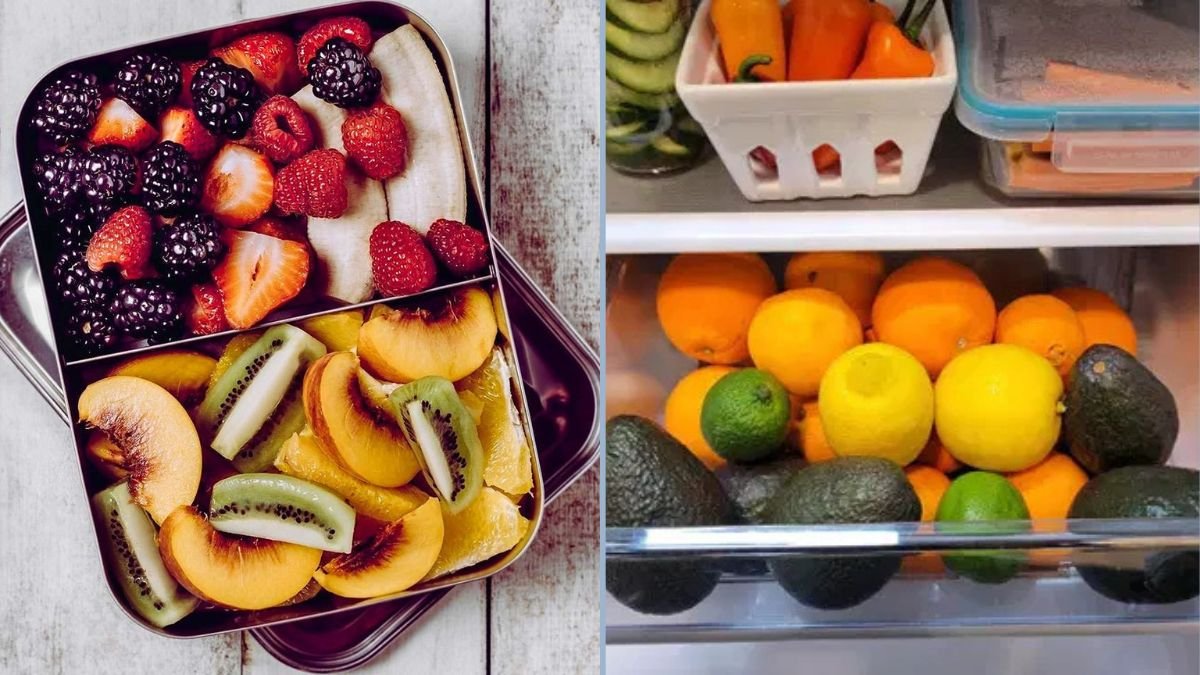
Fresh fruits and vegetables are the heart of a healthy vegetarian diet. Their nutritional richness, vibrant colors, and versatility make them indispensable in every kitchen. However, keeping fresh produce organized, accessible, and long-lasting can be a challenge for many households. Improper organization often leads to food spoilage, nutrient loss, and unnecessary waste.
Efficiently organizing fresh produce involves more than just storing fruits and vegetables in the refrigerator; it requires understanding their storage needs, shelf lives, and interactions with each other. A well-organized system ensures not only freshness and flavor but also reduces waste, saves time, and promotes mindful eating habits.
This article explores practical, sustainable, and efficient ways to organize fresh produce at home — helping maintain quality, reduce waste, and improve overall kitchen efficiency.
Understanding the Importance of Produce Organization
Organizing fresh produce properly serves multiple purposes:
- Preserves Freshness and Nutrients: Proper storage slows down spoilage and helps retain essential vitamins, minerals, and antioxidants.
- Reduces Waste: Knowing what produce you have and where it is stored helps prevent food from going bad unnoticed.
- Saves Time: A well-arranged fridge or pantry makes meal planning and preparation quicker and easier.
- Encourages Healthy Eating: When fruits and vegetables are visible and accessible, you are more likely to consume them regularly.
- Supports Sustainability: Reducing waste and extending shelf life contributes to eco-friendly kitchen habits.
In essence, efficient produce organization promotes both health and environmental well-being.
Step 1: Categorize Produce Based on Storage Needs
Different fruits and vegetables require different conditions to stay fresh. The first step toward efficient organization is categorization.
A. Refrigerator Produce
These items benefit from cool temperatures that slow enzymatic and microbial activity:
- Leafy greens: Spinach, lettuce, kale, and coriander should be stored in airtight containers or zip bags with paper towels to absorb moisture.
- Cruciferous vegetables: Broccoli, cauliflower, and cabbage should be kept in breathable bags to maintain humidity.
- Berries: Store in shallow containers lined with paper towels to absorb excess moisture.
- Carrots and beets: Remove the tops (which draw moisture from roots) and store in perforated bags in the vegetable drawer.
B. Countertop Produce
Some fruits and vegetables need room temperature for ripening and flavor development:
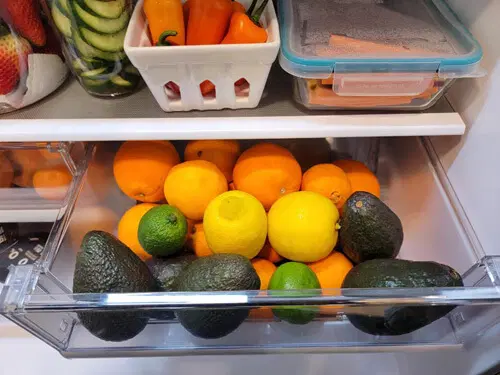
- Bananas, mangoes, and avocados: Allow to ripen at room temperature, then refrigerate to extend shelf life.
- Tomatoes: Store away from direct sunlight; refrigeration can alter their flavor and texture.
- Citrus fruits: Lemons, oranges, and limes stay fresh for a week or more on the counter.
C. Pantry or Dark, Cool Storage
Certain produce thrives in dry, well-ventilated spaces:
- Potatoes, onions, and garlic: Keep in baskets or mesh bags away from sunlight.
- Pumpkins and squashes: Store in a cool, dark area; they can last for weeks.
- Dry ginger and turmeric roots: Store in breathable containers to prevent molding.
By separating produce based on temperature and humidity requirements, you can prevent premature spoilage and cross-contamination.
Step 2: Understand Ethylene Gas and Its Effects
Ethylene is a natural gas produced by certain fruits during ripening. While harmless, it can accelerate ripening and spoilage of nearby produce.
High Ethylene Producers:
- Apples
- Bananas
- Avocados
- Pears
- Mangoes
- Tomatoes
Ethylene-Sensitive Produce:
- Leafy greens
- Cucumbers
- Broccoli
- Carrots
- Potatoes
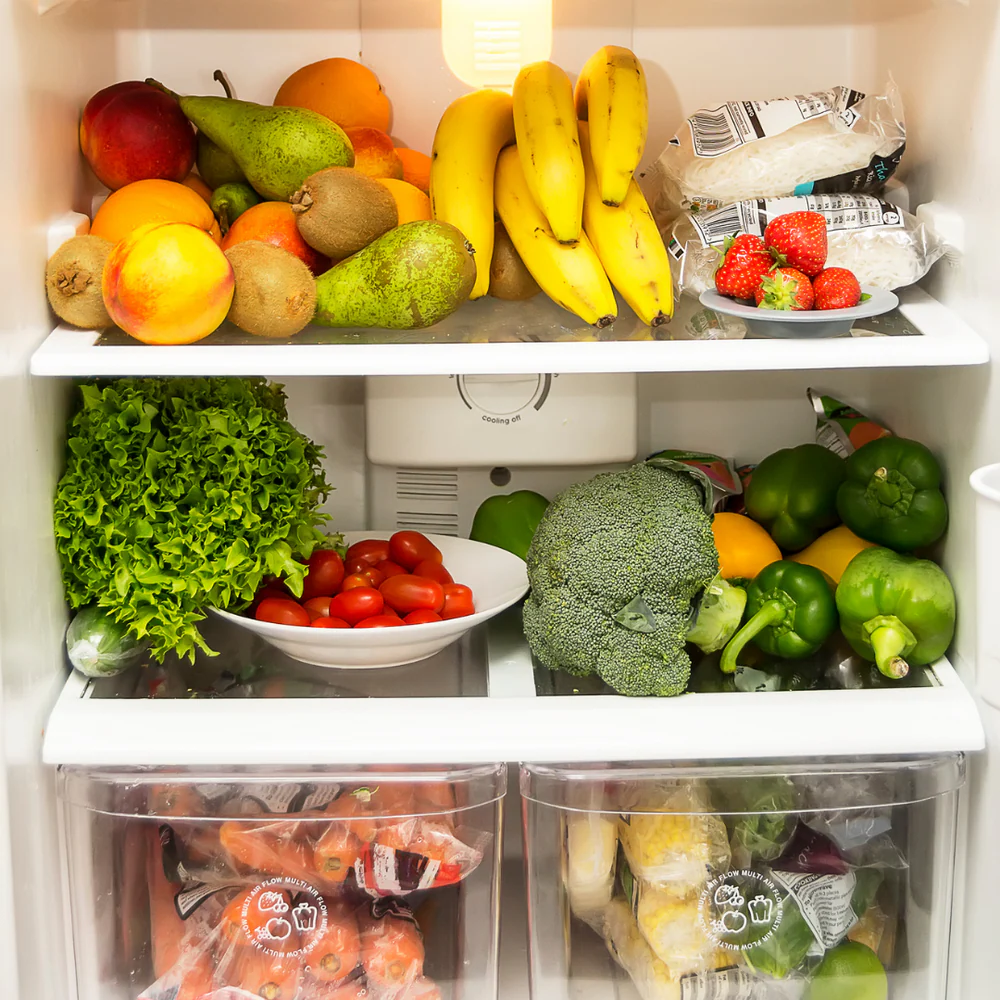
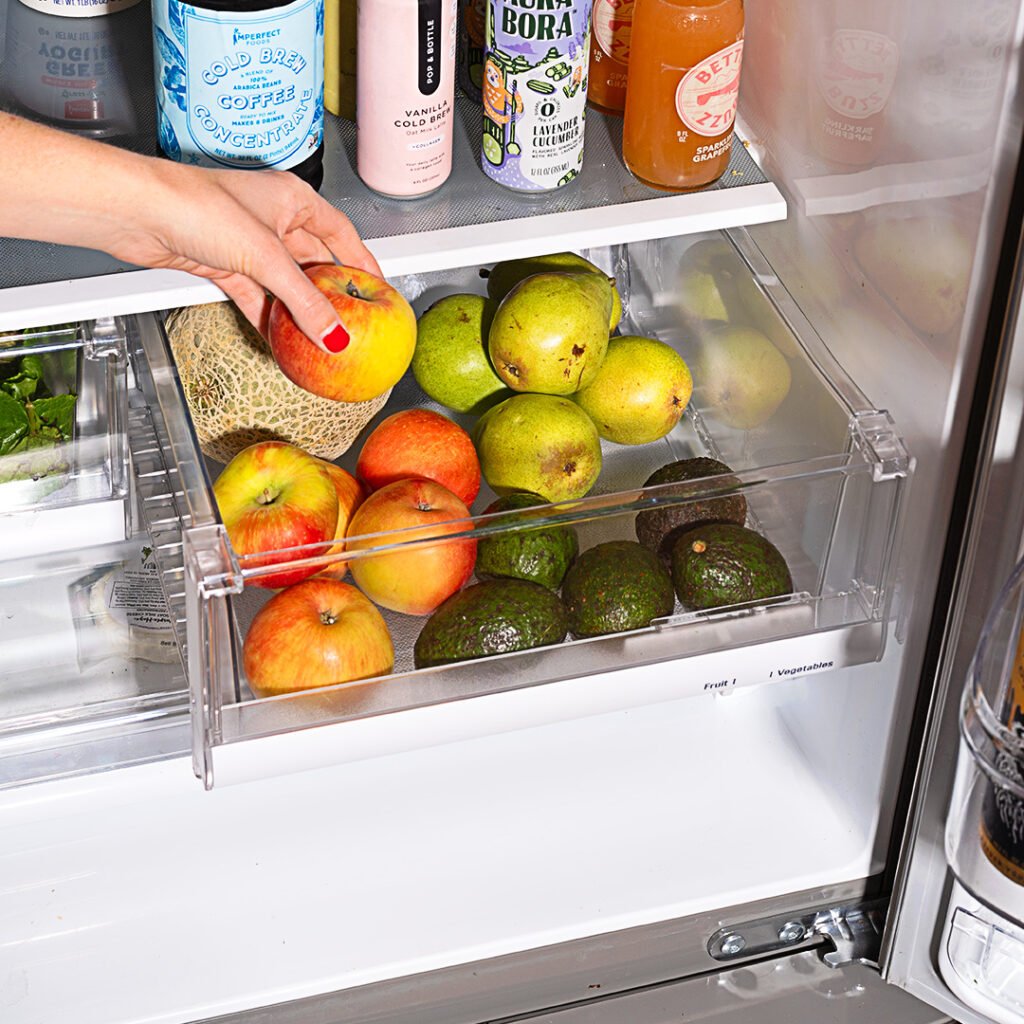
Tip: Store ethylene-producing fruits separately from ethylene-sensitive vegetables. For instance, keeping bananas and leafy greens in the same drawer can cause the greens to wilt quickly.
Using separate compartments or storage bins labeled “Fruits” and “Vegetables” is an effective way to manage ethylene exposure.
Step 3: Optimize Refrigerator Organization
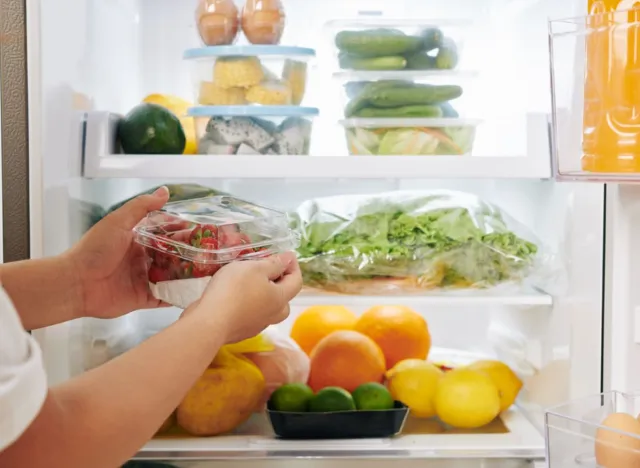
A refrigerator’s layout plays a crucial role in maintaining produce quality. Properly allocating space based on humidity and temperature zones helps extend freshness.
Refrigerator Zones and Best Uses:
- Crisper Drawers:
- Designed for humidity control.
- Store leafy greens, herbs, and vegetables like cucumbers and bell peppers.
- Set one drawer to high humidity for vegetables and another to low humidity for fruits.
- Middle Shelves:
- Maintain consistent temperature.
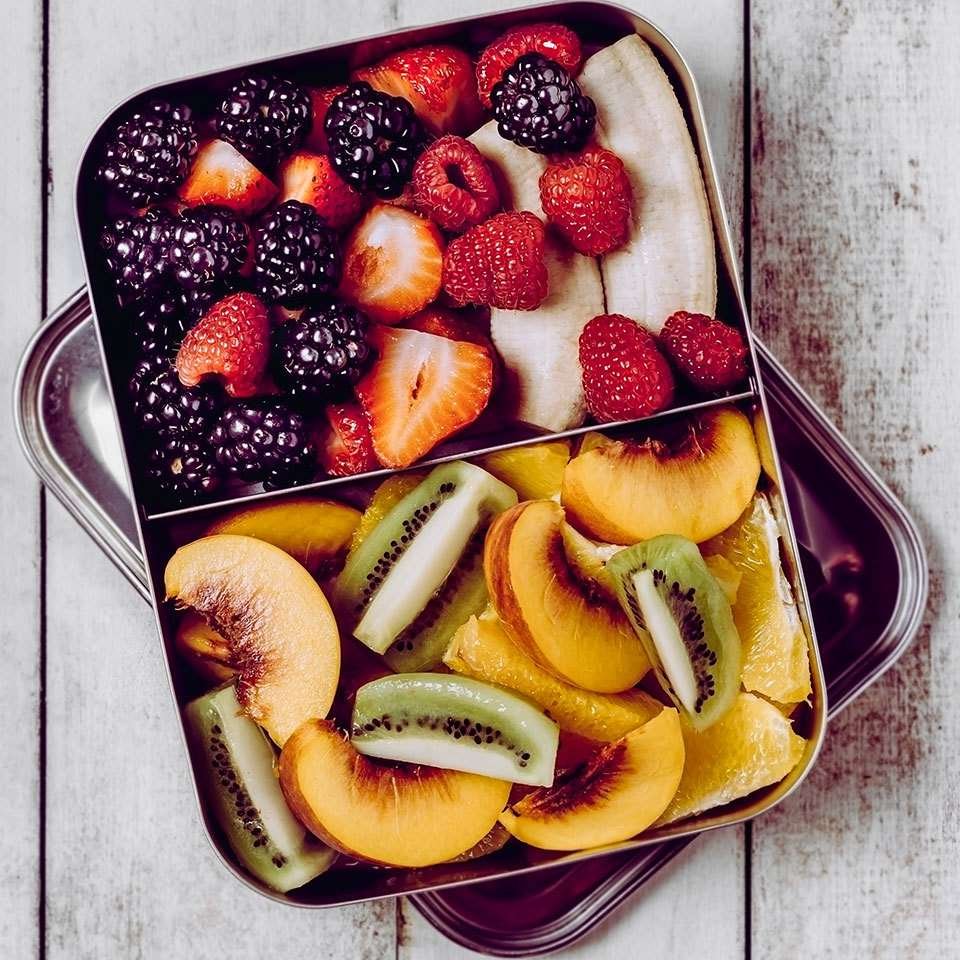
- Store ripe fruits like berries, grapes, and cut fruit in sealed containers.
- Door Compartments:
- Warmer than other sections.
- Ideal for hardy produce like citrus fruits or root vegetables that can withstand mild temperature changes.
- Top Shelves:
- Best for pre-washed and ready-to-eat fruits for easy access and quick snacks.
Pro Tip: Label drawers and containers — e.g., “Eat Soon,” “Fresh Greens,” or “Ready to Use.” This helps prioritize perishable items and prevents waste.
Step 4: Use Proper Storage Containers
Choosing the right containers helps regulate air circulation and moisture levels.
Recommended Storage Options:
- Glass containers: Eco-friendly and transparent, allowing you to see produce easily.
- Perforated plastic bags: Prevent moisture buildup and mold.
- Silicone reusable bags: Durable and airtight for both fruits and vegetables.
- Paper towels or cloth liners: Absorb excess water to reduce spoilage in leafy greens.
- Mason jars: Perfect for storing chopped vegetables, herbs, or salad mixes.
Avoid sealing produce completely without ventilation, as trapped moisture accelerates decay.
Step 5: Plan and Rotate Produce Regularly
Efficient organization isn’t static — it requires active rotation and meal planning.
Practical Strategies:
- First In, First Out (FIFO): Use older produce before newer ones to prevent forgotten, spoiled items.
- Visual Reminders: Keep the most perishable items at the front of the fridge or countertop.
- Weekly Inventory: Take a few minutes weekly to review what you have, discard anything spoiled, and plan meals around nearing-expiry produce.
- Meal Prepping: Chop and portion vegetables in advance. Store them in labeled containers for quick access and reduced cooking time.
By maintaining awareness of your produce stock, you save money, reduce waste, and ensure freshness in every meal.
Step 6: Use Special Techniques for Extended Freshness
Several simple techniques can prolong the life of your fresh produce naturally:
- Hydrate Greens: Wrap leafy greens in damp cloth or paper towels and store in resealable bags.
- Submerge Herbs: Keep herbs like cilantro and parsley upright in jars of water (like flowers) covered loosely with a bag.
- Store Roots Properly: Keep carrots and radishes in airtight containers filled with water to retain crispness.
- Avoid Washing Until Use: Moisture encourages mold, so wash produce only before consumption.
- Freeze Excess: If you have more than you can use, blanch and freeze vegetables or slice and freeze fruits for smoothies or desserts.
These small adjustments dramatically increase shelf life and reduce food waste.
Step 7: Maintain Cleanliness and Hygiene
A clean storage environment prevents contamination and ensures longer freshness:
- Regularly clean refrigerator shelves and drawers with vinegar or baking soda solution.
- Remove decaying produce immediately to prevent spreading mold or bacteria.
- Wipe condensation and ensure containers are dry before restocking.
Maintaining hygiene not only preserves the freshness of produce but also ensures food safety.
Step 8: Sustainable Practices for Produce Management
Efficient organization aligns closely with sustainable kitchen practices.
- Compost Scraps: Use peels, stems, and trimmings for compost to enrich garden soil.
- Repurpose Leftovers: Use slightly soft fruits for smoothies, jams, or baking; wilted vegetables for soups or stir-fries.
- Buy Seasonally and Locally: Reduces storage time and ensures fresher produce.
- Avoid Plastic Waste: Choose reusable bags, baskets, or eco-friendly containers instead of single-use packaging.
Through mindful organization and sustainable habits, households can reduce food and environmental waste significantly.
Visual Appeal and Accessibility
An organized produce section not only preserves freshness but also inspires healthy eating. Arranging fruits and vegetables by color and category can make your refrigerator or pantry look vibrant and inviting. Clear bins and glass containers make it easier to spot what you need while reminding you to consume perishable items first.
Tip: Dedicate one shelf to “Ready-to-Eat Produce” — washed grapes, carrot sticks, or sliced cucumbers — to encourage healthy snacking and minimize food neglect.
Benefits of Efficient Produce Organization
- Extended Shelf Life: Proper humidity, ventilation, and temperature management help produce stay fresh longer.
- Reduced Food Waste: Knowing exactly what you have prevents unnecessary purchases.
- Improved Nutrition: Fresh produce retains more vitamins and minerals when stored correctly.
- Time and Cost Efficiency: Organized produce makes meal prep faster and grocery budgeting easier.
- Sustainability: Reducing spoilage contributes to eco-friendly kitchen habits and responsible consumption.
Conclusion
Efficiently organizing fresh produce is more than a matter of neatness — it’s a thoughtful approach to food preservation, health, and sustainability. By understanding each fruit and vegetable’s storage requirements, managing humidity and temperature zones, and maintaining proper rotation, you can significantly reduce waste and enhance the quality of your meals.
From using breathable containers and labeling drawers to understanding ethylene gas interactions, every small step contributes to a more efficient, eco-conscious kitchen. Organized produce storage supports mindful consumption, encourages a healthier diet, and reflects respect for the natural ingredients that nourish us.
In a world increasingly focused on sustainability and resource management, efficient produce organization is not just a household skill — it is a vital practice in promoting responsible living and a deeper appreciation for fresh, plant-based food.