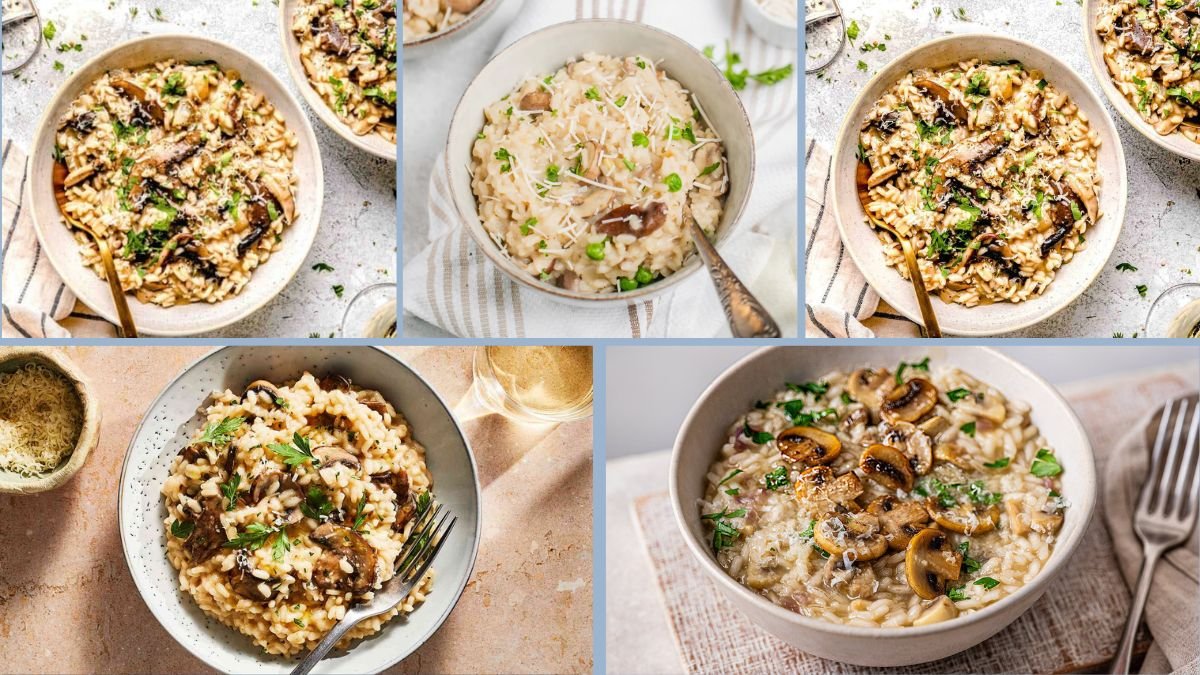
Risotto is a cornerstone of Italian cuisine, renowned for its creamy texture, rich flavor, and comforting warmth. Among its many variations, mushroom risotto stands out for its earthy aroma and luxurious mouthfeel. While it may seem intimidating to prepare, mastering risotto is entirely achievable with attention to technique, timing, and ingredient selection.
Creating the perfect mushroom risotto is about more than stirring rice in broth. It involves balancing textures, extracting maximum flavor from mushrooms, and finishing with creamy richness without relying on non-vegetarian ingredients. Here are seven steps to help you make mushroom risotto like a professional chef.
Step 1: Choose the Right Rice
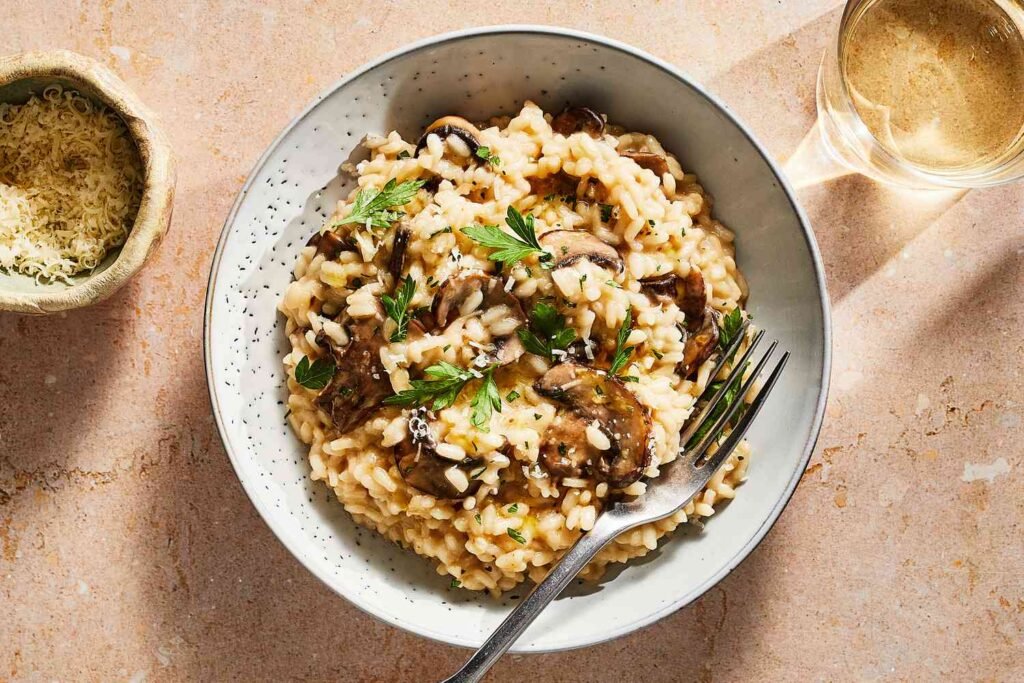
The foundation of any great risotto is the rice itself.
- Arborio Rice: The most common choice, known for its high starch content, which contributes to creamy texture.
- Carnaroli Rice: Preferred by many chefs for its ability to absorb liquids while maintaining firm grains.
- Vialone Nano: Smaller grains that cook evenly and create a rich, creamy dish.
Pro Tip: Avoid long-grain rice such as basmati or jasmine; they lack the necessary starch for a classic risotto.
Science Insight: The high amylopectin content in short-grain rice releases starch during slow cooking, creating the creamy consistency that defines risotto.
Step 2: Prepare Flavorful Mushrooms
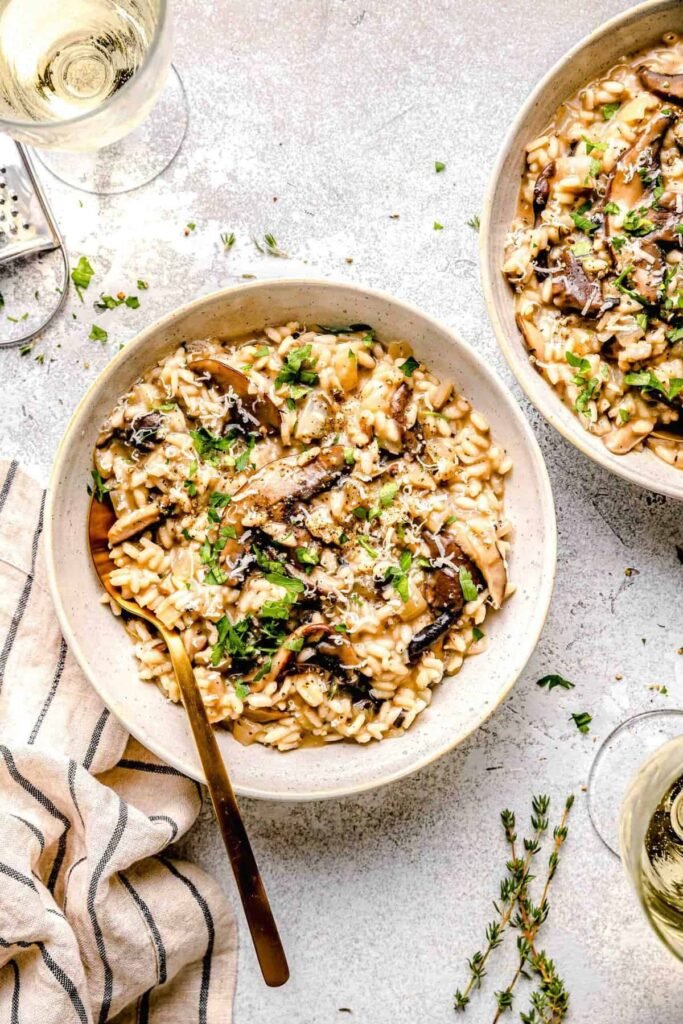
Mushrooms are the soul of this risotto, imparting deep umami notes.
- Variety Matters: Cremini, shiitake, or portobello mushrooms offer richness and texture. Mixing varieties enhances complexity.
- Sauté First: Cook mushrooms in olive oil or vegan butter until browned and slightly caramelized. Avoid overcrowding the pan to prevent steaming.
- Seasoning: Add salt, pepper, and a touch of garlic or shallots to boost flavor.
Pro Tip: Keep some mushrooms whole or in large pieces for texture, while finely chopping others to distribute flavor evenly.
Culinary Insight: Browning mushrooms through the Maillard reaction releases savory compounds that intensify the overall taste of the risotto.
Step 3: Build the Base with Aromatics
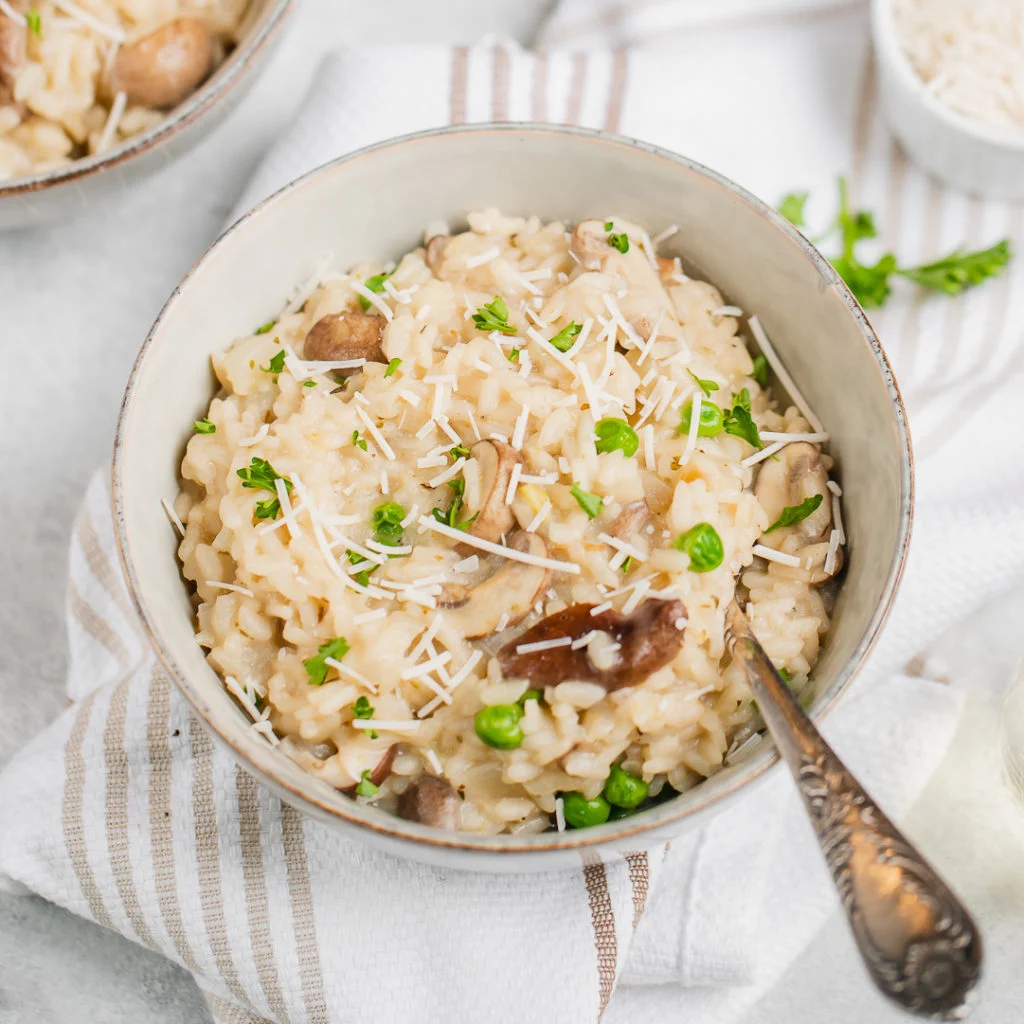
The flavor base is crucial to layering taste in risotto.
- Onions or Shallots: Finely diced, sautéed gently until translucent.
- Garlic: Adds warmth and depth without overpowering.
- Herbs: Fresh thyme or rosemary complements the earthy mushrooms.
Pro Tip: Cook aromatics on low heat to avoid burning, which would impart bitterness.
Food Science Note: Sautéing aromatics in fat releases essential oils, creating a fragrant and flavorful foundation for the rice.
Step 4: Toast the Rice
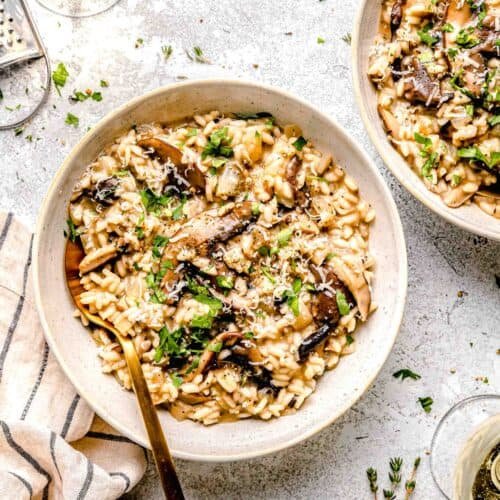
Toasting rice is a key step that enhances flavor and helps maintain texture.
- Technique: Add rice to the sautéed aromatics and stir for 1–2 minutes until the edges become translucent.
- Optional Boost: Deglaze with a splash of dry white wine or vegetable broth for acidity and complexity.
Pro Tip: Stir constantly to coat each grain evenly in fat; this also prevents sticking.
Science Insight: Toasting (or “tostatura”) helps coat the starch granules in fat, allowing the rice to absorb liquid gradually without becoming mushy.
Step 5: Gradually Add Broth
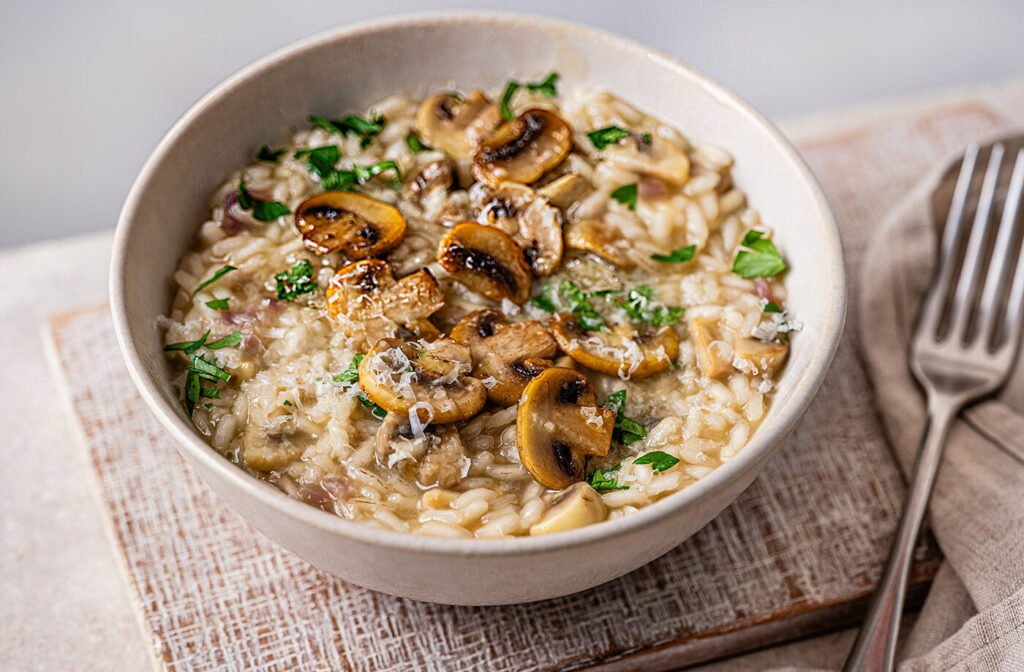
The hallmark of risotto is its slow, gradual absorption of liquid.
- Use Warm Broth: Vegetable broth is ideal. Keeping it warm prevents temperature shock and ensures even cooking.
- Add in Small Batches: Pour a ladleful at a time, stirring frequently until almost absorbed before adding more.
- Consistency Check: The rice should be tender yet firm (“al dente”) when cooked.
Pro Tip: Stirring gently, not vigorously, releases starch steadily, creating creaminess.
Science Insight: Slow absorption of liquid allows starch granules to swell gradually, producing the signature velvety texture of risotto.
Step 6: Finish with Creaminess
Finishing touches elevate risotto from good to professional quality.
- Fat for Creaminess: Stir in vegan butter or a drizzle of olive oil at the end.
- Cheese Alternatives: Nutritional yeast or vegan Parmesan adds richness and umami.
- Optional Add-ins: A splash of plant-based cream or cashew cream can create extra silkiness.
Pro Tip: Avoid overcooking after adding fats or cheese to maintain texture. Risotto should be loose and creamy, not stiff.
Culinary Insight: Adding fat at the end emulsifies residual starches, enriching the mouthfeel and enhancing flavor.
Step 7: Serve Immediately and Garnish
Risotto waits for no one—serving promptly ensures optimal texture and presentation.
- Portion: Spoon directly onto warm plates to maintain heat.
- Garnish: Fresh parsley, thyme, or microgreens add freshness and color.
- Optional Crunch: Toasted nuts or breadcrumbs provide contrast to creamy rice.
Pro Tip: Risotto continues to thicken as it cools. Serve immediately to enjoy the classic creamy consistency.
Styling Hack: Use a ladle to create a neat mound in the center of the plate for an elegant presentation.
Bonus Tips for Perfect Mushroom Risotto
- Quality Ingredients: Use fresh mushrooms, homemade or high-quality broth, and unprocessed rice for best results.
- Batch Cooking: Risotto is best made fresh, but mushrooms and broth can be prepped ahead.
- Flavor Layers: Add a dash of soy sauce or miso paste for an umami boost.
- Experiment with Herbs: Tarragon or sage adds unique aromatic notes.
- Texture Variation: Keep some mushrooms sautéed lightly as a topping to maintain a textural contrast with the creamy rice.
Conclusion
Creating creamy mushroom risotto is both an art and a science. By following these seven steps—choosing the right rice, preparing mushrooms thoughtfully, building a flavorful aromatic base, toasting rice, gradually adding broth, finishing with richness, and serving immediately—you can achieve restaurant-quality results in your own kitchen.
This vegetarian risotto exemplifies the beauty of plant-based cooking: luxurious, satisfying, and rich in flavor without any animal products. Its creamy texture, earthy mushroom notes, and elegant presentation make it suitable for weeknight dinners, dinner parties, or special occasions.
Mastering risotto enhances your culinary repertoire and demonstrates how attention to detail—from ingredient selection to cooking technique—can transform simple pantry staples into a refined, soul-warming dish.