
Pizza is one of the most universally loved foods across the globe, known for its irresistible combination of crisp crust, flavorful toppings, and gooey cheese. However, most commercially available pizzas are often made with refined flour (maida), loaded with high-fat cheese, and packed with processed toppings. While delicious, these pizzas don’t always align with a healthy lifestyle.
For those who want to enjoy the indulgence of pizza while keeping nutrition in mind, a vegetable pizza with a whole wheat base is the perfect solution. By using wholesome wheat flour, fresh seasonal vegetables, and balanced spices, you can create a pizza that is both satisfying and nourishing.
In this article, we will explore a 7-step guide to making vegetable pizza with a whole wheat base, while also discussing the nutritional benefits, cultural adaptation of pizza in India, and expert tips for achieving the perfect homemade version.
Why Choose a Whole Wheat Vegetable Pizza?

- Healthier Alternative – Whole wheat flour is rich in dietary fiber, iron, and essential minerals. It aids digestion and helps maintain energy levels.
- Vegetarian-Friendly – Using fresh vegetables as toppings ensures vitamins, antioxidants, and natural flavors without relying on meat-based options.
- Customizable – You can add or omit vegetables according to seasonal availability and personal taste preferences.
- Budget-Friendly – Homemade pizzas save money compared to restaurant versions while allowing full control over ingredients.
- No Refined Flour – Unlike regular pizza, this version avoids maida completely, making it suitable for health-conscious families.
Key Ingredients
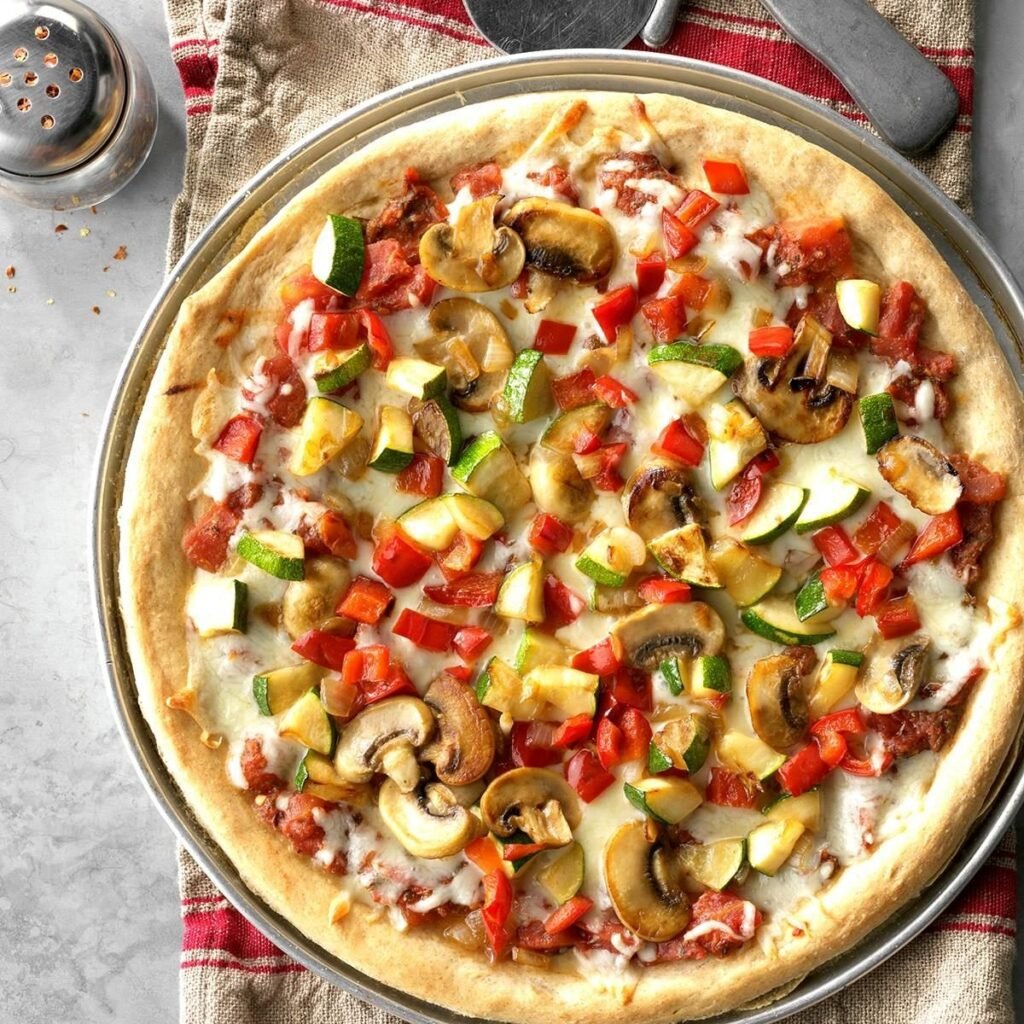
For the Whole Wheat Pizza Base:
- Whole wheat flour – 2 cups
- Dry yeast – 1 tsp
- Warm water – ½ cup
- Sugar – 1 tsp
- Salt – ½ tsp
- Olive oil – 1 tbsp (optional, can be reduced or skipped for oil-conscious cooking)
For the Pizza Sauce:
- Tomatoes – 3 large, blanched and pureed
- Onion – 1 medium, finely chopped
- Garlic – 3 cloves, minced
- Red chili flakes – ½ tsp
- Mixed herbs (oregano, basil, thyme) – 1 tsp
- Salt – to taste
For the Toppings:
- Capsicum – 1 medium, sliced
- Onion – 1 medium, sliced
- Tomato – 1 medium, sliced
- Sweet corn – ¼ cup (boiled)
- Mushrooms – ½ cup (optional, but vegetarian)
- Black olives – a few, sliced
- Grated mozzarella or processed cheese – 1 cup (use part-skim for lighter version)
- Fresh basil leaves – for garnish
The 7-Step Recipe
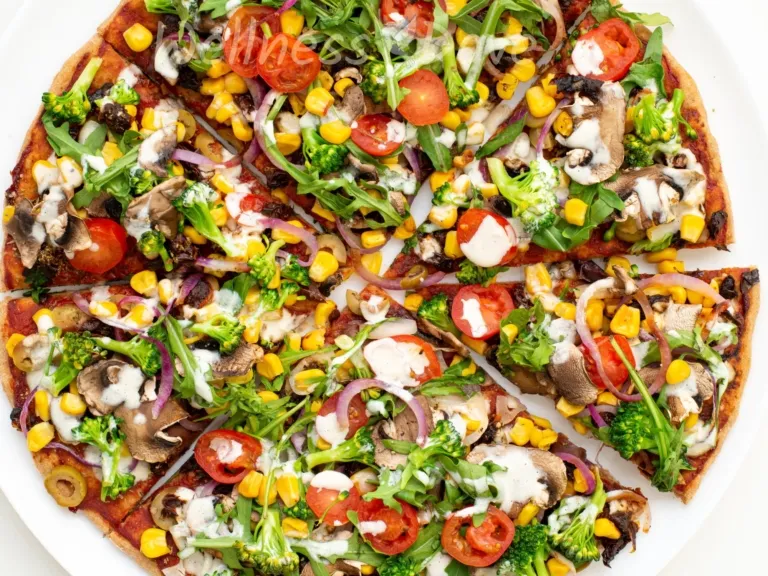
Step 1: Prepare the Whole Wheat Dough
- In a small bowl, mix yeast, sugar, and warm water. Let it rest for 10 minutes until it turns frothy, indicating the yeast has activated.
- In a large mixing bowl, add whole wheat flour and salt.
- Pour in the activated yeast mixture and knead into a soft dough. Add a little extra water if required.
- Cover the dough with a damp cloth and let it rest in a warm place for 1–2 hours until it doubles in size.
This base forms the heart of the pizza and ensures a wholesome, fiber-rich crust.
Step 2: Prepare the Pizza Sauce

- Heat a non-stick pan, add garlic and onion, sauté without oil by sprinkling a little water.
- Add tomato puree, chili flakes, herbs, and salt.
- Simmer until the sauce thickens and flavors are well combined.
This fresh tomato-based sauce is far healthier than store-bought versions that often contain preservatives and excess sodium.
Step 3: Roll Out the Base
- Once the dough has risen, punch it down gently to release air.
- Divide it into equal portions depending on the size of pizza you want.
- Roll out each portion on a floured surface into a round base about ½ inch thick.
- Use a fork to prick the surface lightly—this prevents puffing while baking.
Step 4: Pre-Bake the Crust
- Preheat oven to 200°C (392°F).
- Place the rolled-out base on a greased baking tray or lined parchment paper.
- Bake for 5–7 minutes until slightly firm but not fully cooked.
Pre-baking ensures the base stays crisp even after adding sauce and toppings.
Step 5: Add Sauce and Toppings
- Spread a generous layer of pizza sauce on the pre-baked crust.
- Sprinkle half of the cheese over the sauce.
- Arrange sliced vegetables (capsicum, onion, tomato, corn, mushrooms, olives) evenly.
- Sprinkle the remaining cheese on top.
This step allows you to customize—load with more vegetables for nutrition or keep it minimal for a lighter version.
Step 6: Bake the Pizza
- Place the topped pizza back in the preheated oven.
- Bake at 200°C for 12–15 minutes until the cheese melts and turns golden.
- Ensure vegetables remain slightly crunchy to retain freshness and nutrients.
Step 7: Garnish and Serve
- Remove the pizza carefully, let it cool for 2–3 minutes before slicing.
- Garnish with fresh basil leaves or a sprinkle of oregano and chili flakes.
- Serve hot with a side of green salad or soup for a complete meal.
Nutritional Benefits

- Whole Wheat Base – Provides fiber, aids digestion, and helps control blood sugar levels.
- Vegetable Toppings – Rich in antioxidants, vitamins A and C, and minerals like potassium.
- Tomato Sauce – High in lycopene, an antioxidant linked to heart health.
- Cheese – Supplies protein and calcium, but can be moderated for calorie-conscious diets.
A medium slice of this whole wheat vegetable pizza contains approximately 180–200 calories, depending on cheese quantity. This makes it significantly healthier than fast-food pizzas, which average 300+ calories per slice.
Expert Tips for Perfect Whole Wheat Pizza
- Dough Consistency – Ensure soft and pliable dough; too hard results in a dense crust.
- Yeast Activation – Always check yeast froth; inactive yeast means dough won’t rise.
- Don’t Overload Toppings – Too many toppings release moisture, making crust soggy.
- Pre-Bake Base – Essential for avoiding undercooked crust.
- Cheese Balance – Use moderate cheese—just enough for flavor but not overwhelming.
- Cooking Without Oil – Water sautéing and non-stick pans reduce excess fat without losing flavor.
- Air Fryer Option – Small pizzas can also be cooked in an air fryer at 180°C for 8–10 minutes.
Cultural and Social Adaptation of Pizza in India
Pizza, though Italian in origin, has found deep resonance in India. Over the past few decades, it has been reimagined with local flavors and vegetarian toppings to suit Indian palates. Paneer tikka pizza, masala corn pizza, and tandoori vegetable pizzas are popular adaptations.
The move toward whole wheat and vegetable-based pizzas represents a fusion of global cuisine with India’s traditional emphasis on health, balance, and vegetarianism. It reflects a shift where modern indulgences meet mindful eating.
Conclusion
Pizza need not be a guilty indulgence. With a whole wheat base, fresh vegetable toppings, and a homemade sauce, it becomes a balanced meal that satisfies cravings while nourishing the body. By following this 7-step guide—preparing the dough, making the sauce, rolling out, pre-baking, adding toppings, baking, and garnishing—you can create a pizza that is wholesome, delicious, and family-friendly.
This oil-free, vegetarian version is proof that fast food can be reinvented into smart food. It celebrates flavor without compromising health. Whether for a weekend dinner, kids’ party, or simply a family cooking session, whole wheat vegetable pizza brings joy to the table—crispy, colorful, and utterly satisfying.
So, next time the craving strikes, skip the takeout menu and head straight to your kitchen. With just seven steps, you can craft a pizza that combines the best of tradition, nutrition, and indulgence.