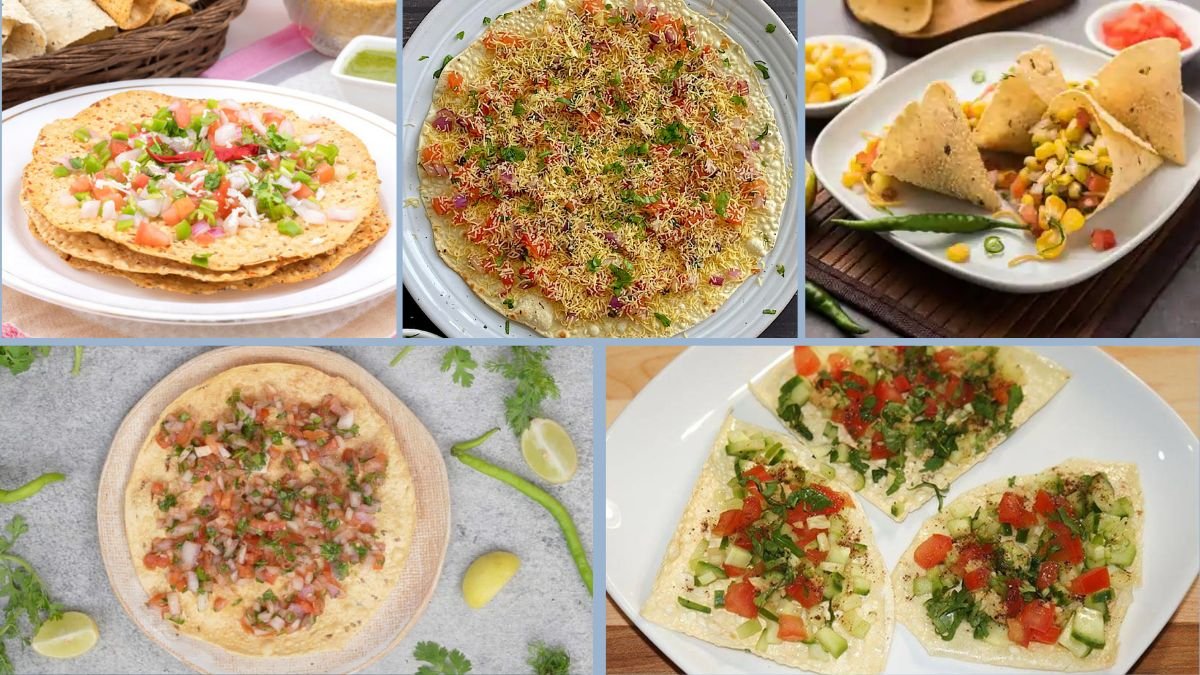
Indian cuisine is renowned for its vibrant flavours, bold spices, and clever ways of turning even the simplest ingredients into delightful snacks. Among the many quick bites enjoyed across India, Masala Papad holds a special place. Crisp, tangy, spicy, and refreshing, this dish is commonly served as an appetizer in restaurants, at family gatherings, or as an evening snack.
At its heart, Masala Papad combines two components: a roasted or fried papad (thin lentil wafer) and a colourful topping of fresh vegetables, herbs, and spices. The beauty of this dish lies in its adaptability—there are countless variations, and each household brings its own twist. Since papad is naturally vegetarian, Masala Papad is entirely plant-based, making it a light yet satisfying snack.
This article breaks down five easy steps to prepare Masala Papad at home, along with cultural insights, nutritional value, serving suggestions, and common mistakes to avoid.
Step 1: Choosing and Preparing the Papad
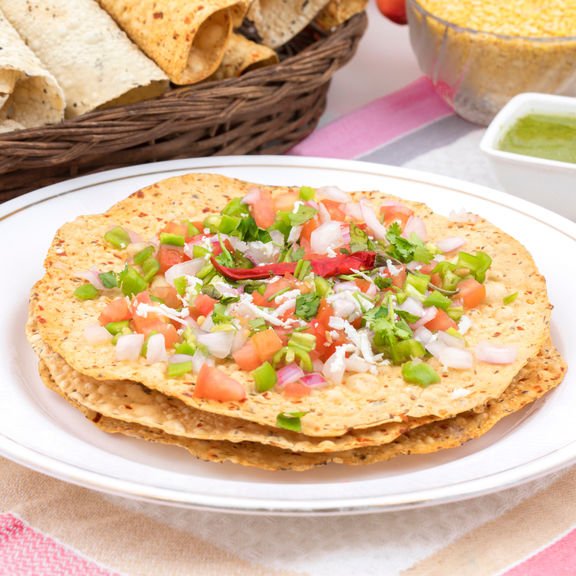
The foundation of Masala Papad is the papad itself. Papad (also called papadam or appalam) is a thin disc made from lentil flour, often urad dal (black gram), and seasoned with black pepper, cumin, or asafoetida. It is widely available in Indian grocery stores.
How to choose the right papad:
- For a crisp, neutral base, go for plain urad dal papad.
- For a spicier kick, choose papads seasoned with green chili, garlic, or black pepper.
- Larger papads (about 6 inches in diameter) work best for topping.
Cooking methods:
- Roasting: Place papad directly over an open flame, rotating with tongs until both sides are crisp. This method keeps it light and oil-free.
- Microwaving: A quick, oil-free method. Place papad in the microwave for 30–60 seconds until crisp.
- Frying (optional): Deep-fry in hot oil for a richer, crunchier base. While delicious, it adds calories and can overpower the freshness of the toppings.
Once prepared, keep the papad aside on a flat plate.
Step 2: Preparing the Vegetable Mix
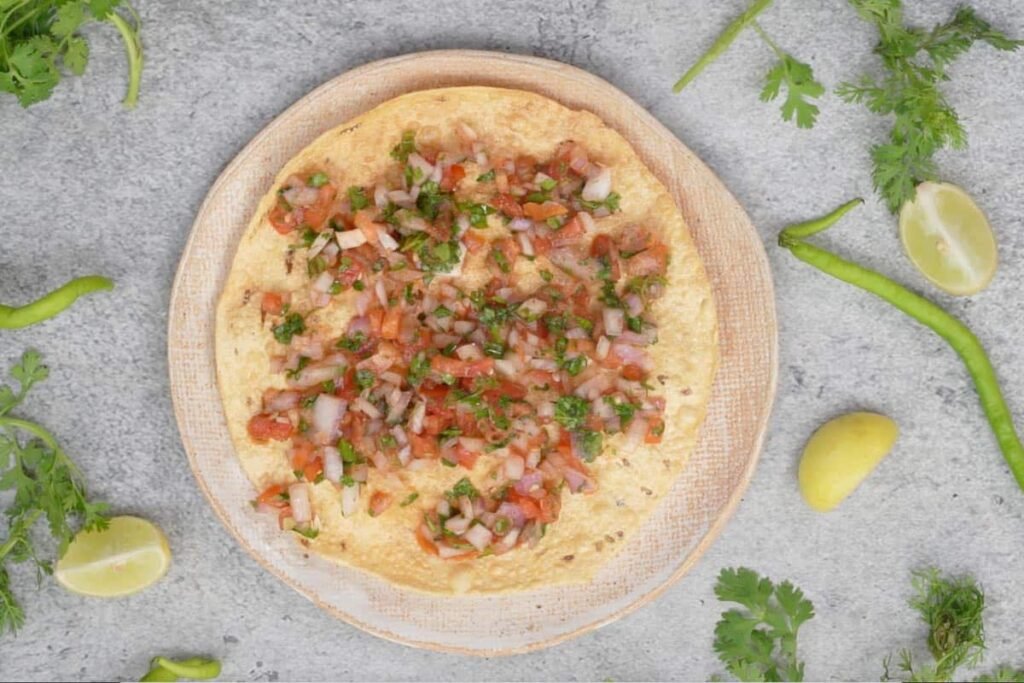
The toppings are what transform papad into Masala Papad. The traditional mix includes onions, tomatoes, green chilies, and coriander leaves.
Basic topping ingredients (for 2 papads):
- ½ cup finely chopped onions
- ½ cup finely chopped tomatoes (deseeded to avoid sogginess)
- 1 green chili (finely chopped, optional)
- 2 tablespoons fresh coriander leaves (chopped)
- ½ teaspoon roasted cumin powder
- ½ teaspoon chaat masala
- Salt to taste
- Juice of half a lemon
Optional variations:
- Add grated carrots, cucumber, or beetroot for extra crunch and colour.
- Pomegranate seeds or sweet corn kernels can give a sweet contrast.
- A drizzle of green chutney or tamarind chutney can elevate flavour.
Mix all ingredients in a bowl just before assembling, so vegetables remain crisp and fresh.
Step 3: Layering the Masala Papad
This is where the dish comes alive.
- Place the roasted or fried papad flat on a serving plate.
- Spread the prepared vegetable mix evenly over the surface. Do not overload, as papad can become soggy quickly.
- Sprinkle a little extra chaat masala and cumin powder over the top for enhanced aroma.
Tip: For a restaurant-style finish, drizzle with a touch of green chutney, tamarind chutney, or even plain yogurt for a creamy balance.
Step 4: Garnishing for Extra Appeal
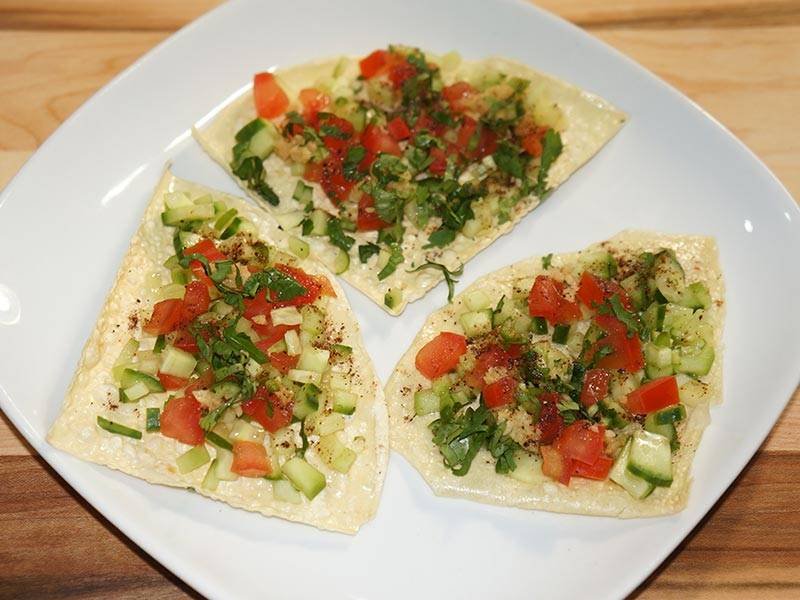
The garnish adds visual beauty and flavour complexity. Since Masala Papad is often served as a starter, presentation matters.
Popular garnishing ideas:
- Fresh coriander sprigs for colour
- Sev (crispy chickpea flour noodles) for crunch
- Pomegranate seeds for a jewel-like pop
- Thin slices of green chili or a dusting of red chili powder for spice lovers
Remember: garnish just before serving, so the papad stays crisp and the toppings remain fresh.
Step 5: Serving and Enjoying
Masala Papad is best served immediately after assembly to maintain its crisp texture. Once toppings sit too long, moisture from vegetables softens the papad.
Serving suggestions:
- As an appetizer before lunch or dinner
- As a quick evening snack with tea
- At parties, arrange a platter of roasted papads and a bowl of toppings for a DIY snack bar
Pairing with refreshing drinks like jaljeera, buttermilk (chaas), or lemonade enhances the experience.
Nutritional Value of Masala Papad

Masala Papad is not only tasty but also nutritionally balanced when prepared thoughtfully.
- Papad (urad dal base): Provides protein and dietary fibre. Roasting keeps calories low, while frying increases fat content.
- Vegetable toppings: Rich in vitamins (C, A, K), minerals, and antioxidants. Raw onions and tomatoes support digestion and boost immunity.
- Spices and herbs: Cumin aids digestion, lemon juice adds vitamin C, and coriander leaves contribute freshness.
On average, one roasted Masala Papad with vegetable topping provides 70–100 calories, depending on garnishes. Fried versions may exceed 200 calories each.
Cultural Significance
Masala Papad showcases India’s culinary philosophy of creating bold flavours with minimal resources. What begins as a simple papad—often seen as a side dish—transforms into a complete snack through the clever use of spices and fresh produce.
- In North India, it is a popular restaurant appetizer, usually paired with drinks.
- In South India, papads (known as appalams) are integral to festive meals, though masala toppings are less common.
- Urban Indian households often prepare Masala Papad as a healthier alternative to fried snacks.
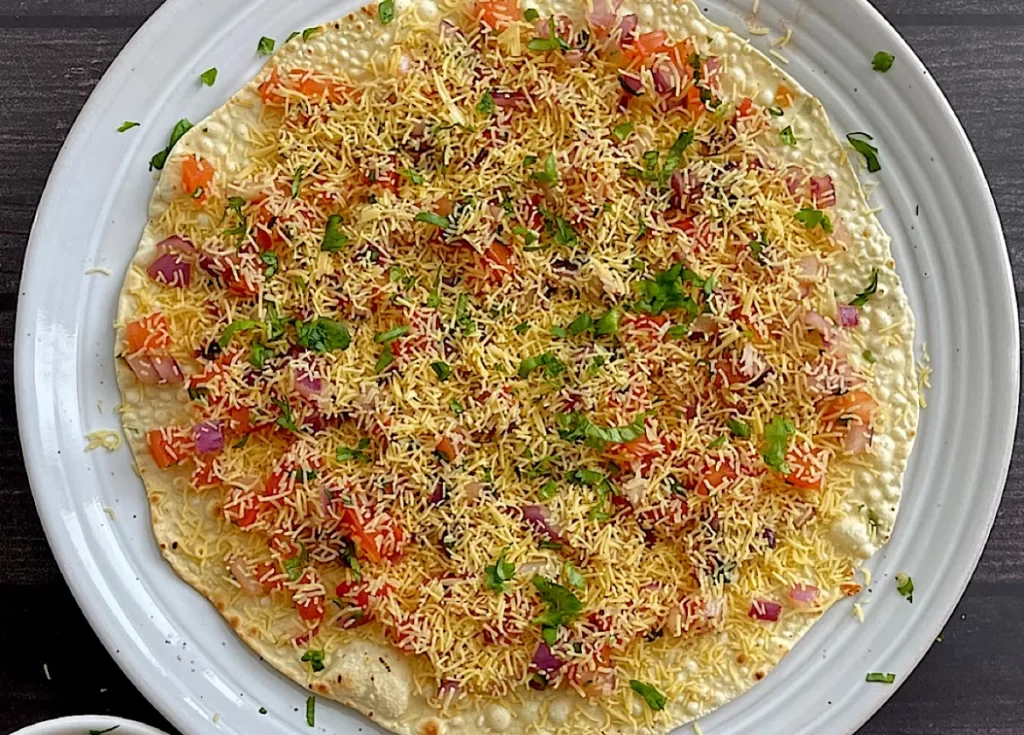
This dish is a reflection of how Indian cuisine adapts everyday staples into versatile creations.
Common Mistakes and How to Avoid Them
- Soggy papad: Always assemble just before serving; excess tomato juice can make papad limp.
- Overloading toppings: A thin layer is enough; too much leads to breaking or sogginess.
- Excessive salt: Remember that papads already contain salt—season toppings lightly.
- Burnt papad during roasting: Keep flame medium and rotate continuously with tongs.
- Preparing too early: Since freshness is key, delay mixing vegetables and lemon juice until needed.
Variations for Creativity
- Cheese Masala Papad: Grate a little processed or mozzarella cheese over hot papad for fusion flavour.
- Healthy Whole Grain Papad: Choose papads made with millet, quinoa, or moong dal for added nutrition.
- Kids’ Special: Use colourful toppings like grated beetroot and corn, drizzle with mild ketchup instead of chili for child-friendly snacking.
- Party Style: Break papad into nacho-sized pieces, top each piece individually with masala for easy finger food.
Conclusion
Masala Papad is proof that simple ingredients, when combined thoughtfully, can produce extraordinary results. By following these five steps—selecting the papad, preparing the vegetable mix, layering toppings, garnishing creatively, and serving immediately—you can recreate this classic Indian snack at home with ease.
Light, crunchy, and bursting with flavour, Masala Papad is a vegetarian-friendly snack that balances taste and nutrition while reflecting India’s ingenuity in snack-making. Whether served as a starter, party finger food, or evening treat, it never fails to impress.
Through this easy guide, one discovers that Masala Papad is more than just a snack—it is a cultural experience, a celebration of spices, and an invitation to enjoy India’s culinary artistry in every crisp, tangy bite.