
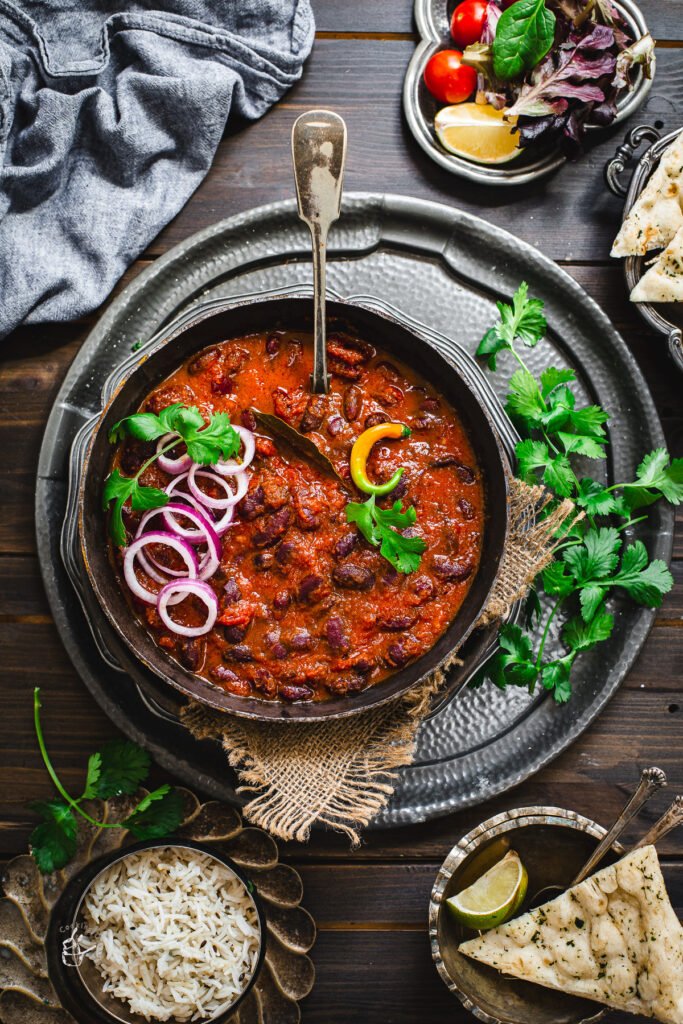
Rajma Masala is more than just a dish — it’s an emotion for many Indian households. A comforting bowl of rajma (kidney beans) in a thick, spicy tomato-based gravy served with steamed rice is often the highlight of Sunday lunches or family dinners. While many restaurant versions of Rajma Masala are loaded with cream or butter to enhance richness, the good news is — you can make an equally delicious, creamy-textured Rajma Masala at home without using any extra cream or dairy.
This detailed, vegetarian, and plant-based guide outlines 7 simple steps to prepare rich, flavorful Rajma Masala using wholesome ingredients — no non-veg, no cream, and no compromise on taste. Perfect for health-conscious eaters, vegans, or anyone who wants a clean, everyday version of this North Indian classic.
Step 1: Choose and Soak the Right Rajma
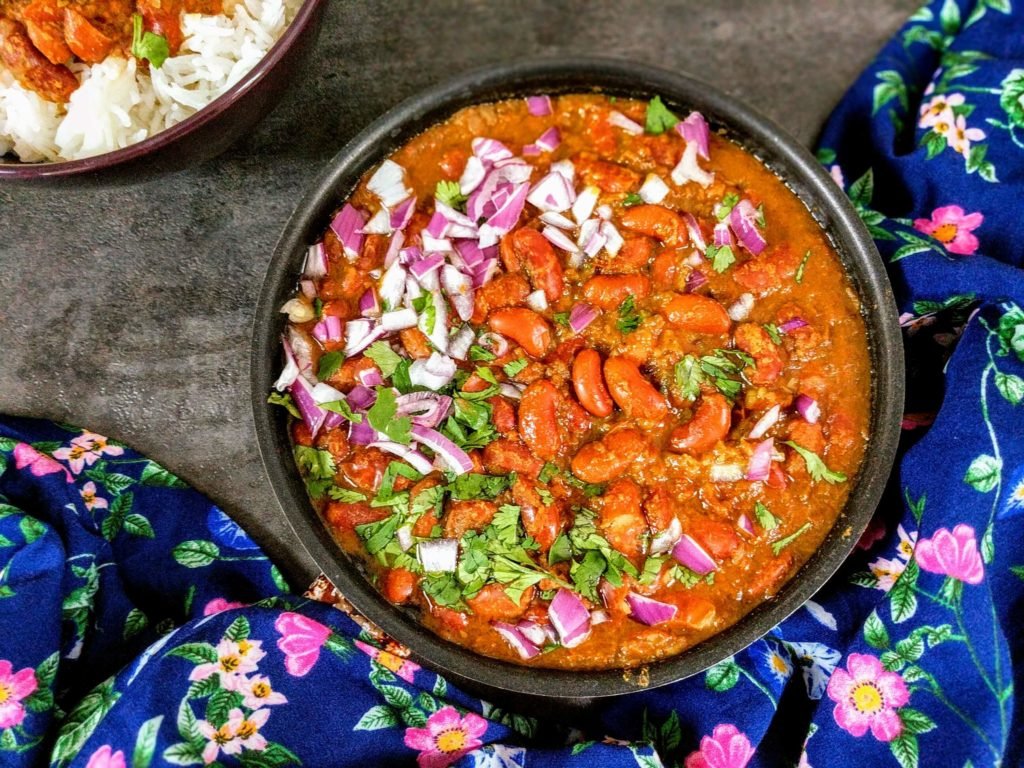
The foundation of any good Rajma Masala lies in the quality of the kidney beans used.
Types of Rajma:
- Jammu Rajma: Smaller, reddish beans that cook faster and are highly flavorful.
- Chitra Rajma: Light brown with speckled texture, common in many Indian homes.
- Red Rajma (Kashmiri): Deep red and slightly larger, great for thicker curries.
Soaking:
- Take 1 cup of dried rajma, rinse thoroughly in water 2-3 times.
- Soak overnight (at least 8 hours) in 3-4 cups of water.
- Discard the soaking water and rinse once more before cooking.
Soaking helps reduce cooking time, improves digestibility, and allows the beans to cook evenly.
Step 2: Pressure Cook Until Soft and Creamy
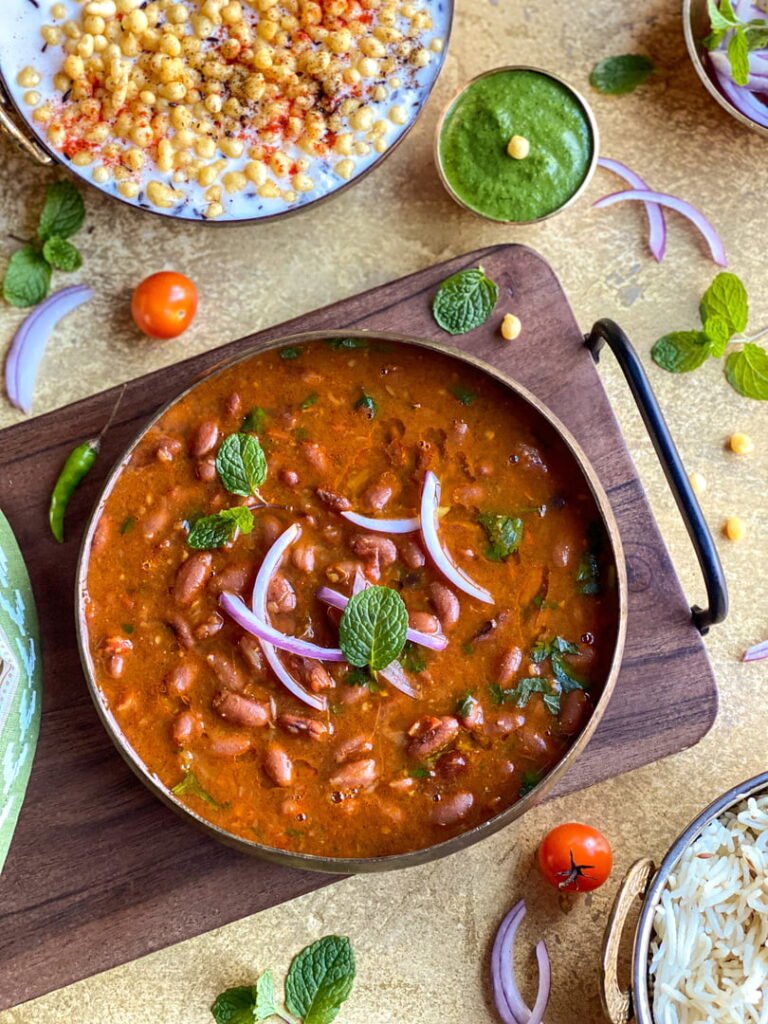
Cooking rajma correctly is essential. Undercooked beans ruin the dish, while perfectly cooked rajma absorbs flavors beautifully.
How to Cook:
- Transfer soaked rajma to a pressure cooker with 3 cups of fresh water.
- Add ½ tsp salt and a pinch of turmeric (optional).
- Pressure cook on medium heat for 4–5 whistles, then simmer for another 10–15 minutes on low.
- Let the pressure release naturally.
Check for Doneness:
- The rajma should be soft enough to mash between your fingers.
- If using an Instant Pot, cook on High Pressure for 35–40 minutes, with natural pressure release.
Note: The cooked beans should be tender but not mushy. Save the cooking liquid — it adds depth to the final gravy.
Step 3: Prepare the Base Masala (Without Cream)
The magic of Rajma Masala lies in its thick, aromatic gravy — made without any dairy in this recipe.
Ingredients:
- 2 tablespoons oil (mustard or sunflower oil works well)
- 1 teaspoon cumin seeds
- 1 bay leaf
- 1 large onion, finely chopped
- 1 tablespoon ginger-garlic paste
- 2 large tomatoes, pureed (or finely chopped)
- 2 green chilies (optional)
- Salt to taste
Spices:
- ½ teaspoon turmeric powder
- 1 teaspoon red chili powder
- 1½ teaspoons coriander powder
- 1 teaspoon cumin powder
- ½ teaspoon garam masala (add at the end)
How to Cook:
- Heat oil in a pan. Add cumin seeds and bay leaf.
- Once they splutter, add chopped onions and sauté until golden brown.
- Add ginger-garlic paste; cook until raw smell disappears.
- Add pureed tomatoes and cook until oil starts to separate.
- Add the dry spices (except garam masala) and cook the masala until thick and aromatic.
Tip: You can blend the cooked onion-tomato masala into a smooth paste for a restaurant-style finish — no cream needed!
Step 4: Add Cooked Rajma and Simmer for Depth
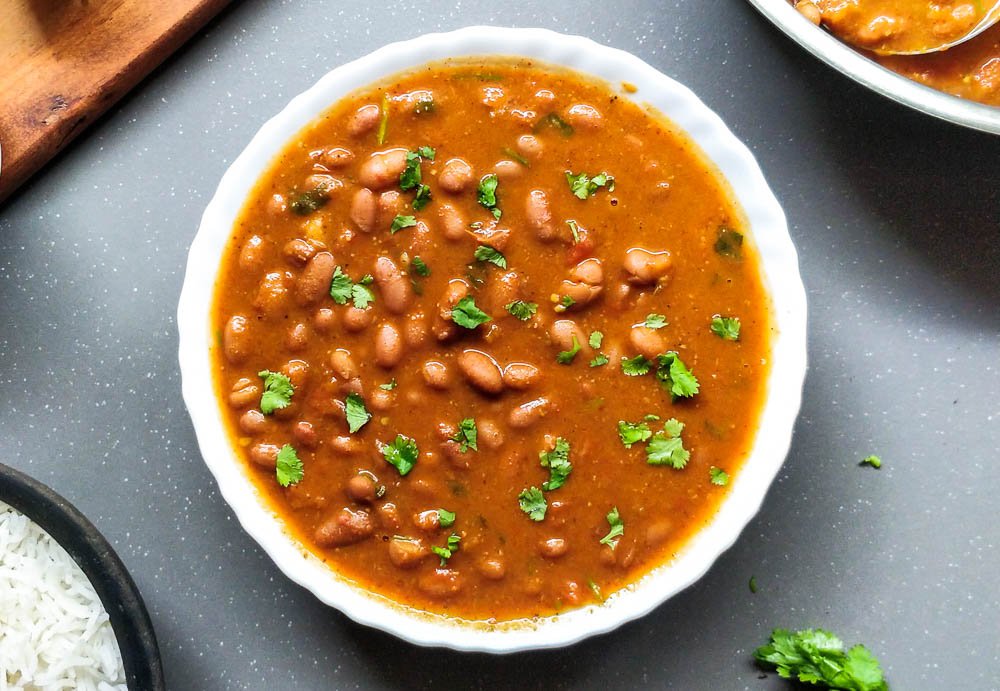
Now it’s time to bring together the cooked beans and the prepared masala.
How to Combine:
- Add the cooked rajma (along with its water) to the masala.
- Mix gently but thoroughly. Use a ladle to mash a few beans against the side of the pan — this will naturally thicken the gravy.
- Simmer uncovered or partially covered for 20–25 minutes on low heat.
Add Water as Needed:
Adjust the consistency depending on your preference. For Rajma Chawal (Rajma with rice), a slightly thinner gravy works best.
Pro Tip: The longer you simmer, the deeper the flavor. Rajma masala tastes even better the next day.
Step 5: Enhance Flavor Without Cream
Who says you need cream for richness? Try these plant-based techniques to elevate flavor and texture:
Smart Additions:
- Grated boiled potato: Adds natural creaminess and thickens the gravy.
- Blended cashew paste: Soak 10 cashews, grind with a little water, and add in the last 10 minutes.
- Blended cooked rajma: Take a few tablespoons of cooked beans and blend with water to create a creamy texture.
Natural Umami Boosters:
- A pinch of kasuri methi (dried fenugreek leaves) crushed between palms
- 1 teaspoon of amchur (dry mango powder) or a squeeze of lemon
- 1–2 teaspoons of jaggery or sugar to balance acidity (optional)
These add-ons give richness, depth, and balance without any dairy or artificial cream.
Step 6: Finish with Aroma and Garnish
The final stage of your Rajma Masala journey is adding a touch of freshness and aroma.
Last-Minute Additions:
- Garam masala: Add ½ teaspoon just before turning off the flame.
- Fresh coriander: Finely chopped and sprinkled on top.
- Lemon juice: A squeeze of lemon enhances freshness.
Let the rajma rest for 5–10 minutes before serving to allow the flavors to meld.
Step 7: Serve It Right for a Complete Meal
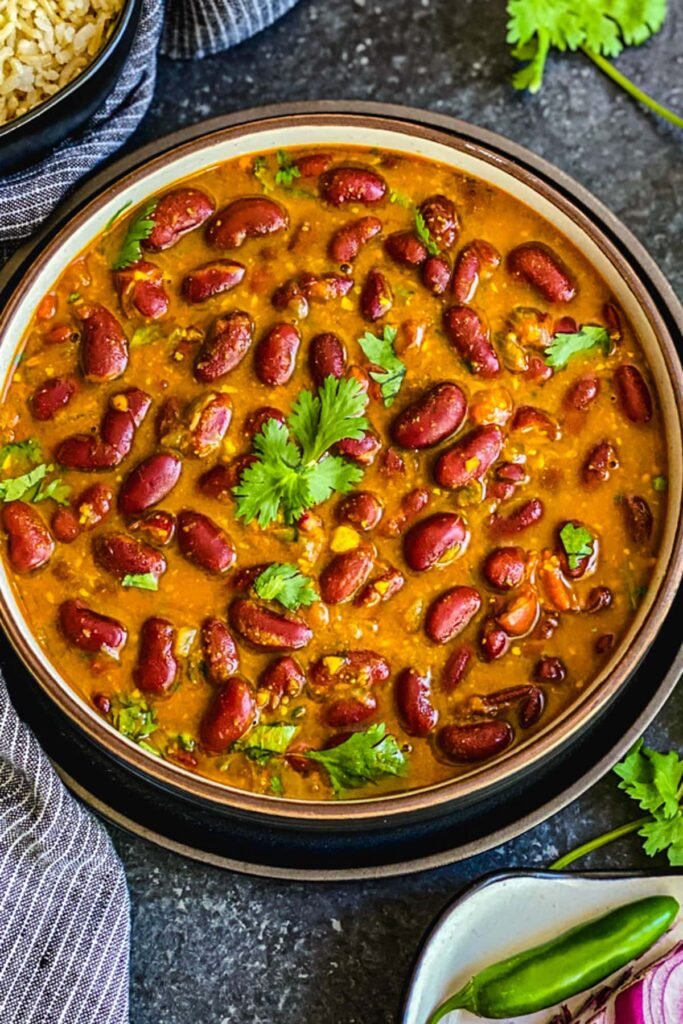
Rajma Masala is delicious on its own, but when paired correctly, it becomes a complete, soul-satisfying meal.
Traditional Serving:
- Steamed basmati rice (Rajma-Chawal): The most iconic and comforting combination.
- Add onion salad and a lemon wedge on the side.
- Serve with papad or pickle for extra crunch and spice.
Other Pairings:
- Jeera rice or brown rice
- Chapati or phulka (if rice is not preferred)
- A small bowl of vegan raita (made with plant-based yogurt)
Storage Tip: Rajma Masala stays well in the fridge for 3–4 days. It also freezes well. Always reheat on low heat, adding a splash of water as needed.
Health Benefits of Cream-Free Rajma Masala
By skipping the cream and butter, this version of Rajma is:
- Low in saturated fat
- High in plant-based protein and fiber
- Naturally gluten-free
- Easier to digest
- Weight-loss friendly
Kidney beans are also rich in iron, potassium, magnesium, and antioxidants — making Rajma Masala both a comforting and nourishing meal.
Conclusion
Rajma Masala, when made without cream or dairy, becomes a wholesome, heartwarming dish that celebrates the natural flavors of spices, tomatoes, and kidney beans. It’s a reminder that richness in food doesn’t always come from fats — it can come from time, patience, and thoughtful cooking techniques.
By following these 7 simple steps, you can prepare a healthy, flavorful, vegetarian (and vegan) Rajma Masala that is ideal for daily meals, family gatherings, or even for your thesis on Indian culinary traditions.
Soak the rajma, simmer the masala, let the spices do their magic — and enjoy a bowl of rajma that’s as comforting as it is good for you.