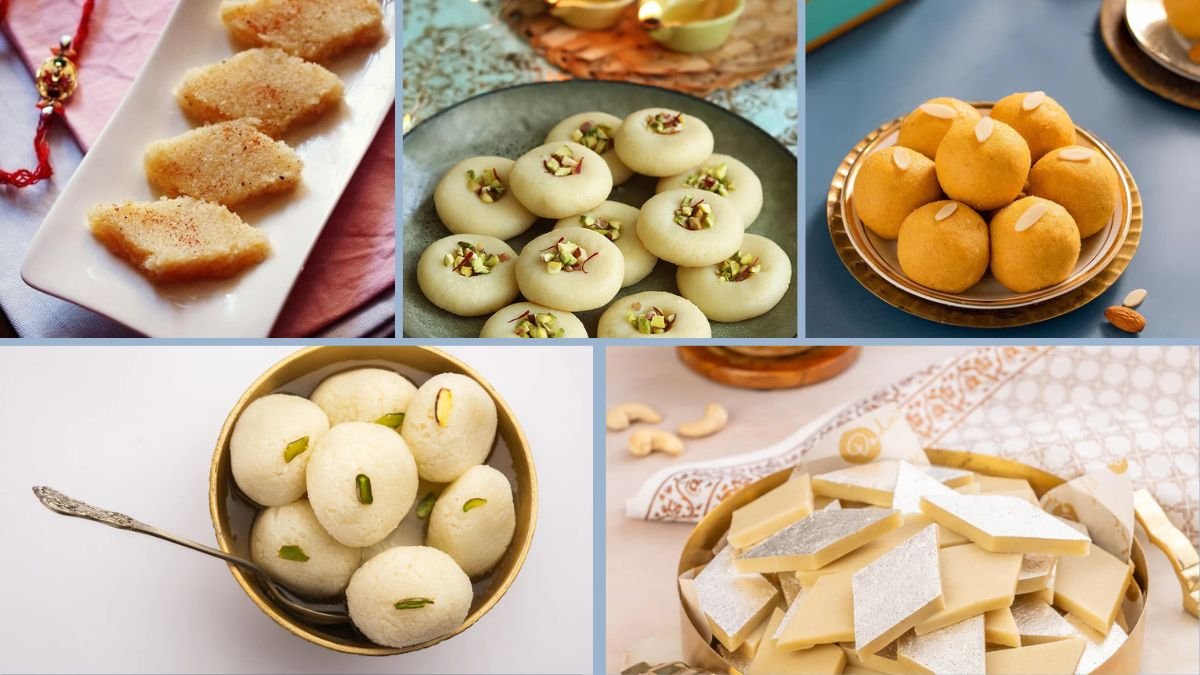
Indian sweets — known as mithai — are more than just desserts. They’re tied to festivals, family traditions, religious rituals, and everyday moments of joy. From rich milk-based delicacies to nutty, syrupy delights, Indian sweets showcase the diversity of regional ingredients and culinary creativity.
The best part? Many of these iconic sweets can be made at home using basic ingredients like milk, ghee, sugar, and flour. In this article, we’ve compiled 8 of the best Indian sweets you can easily prepare at home, with step-by-step insights, pro tips, and variations. Every sweet listed here is 100% vegetarian, with no eggs or animal-derived additives.
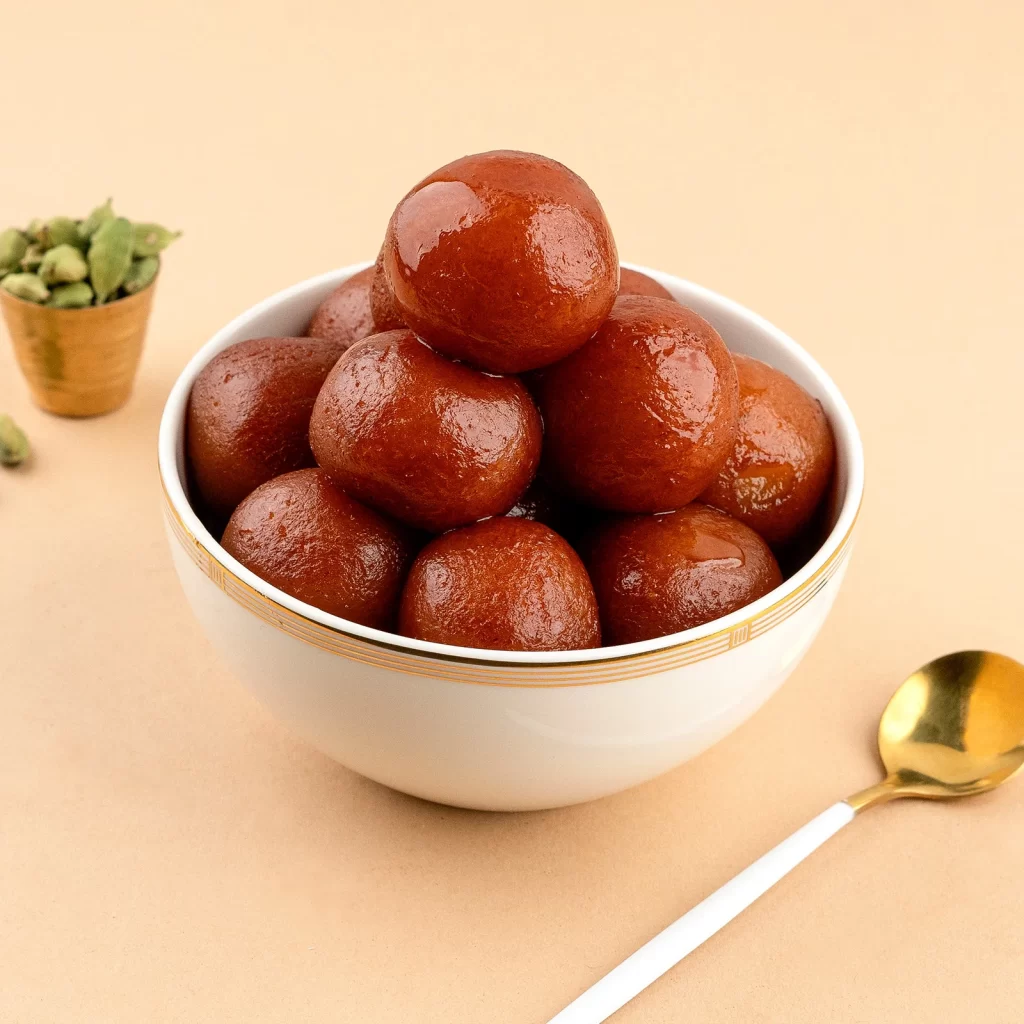
1. Gulab Jamun
Why You’ll Love It:
Soft, spongy balls soaked in fragrant sugar syrup — gulab jamun is India’s most beloved dessert. It’s a must-have for festivals, weddings, and family get-togethers.
Key Ingredients:
Khoya (milk solids), all-purpose flour, ghee, sugar, rose water, cardamom.
How It’s Made:
- The dough is made from khoya and flour, rolled into small balls.
- These are deep-fried on low heat until golden brown.
- Soaked in warm sugar syrup flavored with cardamom and rose water.
Pro Tip:
Let the fried balls rest in the syrup for at least 1–2 hours before serving to absorb flavor fully.
Vegetarian Note:
Traditional gulab jamun is completely vegetarian. Store-bought mixes should be checked for additives or milk powders with animal enzymes.
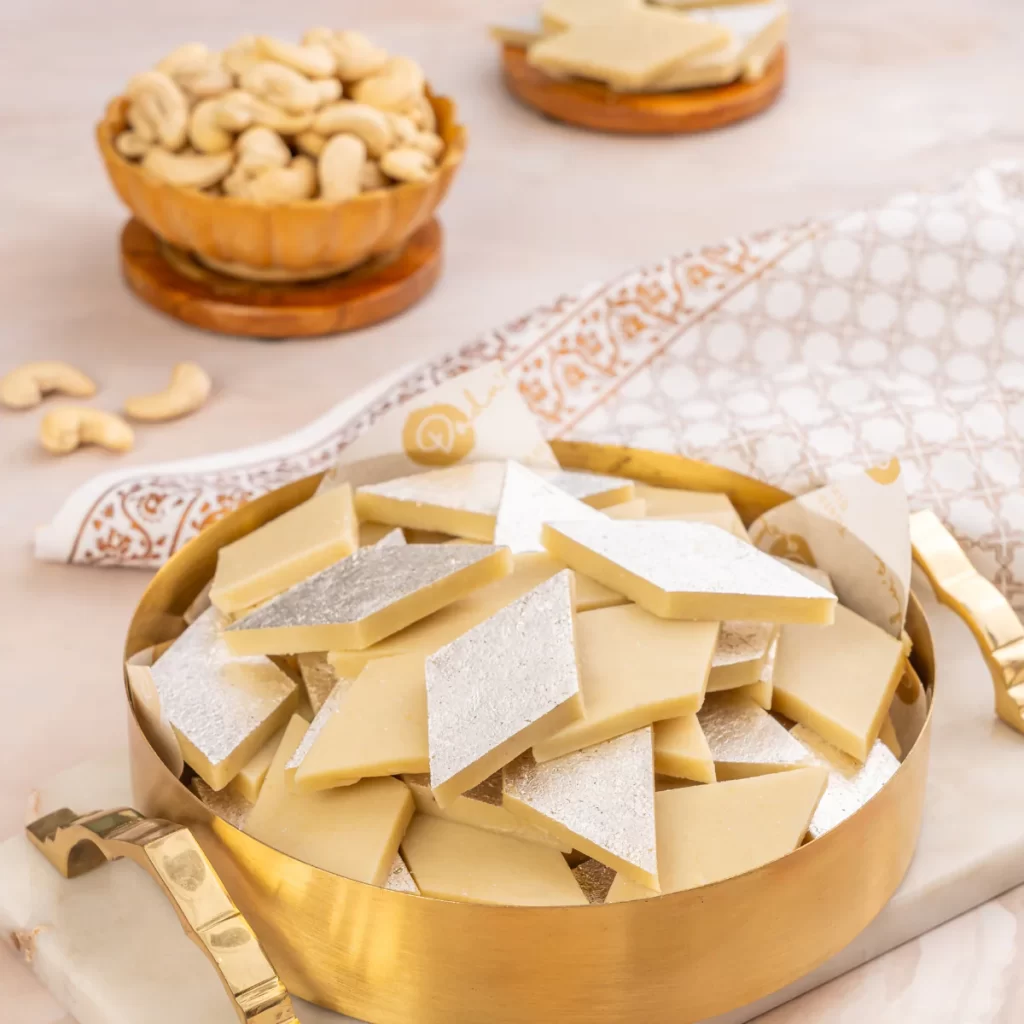
2. Kaju Katli
Why You’ll Love It:
This diamond-shaped cashew sweet is silky, nutty, and rich — yet surprisingly simple to make.
Key Ingredients:
Cashew nuts, sugar, water, ghee, cardamom.
How It’s Made:
- Cashews are ground into a fine powder.
- Mixed with sugar syrup and cooked until a soft dough forms.
- Rolled out and cut into thin diamond shapes, often topped with silver leaf (varak).
Pro Tip:
Do not overcook the mixture — it should be pliable, not crumbly.
Vegetarian Note:
Make sure silver leaf is vegetarian (some use animal byproducts). Or skip the varak.
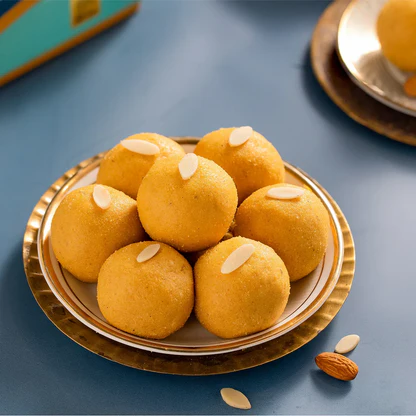
3. Besan Ladoo
Why You’ll Love It:
Aromatic, melt-in-the-mouth ladoos made from roasted gram flour, besan ladoos are perfect for gifting and festive platters.
Key Ingredients:
Besan (gram flour), ghee, sugar, cardamom, nuts.
How It’s Made:
- Besan is slowly roasted in ghee until golden and aromatic.
- Cooled slightly, mixed with powdered sugar and cardamom.
- Rolled into small round balls.
Pro Tip:
Patience is key — slow roasting brings out deep, nutty flavors.
Vegetarian Note:
Naturally vegetarian. For vegan versions, use coconut oil instead of ghee.
4. Rasgulla
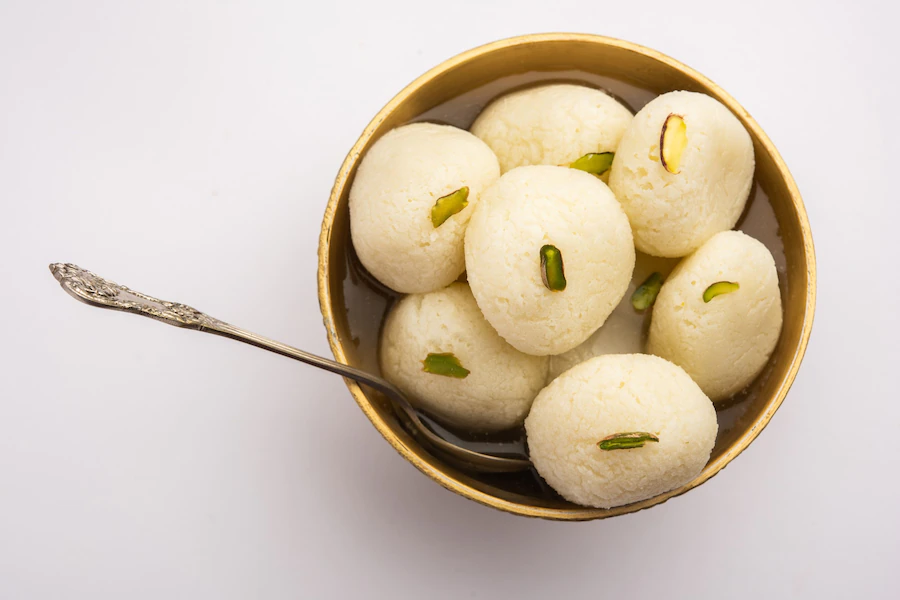
Why You’ll Love It:
Spongy white balls made from fresh paneer (chhena), rasgullas are light, juicy, and incredibly refreshing — especially when served chilled.
Key Ingredients:
Milk, lemon juice (to curdle), sugar, water, cardamom.
How It’s Made:
- Milk is curdled to make chhena, which is kneaded and shaped into balls.
- Boiled in sugar syrup until they puff up and become spongy.
Pro Tip:
Knead the chhena well until smooth — this ensures a soft, uniform texture.
Vegetarian Note:
100% vegetarian. Use fresh lemon juice or vinegar to curdle the milk.
5. Coconut Barfi

Why You’ll Love It:
A fragrant, chewy sweet with a tropical flavor, coconut barfi is both traditional and easy to make.
Key Ingredients:
Fresh or desiccated coconut, sugar, milk or condensed milk, cardamom, ghee.
How It’s Made:
- Coconut is cooked with milk and sugar until thickened.
- The mixture is spread on a greased tray and cut into squares once cooled.
Pro Tip:
Use freshly grated coconut for maximum flavor and soft texture.
Vegetarian Note:
Fully vegetarian. Condensed milk may be replaced with coconut milk for a vegan option.
6. Moong Dal Halwa
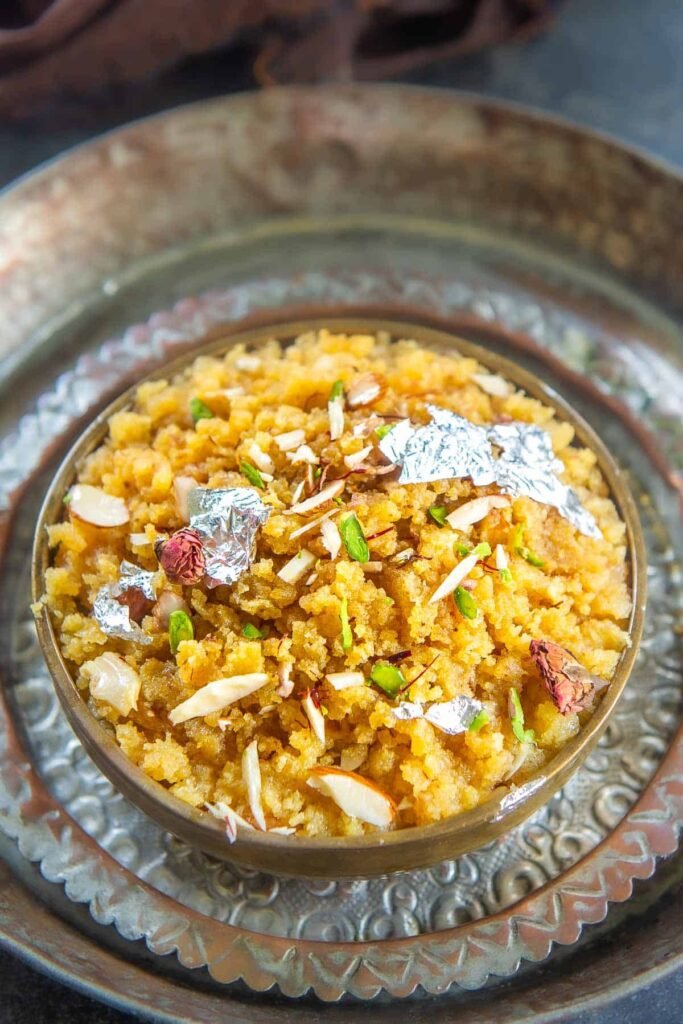
Why You’ll Love It:
Rich, nutty, and indulgent, moong dal halwa is often served warm during weddings and winter celebrations.
Key Ingredients:
Moong dal (yellow lentils), ghee, sugar, cardamom, saffron, nuts.
How It’s Made:
- Moong dal is soaked, ground, and then roasted in ghee until golden brown.
- Mixed with sugar syrup and cooked until thick, then topped with nuts.
Pro Tip:
Stir constantly while cooking to prevent burning and ensure a silky finish.
Vegetarian Note:
Completely vegetarian. For vegan adaptation, use plant-based ghee or oil.
7. Jalebi
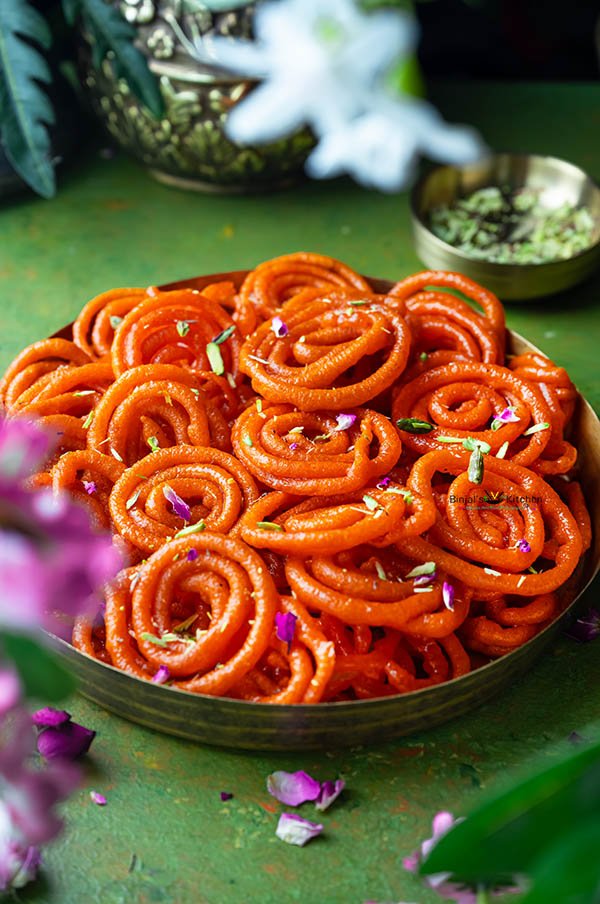
Why You’ll Love It:
Crisp on the outside, syrupy on the inside — jalebi is a classic spiral-shaped sweet that’s addictive and celebratory.
Key Ingredients:
All-purpose flour, yogurt, baking soda, sugar, saffron, ghee/oil.
How It’s Made:
- A fermented batter is piped into hot oil in spiral shapes.
- Fried till crisp and dipped in warm saffron-infused sugar syrup.
Pro Tip:
Fry on medium heat for even crispness. Don’t oversoak in syrup — quick dip is enough.
Vegetarian Note:
No eggs used. Yogurt can be plant-based for a vegan version.
8. Milk Peda
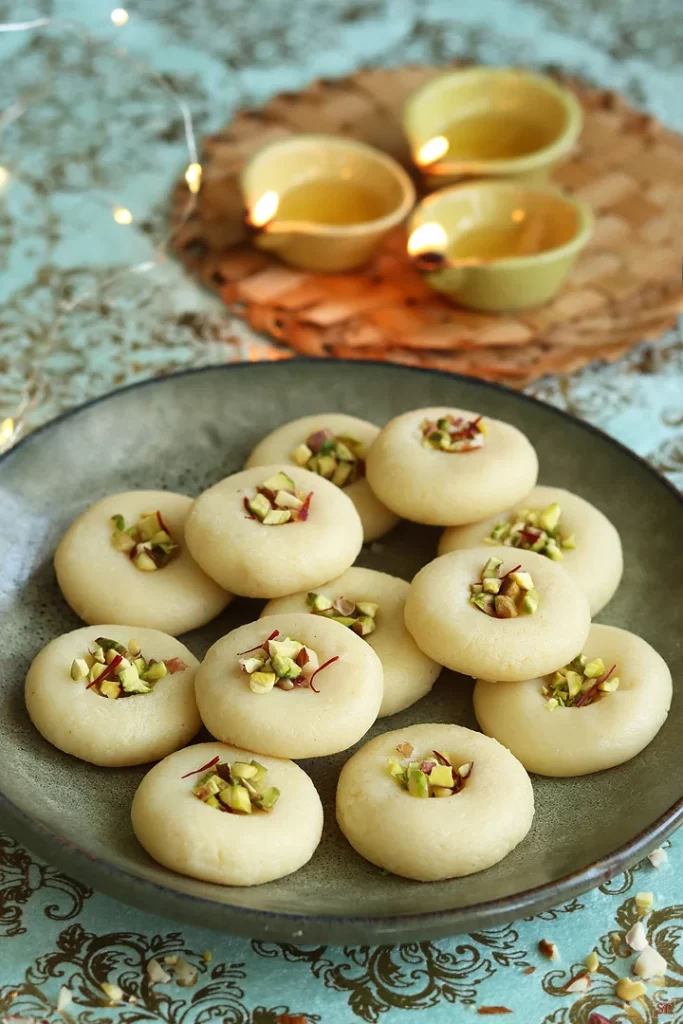
Why You’ll Love It:
A classic North Indian sweet, milk peda is soft, chewy, and deeply flavored with cardamom and saffron.
Key Ingredients:
Khoya or condensed milk, sugar, cardamom, saffron, ghee.
How It’s Made:
- Khoya or milk solids are slowly cooked with sugar and flavorings.
- The thickened mixture is shaped into small round discs and garnished with nuts.
Pro Tip:
Use homemade khoya or mawa for the most authentic taste.
Vegetarian Note:
Naturally vegetarian. Vegan versions can be attempted using almond or soy milk solids.
What Makes Indian Sweets So Special?
Indian sweets aren’t just sugar-based desserts. They are full of symbolic meaning, cultural relevance, and craftsmanship. Here’s why they stand out:
1. Ingredients from the Earth
Most Indian sweets use ingredients like milk, ghee, lentils, grains, jaggery, and nuts — all of which are vegetarian and accessible.
2. Deep Cultural Roots
Each region has its specialties — Rasgulla from Bengal, Mysore Pak from Karnataka, Peda from Mathura, and more. Recipes are often handed down for generations.
3. No Baking Required
Many Indian sweets are made on the stovetop — perfect for kitchens without ovens.
4. Flexible for Festivals and Fasts
Sweets can be customized for religious fasts (using sendha namak, no grains, etc.), and adjusted to dietary needs (low sugar, vegan, etc.).
Tips for Making Indian Sweets at Home
1. Use Good Quality Ingredients:
Fresh milk, real ghee, and whole spices make a big difference in taste.
2. Practice Patience:
Most sweets involve slow cooking and constant stirring. Rushing can ruin texture.
3. Adjust Sweetness:
Indian sweets tend to be rich. You can reduce sugar slightly based on preference.
4. Don’t Skip Flavorings:
Cardamom, saffron, rose water, and kewra essence elevate the aroma and authenticity.
5. Storage:
Most sweets can be stored in airtight containers for 2–5 days at room temperature. Milk-based ones should be refrigerated.
Final Thoughts
Making Indian sweets at home is more than a culinary activity — it’s a cultural celebration. Each dessert carries with it stories of childhood, festivals, and moments of sharing. With a few basic ingredients and a little time, you can create these iconic delicacies right in your own kitchen.
From the syrupy swirls of jalebi to the soft richness of milk peda, these 8 vegetarian Indian sweets are delicious, authentic, and deeply satisfying. Whether you’re preparing for Diwali, a family gathering, or just treating yourself, these homemade delights are sure to impress.
So, gather your ingredients, turn on some festive music, and start cooking — because there’s nothing quite like the aroma of ghee, sugar, and cardamom filling your home.