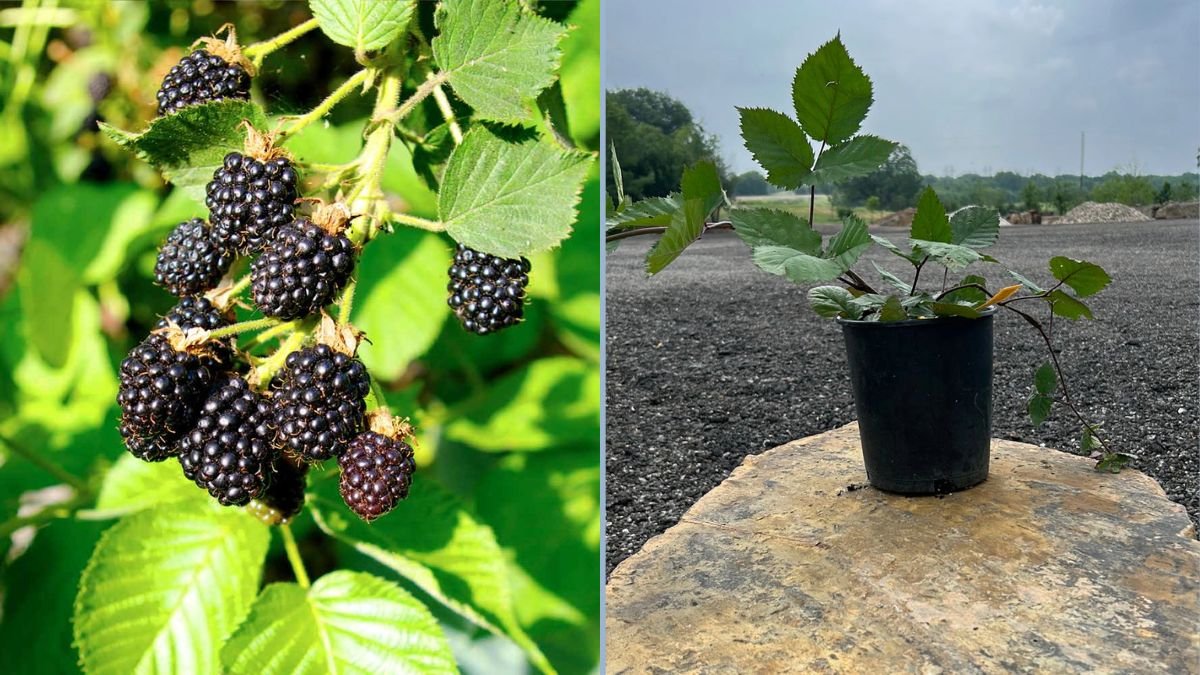
There’s nothing quite like the taste of a freshly picked blackberry. Sweet, juicy, and bursting with flavor, blackberries are a staple of summer gardens. Among the many varieties available, Triple Crown Thornless Blackberries have become a favorite for gardeners looking for big, flavorful berries with minimal hassle. As a thornless variety, they’re easier to handle than traditional blackberries, and their vigorous growth and high yields make them ideal for both home gardens and small-scale fruit production.
In this post, we’ll explore everything you need to know about Triple Crown blackberries, including their growth habits, planting tips, care requirements, pruning, and harvesting. By the end, you’ll be ready to grow your own thornless blackberries with confidence and enjoy a bountiful harvest.
Why Choose Triple Crown Thornless Blackberries?
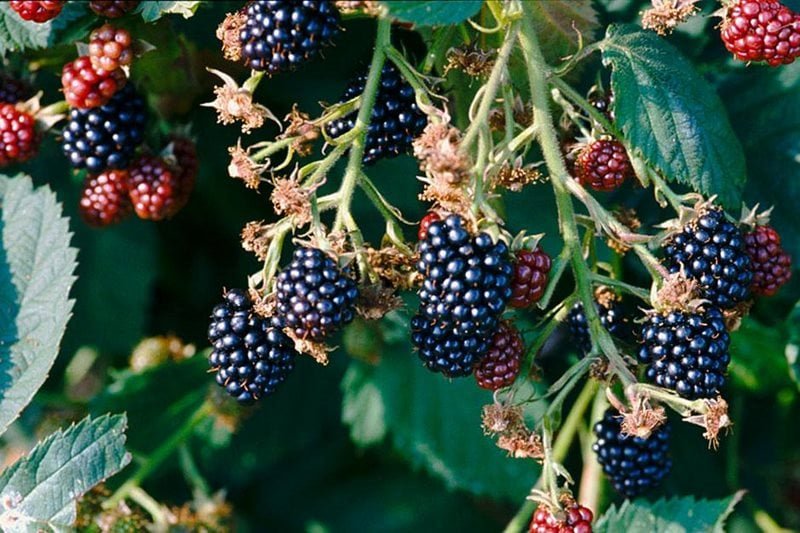
Triple Crown Thornless Blackberries are a hybrid variety developed for home gardeners and commercial growers. Their popularity is based on several key features:
1. Thornless Canes
Traditional blackberry bushes are notoriously prickly, which can make harvesting a challenge. Triple Crown eliminates this problem with thornless canes, making planting, pruning, and picking far more comfortable.
2. High Yields
Triple Crown blackberries are prolific fruiters, producing abundant clusters of large, firm berries throughout the summer. A well-established plant can produce 10–15 pounds of fruit per season, sometimes even more under ideal conditions.
3. Excellent Flavor
These berries are sweet, aromatic, and juicy, perfect for fresh eating, baking, preserves, or freezing. Their flavor is often described as rich and balanced, with a natural sweetness that rivals store-bought blackberries.
4. Adaptability
Triple Crown grows well in a variety of climates, particularly in USDA zones 5–9. They are tolerant of heat, cold, and most soil types, provided drainage is good.
5. Disease Resistance
This variety is resistant to many common blackberry diseases, including anthracnose and powdery mildew, which makes it a low-maintenance option for home gardeners.
Planting Triple Crown Blackberries
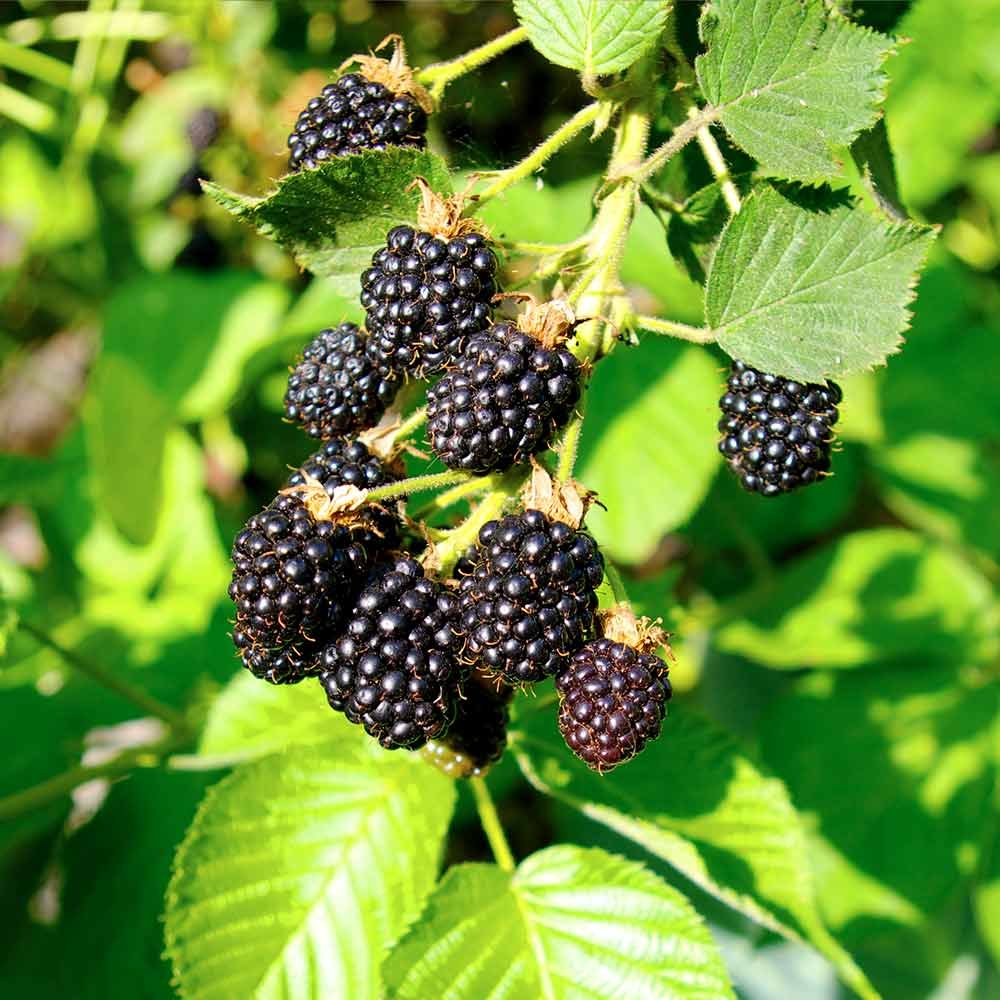
The success of your blackberry patch starts with proper planting. Here’s what you need to know:
1. Choosing a Site
- Full Sun: Blackberries need at least 6–8 hours of sunlight per day. Sun exposure improves berry size, sweetness, and cane health.
- Well-Draining Soil: Avoid low areas prone to waterlogging. Loamy, fertile soil is ideal.
- Good Airflow: Proper spacing prevents disease and helps fruit ripen evenly.
2. Soil Preparation
- Test the soil pH and aim for 5.5–6.5, which is slightly acidic.
- Work in compost or well-aged manure to enrich the soil.
- If drainage is poor, consider raised beds to prevent root rot.
3. Spacing and Layout
- Space plants 3–4 feet apart in rows 8–10 feet apart.
- For larger patches, stagger rows to allow easy access for harvesting.
- Trellises or wire supports are highly recommended to support upright canes and improve fruit exposure.
4. Planting Process
- Dig holes twice as wide as the root ball.
- Spread roots evenly and set the crown slightly above soil level.
- Backfill with enriched soil and water thoroughly.
- Apply a 2–3 inch layer of mulch around the base to retain moisture and suppress weeds.
Caring for Your Blackberry Plants
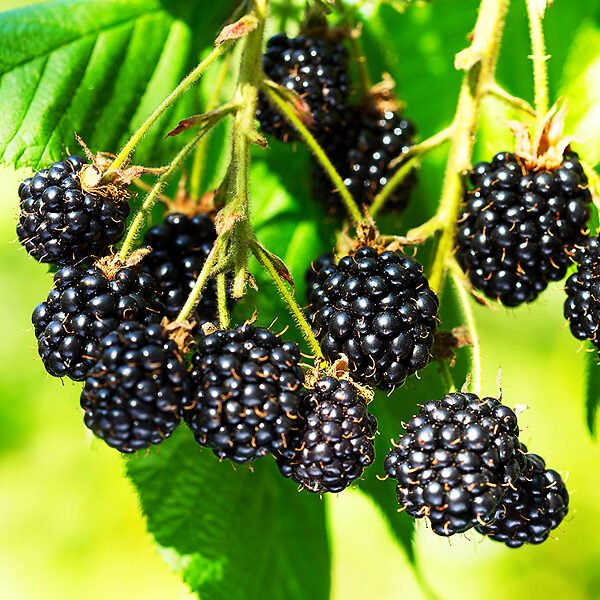
Proper care ensures your Triple Crown blackberries thrive and produce abundant fruit.
1. Watering
- Newly planted bushes need consistent moisture to establish roots.
- Mature plants require 1–2 inches of water per week, particularly during dry spells and fruiting.
- Drip irrigation or soaker hoses are ideal for keeping leaves dry and reducing fungal risk.
2. Fertilizing
- Fertilize in early spring with a balanced fertilizer (10-10-10) or organic compost.
- Apply a second feeding after harvest to promote cane growth for the following season.
- Avoid excessive nitrogen, which encourages leaf growth over fruit production.
3. Mulching
- Mulch with straw, wood chips, or shredded bark to retain soil moisture, prevent weeds, and maintain even soil temperatures.
- Refresh mulch each year to maintain benefits.
4. Pruning
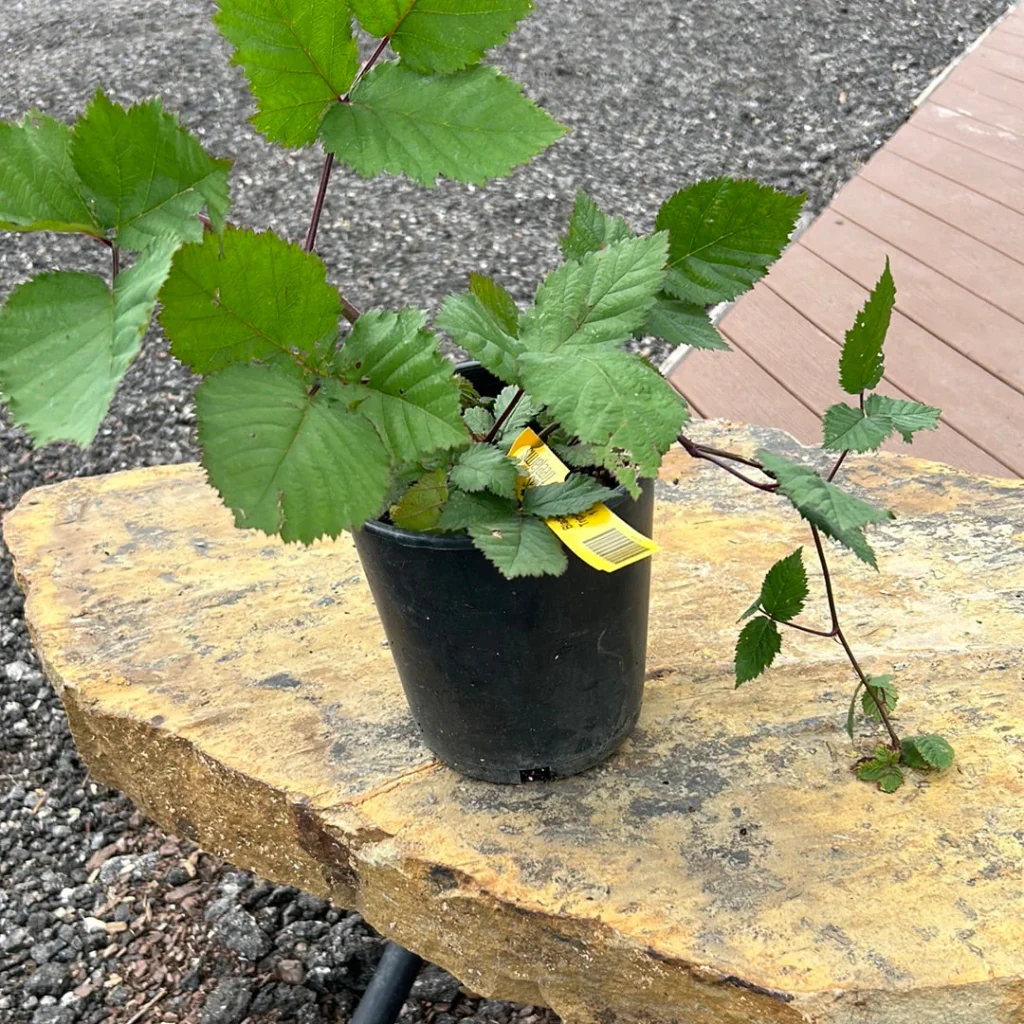
Triple Crown blackberries produce fruit on second-year canes (floricanes). Pruning is essential for healthy growth and high yields.
Pruning Steps:
- Remove spent fruiting canes after harvest.
- Thin crowded canes to allow light penetration and air circulation.
- Train new primocanes along a trellis for next season’s fruit.
- Shorten the tips of primocanes in late summer to encourage lateral branching, which produces more fruit.
Trellising and Support
Even thornless blackberries benefit from trellis support. Trellising keeps canes upright, improves airflow, and makes harvesting easier.
Trellis Options:
- T-bar trellis: Two posts per row with horizontal arms
- Wire trellis: Two to three horizontal wires spaced vertically
- Fence support: A simple fence can serve as a trellis for small patches
Training canes along a trellis also prevents fruit from touching the ground, reducing pest damage and disease.
Pests and Disease Management
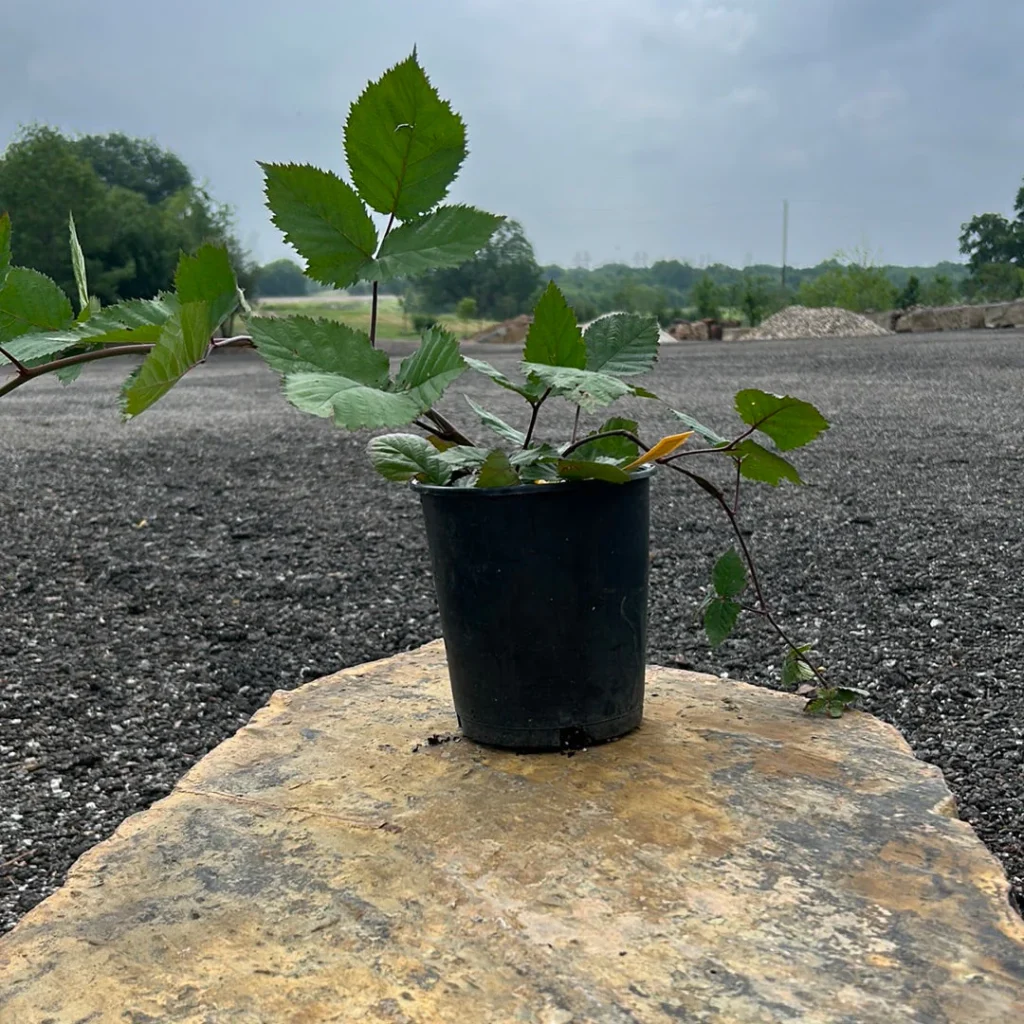
Triple Crown blackberries are relatively hardy, but they can encounter occasional problems:
- Birds: Netting protects ripening fruit.
- Aphids: Can be controlled with insecticidal soap or natural predators.
- Spider mites: Maintain soil moisture and encourage beneficial insects.
- Fungal diseases: Good pruning, proper spacing, and drip irrigation reduce risk.
Healthy soil, sun exposure, and careful pruning make most pests and diseases manageable.
Harvesting Triple Crown Blackberries
Triple Crown produces fruit from midsummer through early fall. Berries are ready when they are fully black, glossy, and easily detach from the cane.
Harvest Tips:
- Pick berries every 2–3 days during peak season.
- Use shallow containers to prevent crushing the delicate fruit.
- Handle carefully, as the berries are juicy and can bruise easily.
- Refrigerate or freeze promptly if not consumed fresh.
With proper care, a mature plant can produce 10–15 pounds of fruit per season, providing enough for fresh eating, desserts, and preserves.
Uses for Triple Crown Blackberries
Triple Crown blackberries are versatile and delicious, perfect for a wide range of culinary uses:
- Fresh eating: Snack straight from the bush
- Baking: Pies, muffins, tarts, and crisps
- Preserves: Jams, jellies, and sauces
- Freezing: Retain flavor for smoothies and desserts
- Garnishes: Bright, shiny berries add visual appeal to dishes
The firm texture of Triple Crown berries makes them ideal for both fresh and processed use.
Benefits of Growing Triple Crown Thornless Blackberries
- Low Maintenance: Thornless canes make care and harvest easier.
- High Productivity: Produces abundant, large berries.
- Long Harvest Season: Fruit ripens over several weeks.
- Disease Resistance: Hardy and resilient in various climates.
- Delicious Flavor: Sweet, aromatic berries suitable for multiple uses.
- Ornamental Value: Beautiful canes and glossy berries enhance garden aesthetics.
For home gardeners, these benefits combine to make Triple Crown an ideal variety, whether planted in small garden beds, raised beds, or larger patches.
Conclusion
Triple Crown Thornless Blackberries are a gardener’s dream: sweet, juicy, and abundant berries without the hassle of thorns. Their vigor, disease resistance, and adaptability make them perfect for home gardens, small orchards, or even container planting. By planting in the right location, preparing the soil properly, supporting canes with a trellis, and following best practices for watering, fertilizing, and pruning, you can enjoy bountiful harvests year after year.
For anyone looking to add a productive, low-maintenance, and delicious fruiting shrub to their garden, Triple Crown Thornless Blackberries are a top choice. With patience, care, and proper timing, your garden can yield bowls of these glossy black jewels, offering fresh enjoyment throughout the summer and fall.