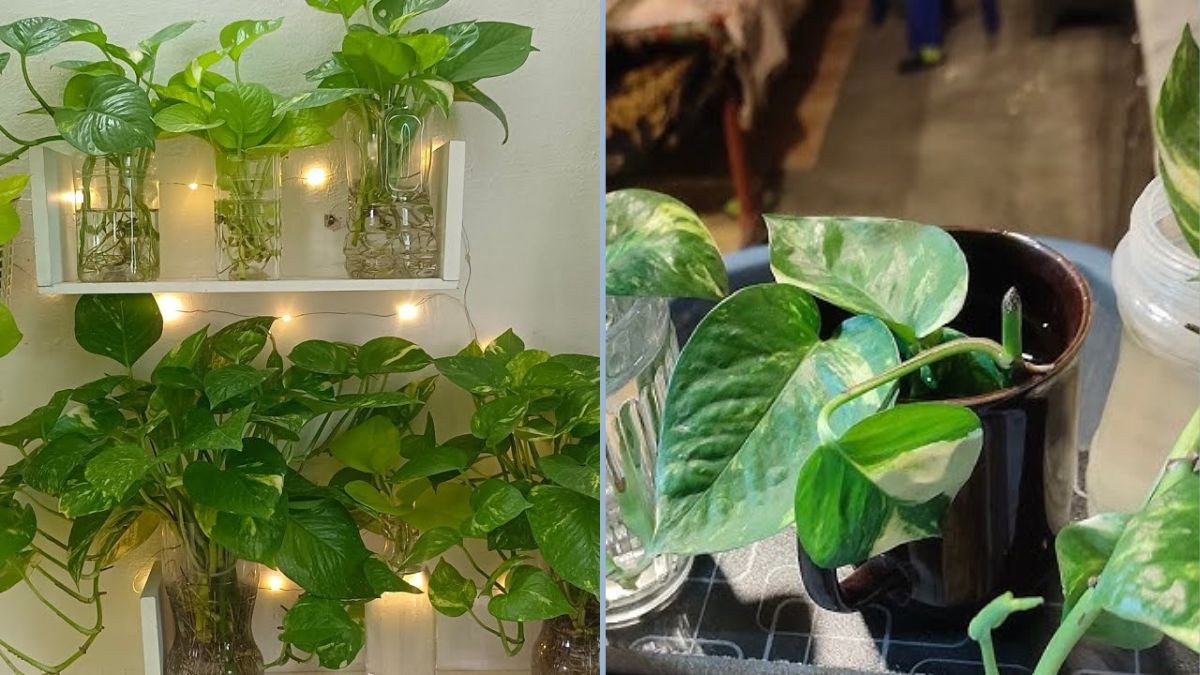
Money plants (Pothos or Epipremnum aureum) are among the most popular indoor plants, celebrated for their lush green foliage, easy maintenance, and reputed ability to bring positive energy and prosperity into homes. While they are typically grown in soil, growing money plants in water has become a trendy and practical option for indoor gardening.
Water-grown money plants are not only visually appealing but also low-maintenance and ideal for apartments, offices, or small spaces. In this guide, we’ll reveal the secrets to growing healthy, bushy money plants in water, including step-by-step care tips, propagation techniques, and common troubleshooting strategies.
Why Grow Money Plants in Water?
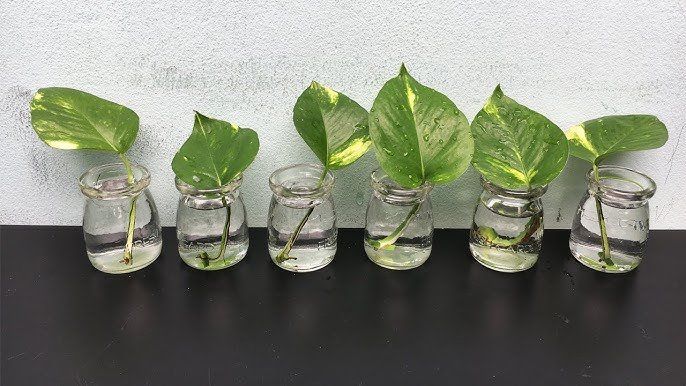
Growing money plants in water offers several advantages:
- Low Maintenance: No need to worry about soil quality, weeding, or repotting.
- Aesthetic Appeal: Glass jars, vases, and bottles show off the roots beautifully.
- Space-Saving: Perfect for desktops, shelves, and windowsills.
- Propagation Made Easy: Growing from cuttings in water encourages faster root development.
- Air Purification: Money plants in water still provide the air-purifying benefits that soil-grown plants offer.
Step 1: Choosing the Right Cutting
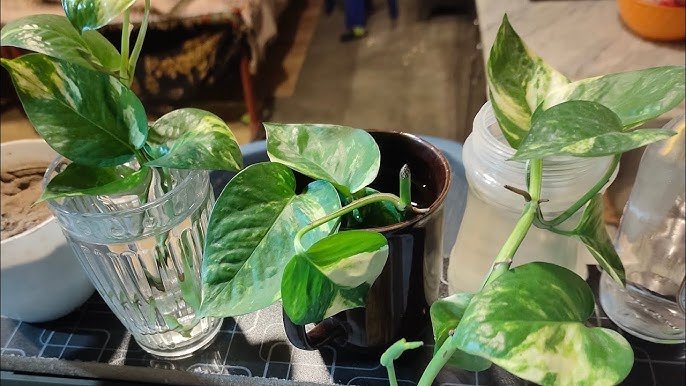
The first step to a healthy money plant is selecting strong, disease-free cuttings:
- Choose a stem with 3–4 leaves and at least one node (the small bump where roots develop).
- Avoid stems with yellow or damaged leaves.
- For bushier growth, take multiple cuttings rather than a single stem.
Pro Tip: Nodes are critical; roots will grow from the nodes, not the leaf tips.
Step 2: Selecting a Container
The container you choose affects both aesthetics and plant health:
- Glass Jars or Vases: Transparent containers allow you to monitor root growth and water clarity.
- Size: The container should be large enough to hold the cutting comfortably and allow room for roots to expand.
- Stability: Ensure the container is sturdy to prevent tipping over as the plant grows.
Step 3: Preparing the Water
Water quality plays a crucial role in the health of your money plant:
- Use Clean Water: Tap water is acceptable if left to sit for 24 hours to remove chlorine. Rainwater or filtered water is ideal.
- Depth: Fill the container so that nodes are submerged, but leaves remain above water.
- Temperature: Avoid very cold or hot water; room temperature is perfect.
Pro Tip: Change the water every 7–10 days to prevent stagnation, algae growth, and odor.
Step 4: Planting the Cutting
- Trim the cutting slightly, removing any leaves near the node to prevent rot.
- Place the node into water, ensuring it is fully submerged.
- Position the cutting upright using small stones, pebbles, or a support stick if necessary.
Within 1–2 weeks, you should start to see roots emerging from the nodes.
Step 5: Ensuring Bushy Growth
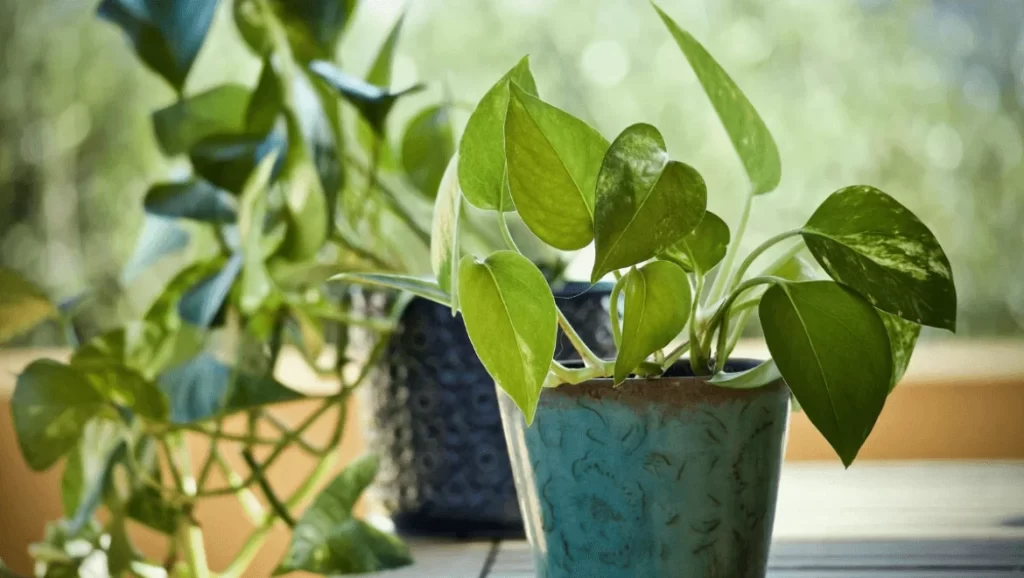
A common challenge for water-grown money plants is that they can become leggy if not pruned and managed correctly. Here’s how to encourage a bushy, full plant:
- Regular Pruning:
- Trim long stems regularly to encourage lateral growth.
- Pinch off the tips to promote new shoots and fuller foliage.
- Light Requirements:
- Place the plant in bright, indirect sunlight.
- Avoid direct sunlight, which can scorch leaves, or low-light areas, which can slow growth.
- Rotate the Container:
- Rotate every few days to ensure even growth on all sides.
- Add Nutrients:
- Use liquid fertilizer diluted in water every 4–6 weeks.
- Organic options like compost tea or a few drops of seaweed extract can boost growth.
Pro Tip: Avoid over-fertilizing, as excess nutrients can damage roots and promote algae growth.
Step 6: Supporting Healthy Roots
Roots are the lifeline of a water-grown money plant. Healthy roots result in a stronger, bushier plant:
- Monitor for Rot:
- Remove any brown, slimy roots immediately.
- Trim dead roots with sterilized scissors.
- Encourage Aeration:
- Use a container with a wide opening to allow air circulation.
- Consider using small air stones in larger containers to oxygenate the water.
- Cleaning the Container:
- Rinse the container when changing water to remove algae and prevent bacterial buildup.
Step 7: Lighting and Placement
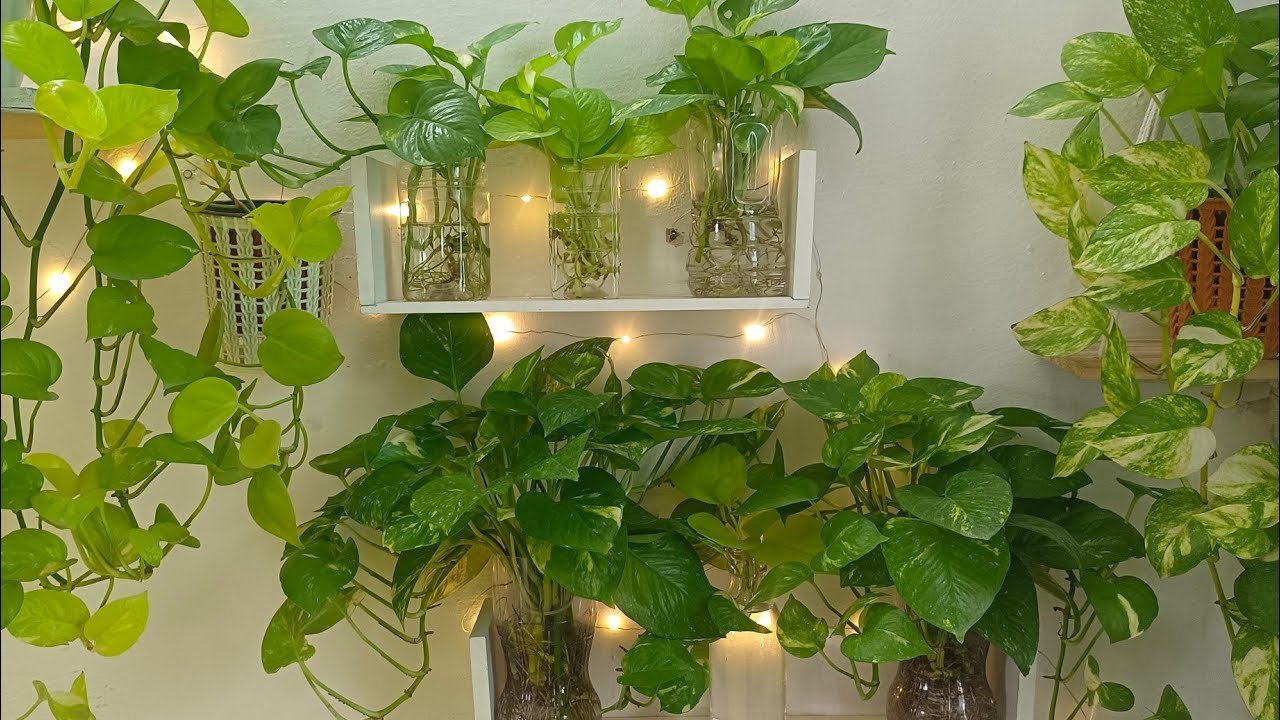
Proper lighting ensures vibrant green leaves and robust growth:
- Bright Indirect Light: Near windows or under fluorescent grow lights.
- Avoid Direct Sun: Can scorch the leaves and damage delicate roots.
- Low Light Options: Money plants tolerate low light but may grow slower and become leggy.
Tip: South- or east-facing windows are perfect for indoor water-grown plants.
Step 8: Propagation Tips for Multiplying Money Plants
Water-grown money plants are incredibly easy to propagate:
- Cut a Healthy Stem: Ensure it has at least one node.
- Place in Water: Wait 1–2 weeks for roots to form.
- Plant in Soil (Optional): Once roots are well-developed, the cutting can be transferred to soil for a long-term, bushy plant.
- Split Existing Plants: Remove older stems and place them in separate containers to create multiple plants.
Step 9: Common Issues and Troubleshooting
Even water-grown money plants can face challenges. Here’s how to handle common issues:
- Yellow Leaves:
- Cause: Overwatering, insufficient light, or nutrient deficiency.
- Solution: Adjust light, prune yellow leaves, and add diluted liquid fertilizer.
- Root Rot:
- Cause: Stagnant water or submerged leaves.
- Solution: Trim affected roots, change water, and ensure proper node placement.
- Leggy Growth:
- Cause: Insufficient light.
- Solution: Move to a brighter spot or supplement with grow lights, prune stems.
- Algae Growth:
- Cause: Excess sunlight on water surface.
- Solution: Reduce direct sunlight, change water regularly, and clean the container.
Step 10: Decorative Ideas for Water-Grown Money Plants
- Floating Jars: Place small glass jars on a water tray for a floating garden effect.
- Hanging Vases: Use macramé or decorative hangers to display cascading money plant vines.
- Terrariums: Combine money plants with decorative pebbles or marbles in transparent containers.
- Desk Plants: Small vases or test tubes can create an elegant office or study desk display.
These setups not only enhance your interior décor but also bring natural freshness and positivity indoors.
Step 11: Benefits of Water-Grown Money Plants
- Aesthetic Appeal: Roots and stems visible through glass create a natural, modern look.
- Easy Maintenance: Requires minimal care compared to soil-grown plants.
- Indoor-Friendly: Perfect for apartments and offices without garden space.
- Fast Propagation: Water propagation encourages faster root development.
- Positive Energy: Believed in Feng Shui to attract prosperity and good luck.
Conclusion
Growing money plants in water is a fun, easy, and rewarding indoor gardening project. By following these secrets—selecting healthy cuttings, using clean water, providing bright indirect light, regular pruning, and adding nutrients—you can enjoy lush, bushy, and healthy money plants year-round.
Whether you’re a beginner or an experienced plant enthusiast, water-grown money plants not only enhance your home décor but also bring a sense of calm, freshness, and positivity. With a little patience and care, you can create a vibrant indoor garden that thrives, multiplies, and looks spectacular.
Start today, and watch your money plants flourish in water, transforming your space into a green oasis full of life, beauty, and prosperity!