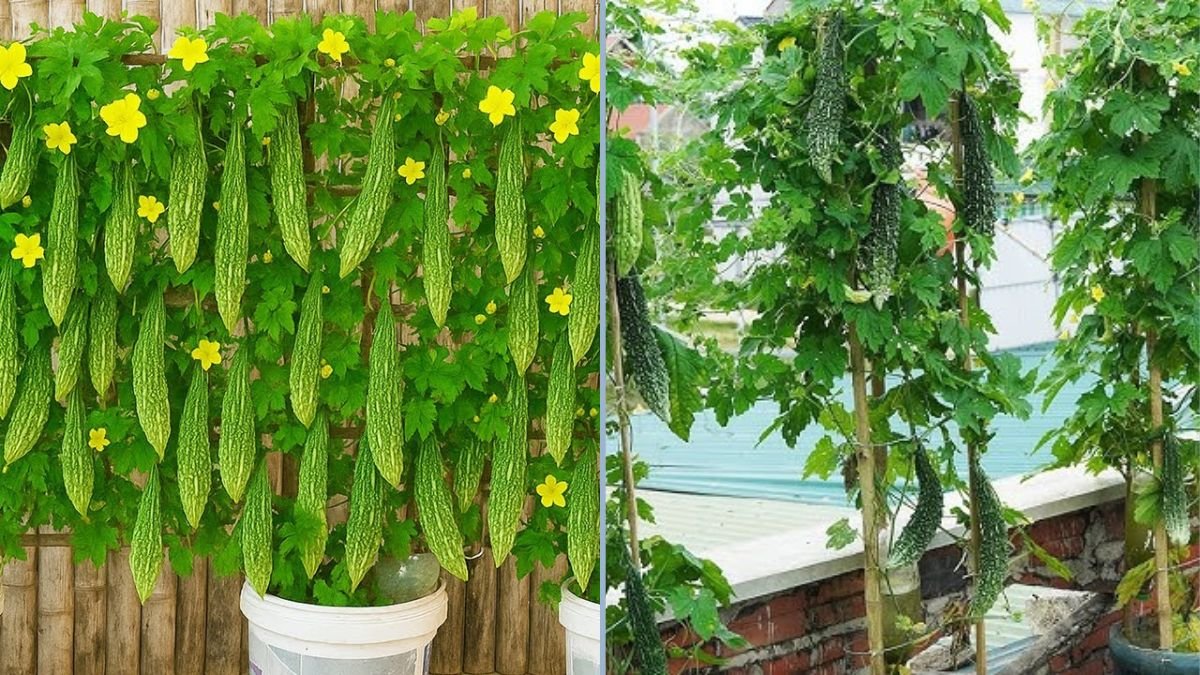
Bitter melon, also known as bitter gourd or Momordica charantia, is a tropical vine vegetable celebrated for its nutritional and medicinal benefits. Rich in vitamins, minerals, and antioxidants, it’s a staple in Asian cuisine and traditional medicine. However, many gardeners struggle to grow it effectively, often getting low yields or slow growth. What if you could grow bitter melon quickly, efficiently, and with a high yield, all in simple plastic tubs? This method is perfect for home gardeners, urban growers, and anyone seeking a compact, low-maintenance way to cultivate this powerhouse vegetable. In this guide, we’ll walk you step by step through the process of growing bitter melon in plastic tubs to achieve an abundant harvest.
Why Grow Bitter Melon in Plastic Tubs?
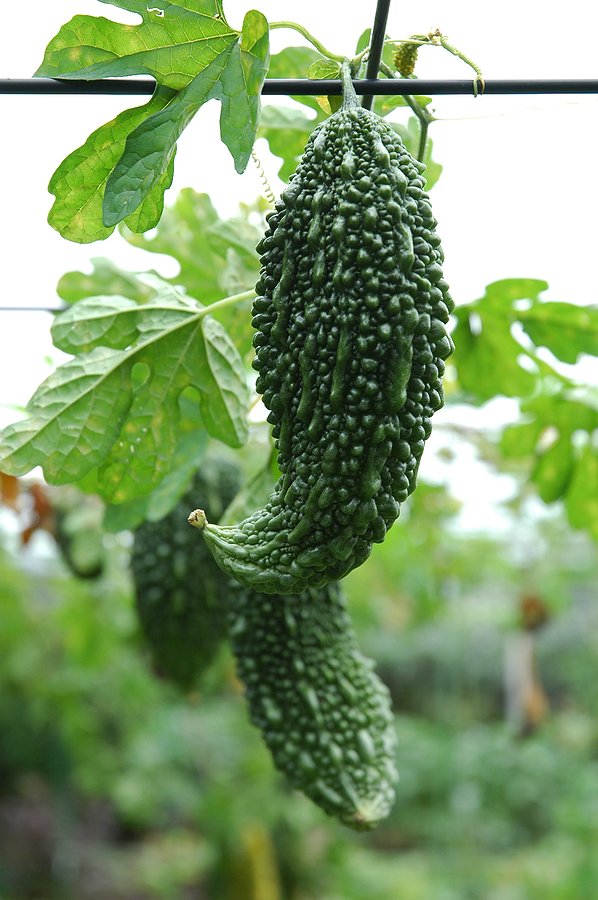
Using plastic tubs to grow bitter melon offers several advantages over traditional garden plots:
- Space-saving: Perfect for balconies, patios, and small yards.
- Controlled growth conditions: Plastic tubs allow you to regulate soil quality, moisture, and drainage easily.
- Rapid growth: With proper soil, water, and nutrients, bitter melon grows faster in a container system.
- High yield: By training vines and managing nutrition, you can maximize fruit production per plant.
- Pest and disease management: Easier to monitor and control pests in a contained environment.
Plastic tub cultivation provides both convenience and productivity, making it an excellent choice for home gardeners.
Step 1: Choosing the Right Bitter Melon Variety
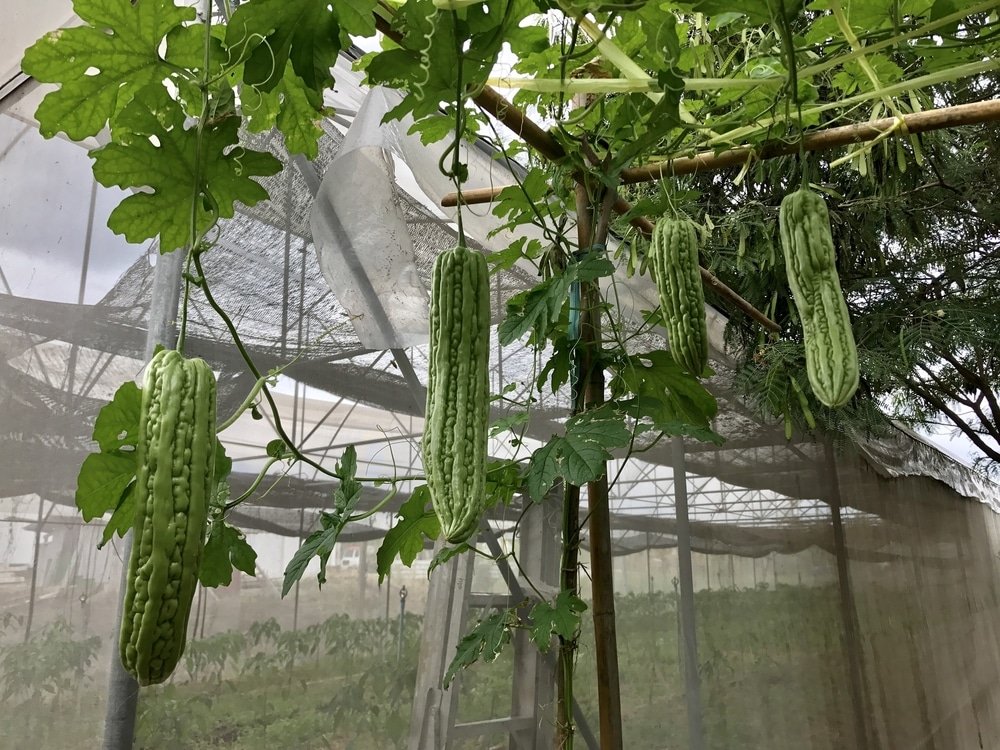
The first step to a super high yield is selecting a suitable variety. Bitter melon comes in different sizes, shapes, and growth habits.
Recommended varieties for plastic tubs:
- Small-fruited varieties: ‘Chinese Long,’ ‘Indian Round’ – these are fast-growing and prolific.
- Medium-fruited varieties: ‘Pusa Do Mausami’ – ideal for both cooking and medicinal uses.
- Hybrid high-yield varieties: These are bred for maximum fruit production and disease resistance.
Select seeds from a reputable supplier to ensure viability and quality. Avoid store-bought bitter melons for planting as they may not germinate properly.
Step 2: Preparing Plastic Tubs
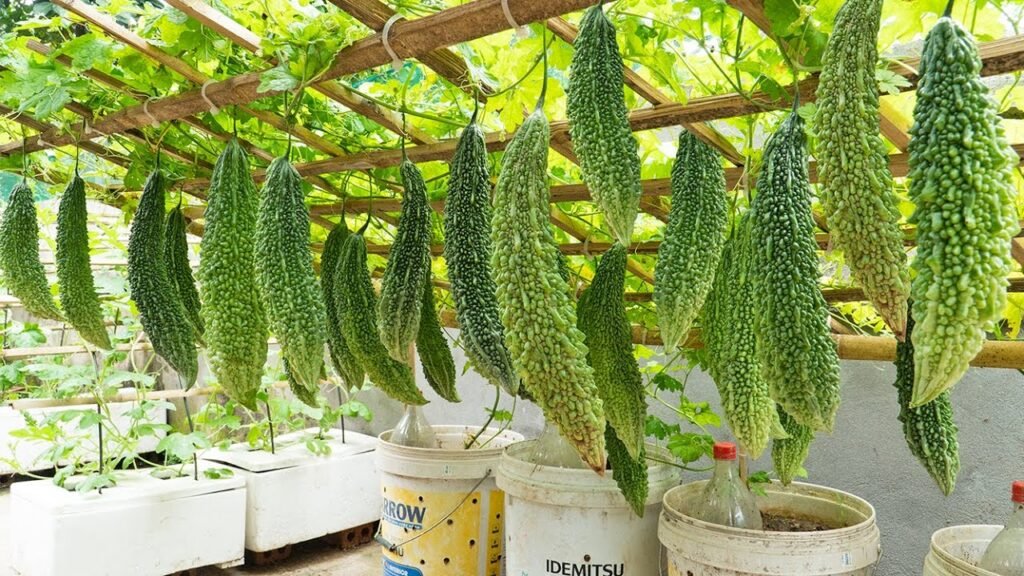
Plastic tubs are lightweight, durable, and reusable, making them ideal for container gardening.
Steps to prepare the tubs:
- Size: Choose tubs that are at least 12–16 inches deep and wide enough to accommodate one or two plants. Larger tubs allow better root development.
- Drainage: Drill multiple holes at the bottom to prevent waterlogging.
- Optional liner: You can line the bottom with small gravel or pebbles for extra drainage.
- Support structure: Place a trellis, net, or bamboo poles inside or beside the tub to support climbing vines.
Plastic tubs provide a controlled environment that supports vigorous growth and high yields.
Step 3: Preparing the Soil Mix
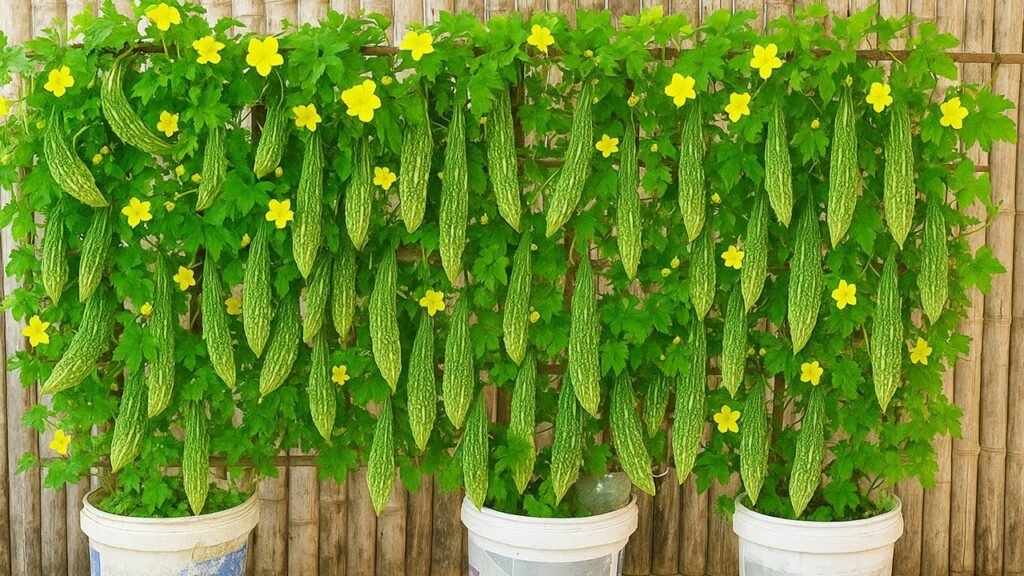
Bitter melon thrives in loose, fertile, and well-draining soil. A high-quality soil mix ensures faster growth and larger fruits.
Recommended soil mix for plastic tubs:
- 40% garden soil or loamy soil
- 30% compost or well-rotted manure
- 20% perlite or coconut coir for aeration and drainage
- 10% organic fertilizer for initial nutrient boost
Tips:
- Maintain soil pH around 6.0–6.8 for optimal nutrient absorption.
- Lightly moisten the soil before planting.
Healthy, nutrient-rich soil is the foundation for fast-growing, high-yield bitter melon plants.
Step 4: Germinating Bitter Melon Seeds
Proper germination accelerates growth and ensures strong seedlings.
Seed germination steps:
- Soak seeds in lukewarm water for 12–24 hours to soften the hard seed coat.
- Plant seeds 1 inch deep in small seed trays or directly in the tubs.
- Maintain a warm temperature of 75–85°F (24–29°C).
- Keep the soil consistently moist but not waterlogged.
Seeds usually germinate in 7–10 days. Once seedlings have 2–3 true leaves, they are ready for transplanting or training in the tub.
Step 5: Transplanting and Spacing
If you started seeds in trays, transplant them carefully to avoid root damage.
Transplanting tips:
- Space one or two plants per tub, depending on tub size.
- Plant seedlings slightly deeper than their original container to promote stronger root development.
- Water thoroughly after transplanting to help plants settle.
Proper spacing ensures that each plant has enough resources for rapid growth and maximum fruit production.
Step 6: Supporting the Vines
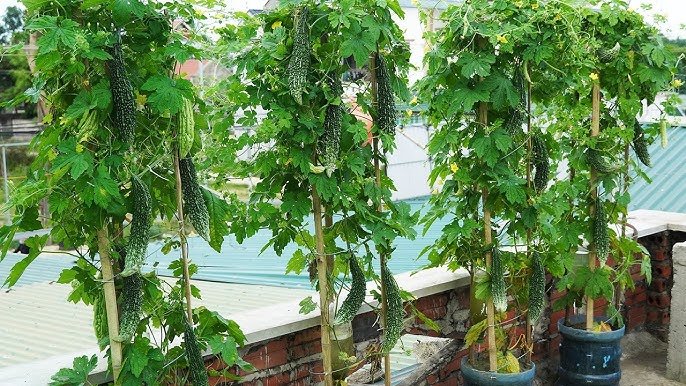
Bitter melon is a climbing vine, and supporting it is essential for fast growth and high yield.
Support tips:
- Install a trellis or net inside or beside the tub.
- Train vines to climb gradually by gently tying them with soft cloth strips.
- Vertical growth improves sunlight exposure, air circulation, and keeps fruits off the soil, reducing disease risk.
Well-supported vines grow faster, produce more flowers, and yield larger, healthier fruits.
Step 7: Watering Properly
Consistent moisture is crucial for bitter melon growth. Irregular watering can lead to bitter, small, or misshapen fruits.
Watering guidelines:
- Water deeply once or twice daily during hot weather.
- Ensure the soil remains moist but not soggy.
- Mulch around the base to retain moisture and reduce evaporation.
Proper watering promotes faster growth and prevents stress that can reduce fruit yield.
Step 8: Fertilizing for Super High Yield
Bitter melon is a heavy feeder, especially during flowering and fruiting.
Fertilization tips:
- During vegetative growth, use a nitrogen-rich fertilizer to support leaves and vines.
- Switch to a fertilizer higher in phosphorus and potassium during flowering and fruiting to boost fruit size and sweetness.
- Liquid fertilizers or compost tea applied every 2–3 weeks can enhance nutrient absorption.
Balanced nutrition ensures rapid vine growth, abundant flowers, and high-yielding fruits.
Step 9: Pruning and Flower Management
Pruning is a secret step for achieving super high yields.
Pruning techniques:
- Remove weak or damaged leaves to improve airflow.
- Limit the number of fruits per vine if necessary to direct energy to fewer, larger, and sweeter fruits.
- Pinch lateral shoots to encourage main vine growth and higher fruit production.
Pruning helps plants focus their energy on producing maximum fruit per vine.
Step 10: Pollination
Bitter melon requires pollination to set fruits. Successful pollination ensures a high yield and well-formed fruits.
Pollination tips:
- Encourage pollinators like bees by planting flowering plants nearby.
- For indoor or greenhouse setups, hand-pollinate using a soft brush to transfer pollen from male to female flowers.
- Remove unpollinated flowers to save plant energy.
Proper pollination is essential for abundant and uniform fruiting.
Step 11: Pest and Disease Management
Even in tubs, bitter melon can face pests and diseases, but close monitoring makes control easier.
Common pests and solutions:
- Aphids and whiteflies: Spray neem oil or insecticidal soap.
- Powdery mildew: Ensure proper spacing and air circulation; apply fungicide if necessary.
- Fruit flies: Harvest fruits promptly to prevent damage.
Preventive care in a contained environment reduces the risk of yield loss.
Step 12: Harvesting for Maximum Yield
Bitter melon grows rapidly, and timely harvesting encourages continuous production.
Harvesting tips:
- Pick fruits when they reach the desired size, usually 4–6 inches for small varieties and 6–10 inches for larger ones.
- Regular harvesting every 2–3 days prevents overripe fruits and stimulates new flower formation.
- Use a sharp knife or scissors to cut fruits carefully, avoiding damage to the vine.
Frequent harvesting is a key secret for achieving super high yield from each plant.
Step 13: Why This Method Works So Well
The plastic tub method works because it combines:
- Controlled soil and nutrition: Ensures strong roots and rapid vine growth.
- Vertical support: Maximizes sunlight, airflow, and space utilization.
- Proper watering and mulching: Reduces stress and promotes rapid fruit development.
- Pruning and pollination: Directs plant energy to producing more and larger fruits.
By managing these factors, home gardeners can achieve unprecedented yields in a small space.
Final Thoughts
Growing bitter melon in plastic tubs is an easy, efficient, and highly productive method for home gardeners. With proper soil, vertical support, consistent care, and strategic pruning, you can achieve a fast-growing vine and an exceptionally high yield of nutritious, flavorful fruits.
This method is ideal for urban gardeners, balcony growers, and anyone looking for a low-maintenance yet productive home garden solution. By following these steps, you can enjoy fresh, homegrown bitter melon regularly while saving space, reducing costs, and maximizing your harvest potential.
Whether you are cooking traditional dishes, making juices, or exploring the medicinal benefits of bitter melon, this plastic tub cultivation method ensures you always have an abundant supply at your fingertips.