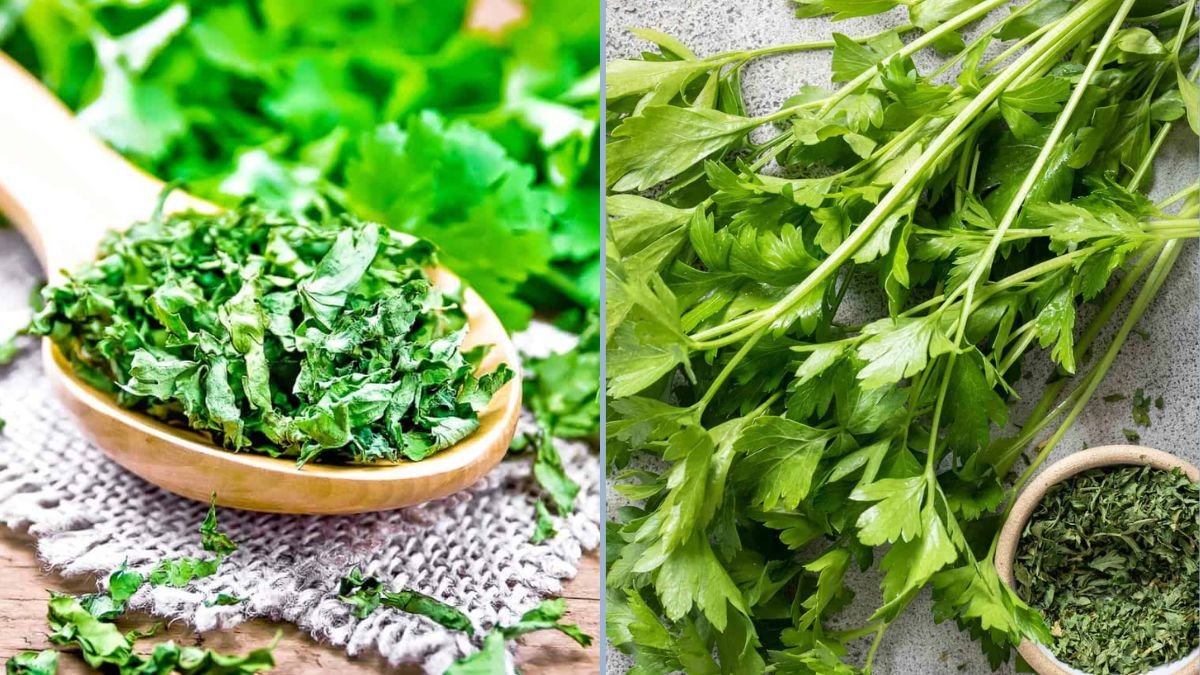
Herbs have long been celebrated for their culinary versatility, nutritional benefits, and aromatic qualities. Among the most widely used herbs in kitchens worldwide, parsley (Petroselinum crispum) and cilantro (Coriandrum sativum) stand out for their unique flavors and vibrant freshness. Both herbs offer more than just taste—they contribute essential nutrients, antioxidants, and plant-based compounds that enhance the nutritional profile of meals.
Using fresh parsley and cilantro in cooking not only elevates the flavor of dishes but also promotes sustainable, plant-based eating. This article provides a comprehensive guide to cultivating, harvesting, and cooking with these herbs, with detailed strategies for maximizing flavor and nutritional benefits in everyday meals.
1. Understanding Parsley and Cilantro
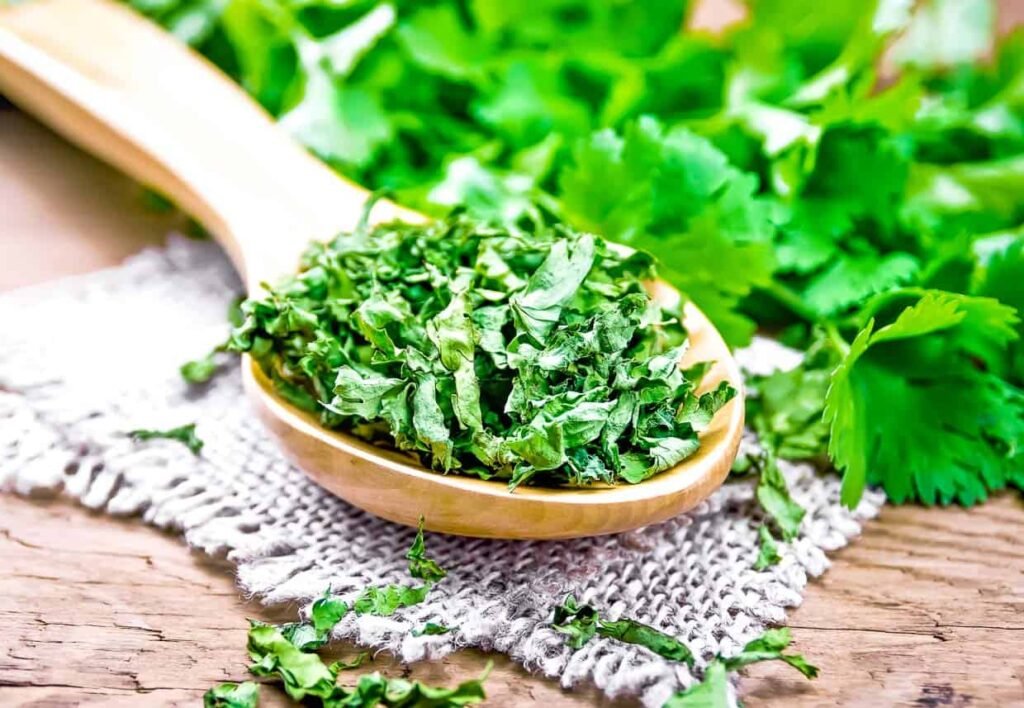
Parsley and cilantro, though often used interchangeably in cooking, have distinct characteristics and culinary applications.
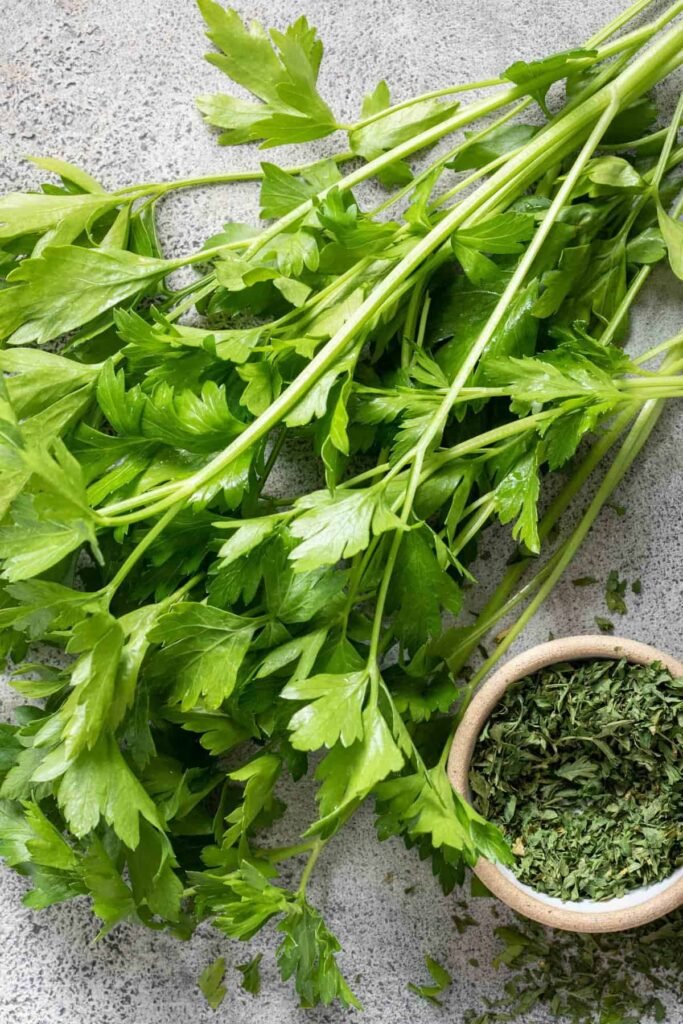
Parsley
- Mild, slightly peppery flavor with a fresh aroma
- Available in two main varieties: curly leaf (ornamental and garnish) and flat-leaf (more robust flavor, ideal for cooking)
- Rich in vitamins A, C, and K, as well as antioxidants and minerals such as iron and potassium
Cilantro
- Distinctive, bright, citrus-like flavor; leaves and stems are used in cooking
- Seeds (coriander) are also used as a spice, but the fresh leaves are prized for their vibrant taste
- Contains antioxidants, vitamin C, and phytonutrients that support wellness
Understanding their flavors and nutritional benefits allows cooks to use them effectively in a variety of dishes.
2. Growing Parsley and Cilantro at Home
Growing parsley and cilantro at home ensures a fresh, pesticide-free supply. Both herbs are well-suited for container gardens, windowsills, or small balcony spaces.
Parsley Cultivation
- Light: 4–6 hours of sunlight or bright indirect light
- Temperature: 18–24°C (65–75°F)
- Soil: Well-draining, nutrient-rich, plant-based potting mix
- Watering: Keep soil evenly moist, avoid waterlogging
Cilantro Cultivation
- Light: 4–5 hours of sunlight or partial shade
- Temperature: 15–20°C (59–68°F); prefers cooler conditions to prevent bolting
- Soil: Well-draining, compost-enriched soil
- Watering: Regular, consistent moisture without saturation
Care Tips
- Harvest outer leaves first to encourage new growth
- Fertilize monthly with plant-based compost or liquid fertilizer
- Monitor for pests such as aphids and treat with neem oil or natural sprays if needed
Home cultivation ensures continuous access to fresh, flavorful leaves for cooking.
3. Harvesting Fresh Herbs
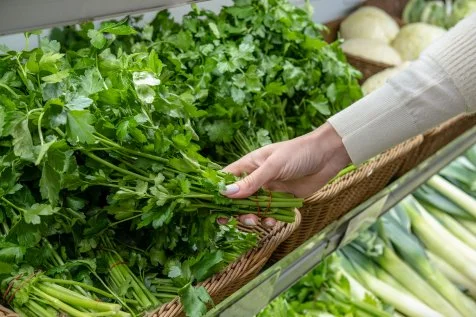
Timing and method of harvesting affect flavor, aroma, and longevity.
Parsley
- Harvest when leaves are vibrant and healthy
- Pinch outer leaves first, leaving inner leaves to continue growing
- Harvest in the morning when essential oils are most concentrated
Cilantro
- Harvest leaves before flowering to maintain freshness and flavor
- Cut stems near the base to encourage bushier growth
- Frequent harvesting delays bolting, especially in warmer climates
Proper harvesting practices maximize the culinary quality of herbs.
4. Preparing Parsley and Cilantro for Cooking
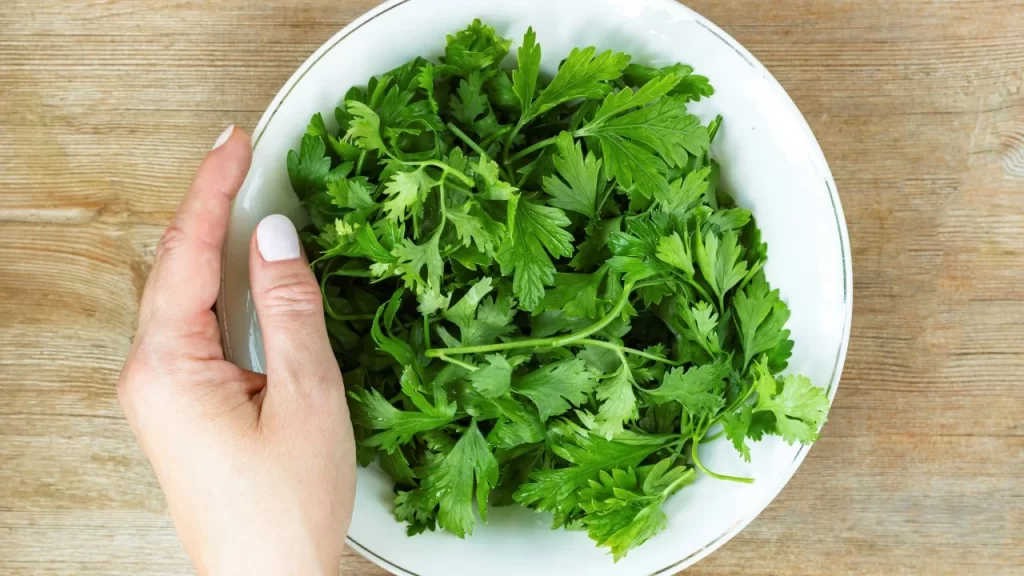
Fresh preparation enhances flavor, texture, and presentation.
Cleaning
- Rinse leaves gently under cool water to remove dust and debris
- Pat dry with a clean cloth or paper towel to prevent excess moisture
Chopping and Storage
- Use sharp knives to avoid bruising leaves
- Chop just before use to preserve aroma and taste
- Store unwashed leaves in airtight containers in the refrigerator for short-term use (3–5 days)
For longer storage, freeze chopped herbs in ice cube trays with a little water or plant-based oil, preserving flavor for future meals.
5. Culinary Applications of Parsley
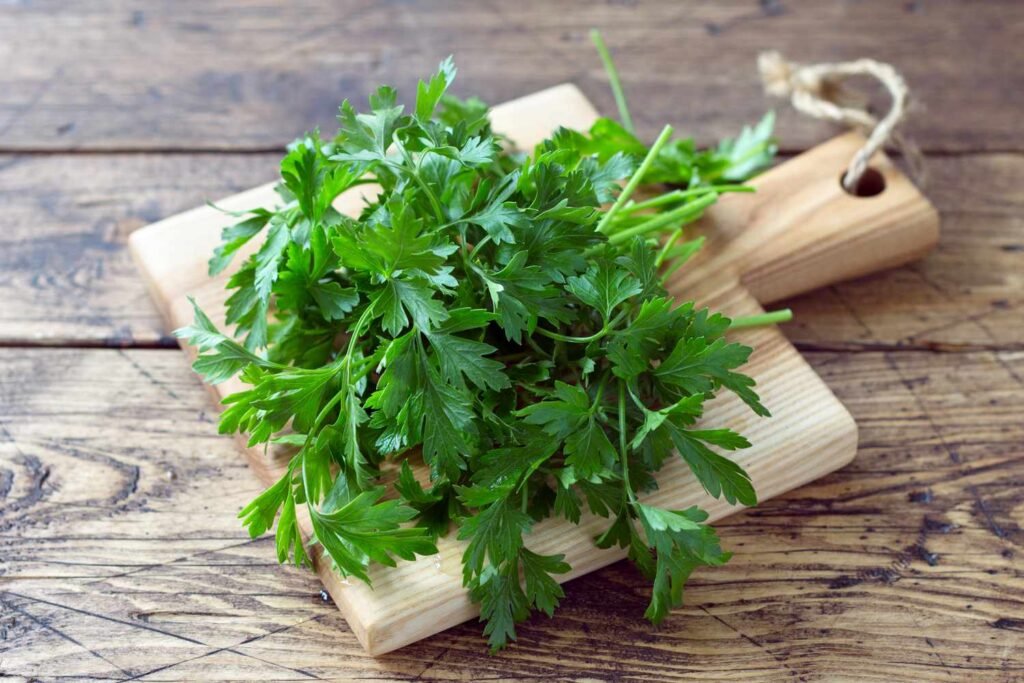
Parsley is highly versatile in cooking, offering both flavor and color to a wide range of dishes.
Uses
- Salads: Tabouli, green salads, grain bowls
- Sauces and Pestos: Herb sauces, chimichurri, and green pestos
- Soups and Stews: Adds fresh aroma when added near the end of cooking
- Garnishing: Sprinkled over roasted vegetables, pasta, and grains for a bright, fresh touch
Parsley pairs well with garlic, lemon, olive oil, tomatoes, and beans, making it a versatile herb for plant-based cooking.
6. Culinary Applications of Cilantro
Cilantro adds a distinctive, refreshing flavor that elevates many dishes.
Uses
- Salsas and Dips: Fresh pico de gallo, guacamole, and chutneys
- Curries and Stir-Fries: Adds freshness to spicy dishes
- Soups and Stews: Enhances flavor when added just before serving
- Grain Dishes: Sprinkled over rice, quinoa, or lentil dishes for color and taste
Cilantro pairs well with lime, chili, garlic, coconut milk, and other herbs such as mint or parsley.
7. Combining Parsley and Cilantro in Dishes
Using parsley and cilantro together can create complex, layered flavors.
Flavor Pairing Tips
- Combine in fresh salads or tabouli for a vibrant taste
- Mix into herb-based sauces or dips for balanced aroma
- Use in soups and curries to complement other plant-based ingredients
Layering herbs enhances plant-based cooking, offering both flavor and nutritional value.
8. Preserving Flavor Through Drying and Freezing
Fresh herbs are best, but preservation methods can extend availability.
Drying
- Tie small bundles and air dry in a cool, dark, well-ventilated space
- Once dry, store in airtight jars away from sunlight
- Use sparingly in cooking, as dried herbs are more concentrated in flavor
Freezing
- Chop fresh leaves and freeze in ice cube trays with water or plant-based oil
- Store frozen cubes in resealable bags for later use in soups, stews, and sauces
Proper preservation retains flavor and nutrients, ensuring year-round access.
9. Nutritional Benefits of Parsley and Cilantro
Both herbs provide essential nutrients and plant-based compounds that contribute to health.
Parsley
- High in vitamins A, C, and K
- Contains antioxidants like flavonoids and carotenoids
- Supports bone health, immunity, and overall wellness
Cilantro
- Rich in vitamin C, potassium, and phytonutrients
- Contains antioxidants that support detoxification and cellular health
- Promotes digestion and adds natural flavor without extra salt or fat
Incorporating these herbs into meals enhances both taste and nutrition.
10. Tips for Maximizing Flavor in Cooking
- Add fresh herbs at the end of cooking to preserve aroma and taste
- Avoid overcooking delicate leaves, especially cilantro, which loses flavor when exposed to heat for long periods
- Combine chopped parsley and cilantro with lemon juice, olive oil, or vinegar for vibrant herb dressings and marinades
- Use whole leaves or stems in stocks and teas for subtle infusion, then remove before serving
Following these tips ensures herbs retain their signature flavors and health benefits.
11. Sustainable and Plant-Based Practices
Growing and cooking with parsley and cilantro can align with sustainable, plant-based lifestyles.
- Home Cultivation: Reduces dependence on store-bought herbs and packaging
- Composting: Use stems and trimmings in compost to enrich soil
- Organic Fertilizers: Apply plant-based compost or seaweed extract to promote healthy growth
- Waste Reduction: Freeze or dry excess leaves to minimize food waste
Sustainable practices preserve environmental resources while enhancing culinary experiences.
12. Common Mistakes to Avoid
- Harvesting entire plants at once, limiting regrowth
- Overwatering or planting in poorly drained soil
- Exposing herbs to excessive heat or sunlight indoors
- Storing wet leaves, which can cause spoilage
- Overcooking delicate leaves, reducing flavor
Avoiding these mistakes ensures fresh, vibrant, and productive herb plants.
13. Benefits of Cooking With Fresh Parsley and Cilantro
- Flavor Enhancement: Fresh herbs elevate simple plant-based dishes
- Nutritional Boost: Provides essential vitamins, antioxidants, and phytonutrients
- Sustainability: Supports home gardening and reduces reliance on commercial packaging
- Cost-Effectiveness: Continuous harvest from small pots reduces grocery expenses
- Aesthetic Appeal: Adds color and vibrancy to dishes and kitchen spaces
- Mindful Cooking: Encourages slow, thoughtful preparation of meals
Using fresh herbs bridges culinary enjoyment, nutrition, and sustainable gardening.
14. Conclusion
Parsley and cilantro are indispensable herbs for plant-based, sustainable cooking. Their vibrant flavors, nutritional benefits, and culinary versatility make them ideal for fresh, homegrown use. By cultivating these herbs at home, harvesting correctly, and incorporating them thoughtfully into dishes, cooks can enjoy peak flavor year-round.
Proper preparation, preservation, and cooking techniques ensure herbs retain their aromatic qualities and nutritional benefits. Whether used individually or combined, parsley and cilantro enhance salads, soups, sauces, and a wide variety of plant-based dishes.
Growing these herbs sustainably, using plant-based fertilizers, and practicing mindful harvesting creates a continuous supply of fresh, aromatic leaves. By mastering the use of parsley and cilantro in cooking, gardeners and home cooks alike can transform everyday meals into flavorful, nutritious, and visually appealing dishes.