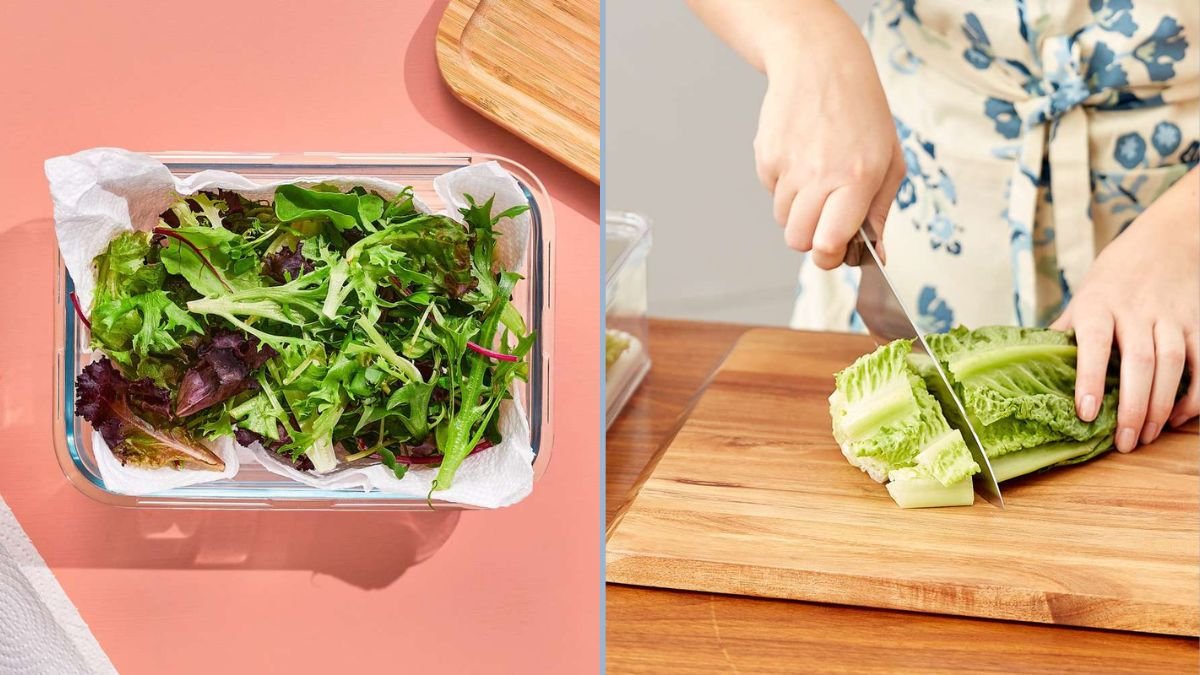
Salad greens, including lettuce, spinach, arugula, kale, and mixed leaf varieties, are staples in vegetarian diets due to their high nutrient content, crisp texture, and versatility. Packed with fiber, vitamins A, C, K, antioxidants, and minerals, leafy greens contribute to digestive health, immunity, and overall wellness. However, their delicate structure and high water content make them highly perishable. In small kitchens with limited refrigerator and counter space, maintaining freshness can be a challenge.
This article explores effective, space-saving, and vegetarian-friendly techniques to store salad greens, including selection, handling, storage methods, container choices, and natural preservation tips.
1. Selecting Salad Greens for Storage
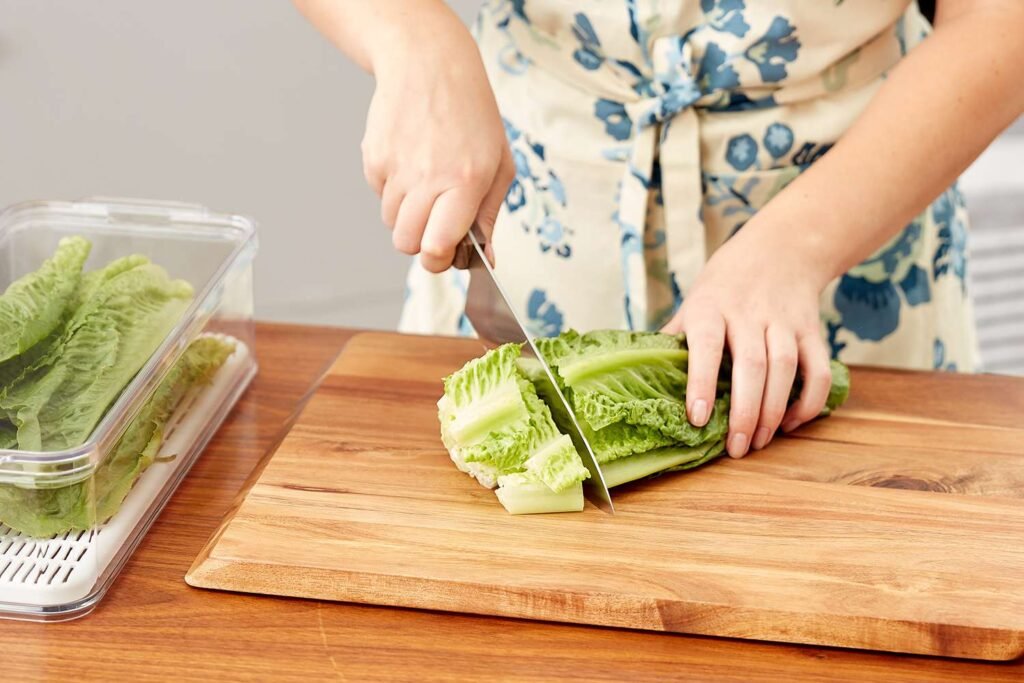
The first step to prolonging salad green freshness is careful selection.
Tips for Selecting Salad Greens
- Leaf Color: Choose vibrant, rich-colored leaves with no yellowing or browning.
- Texture: Leaves should be crisp, firm, and free of wilting.
- Condition: Avoid greens with tears, bruises, sliminess, or signs of insect damage.
- Variety: Consider sturdier greens like kale or romaine for longer storage; delicate greens like arugula or baby spinach should be consumed sooner.
Selecting high-quality greens sets the foundation for extended freshness.
2. Handling Salad Greens Properly
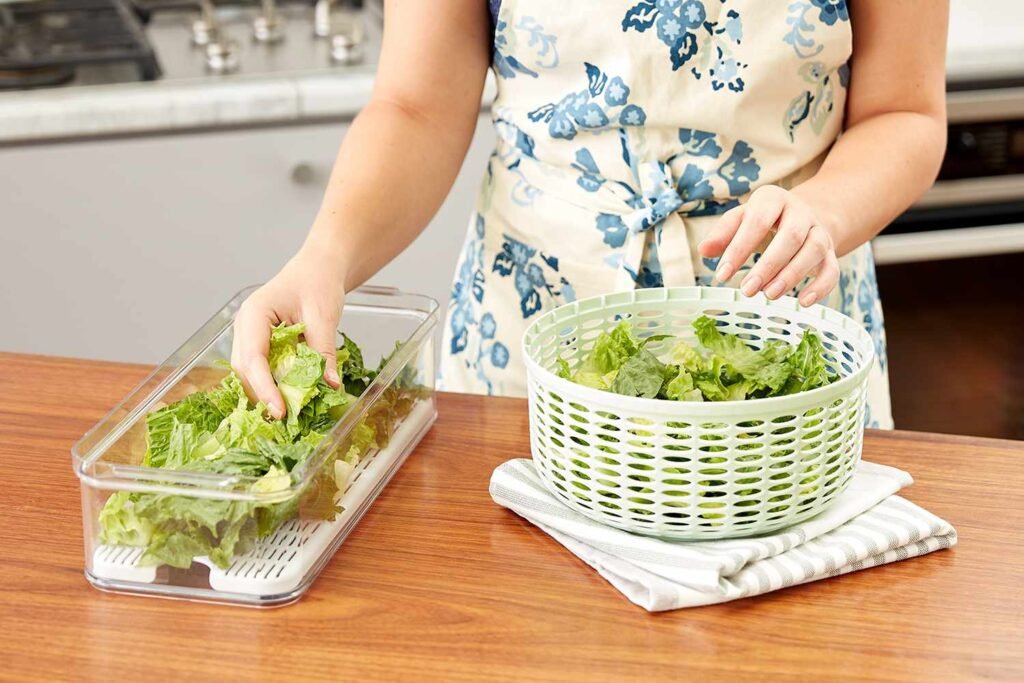
Even the freshest greens can spoil quickly if mishandled.
Handling Tips
- Avoid Washing Before Storage (Optional): Excess moisture promotes decay. Wash leaves only before consumption if desired.
- Gently Remove Damaged Leaves: Torn or wilted leaves can accelerate spoilage.
- Separate by Type: Keep delicate and hearty greens separate; they have different storage requirements.
- Limit Crushing: Avoid packing leaves too tightly in containers or bags to prevent bruising.
Proper handling ensures salad greens enter storage in optimal condition.
3. Ideal Storage Conditions
Temperature, humidity, and airflow are critical for maintaining freshness in small kitchens.
Temperature
- Store leafy greens in the refrigerator at 0°C to 4°C (32°F to 39°F).
- Avoid placing greens near the freezer compartment or directly against cooling coils to prevent freezing or dehydration.
Humidity
- Maintain high relative humidity (~95%) to prevent wilting.
- Use the crisper drawer or humidity-controlled containers when available.
Airflow
- Proper ventilation prevents moisture accumulation and reduces the risk of mold growth.
- Use perforated containers or keep bags slightly open to allow circulation.
4. Space-Saving Storage Methods for Small Kitchens
Small kitchens require creative approaches to maximize storage without compromising freshness.
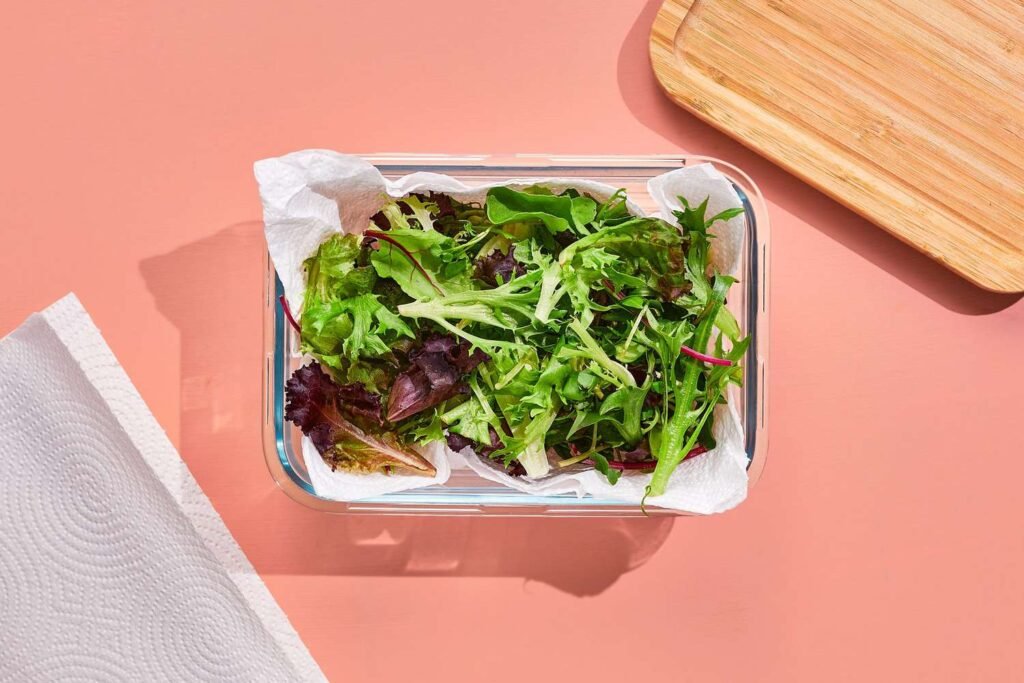
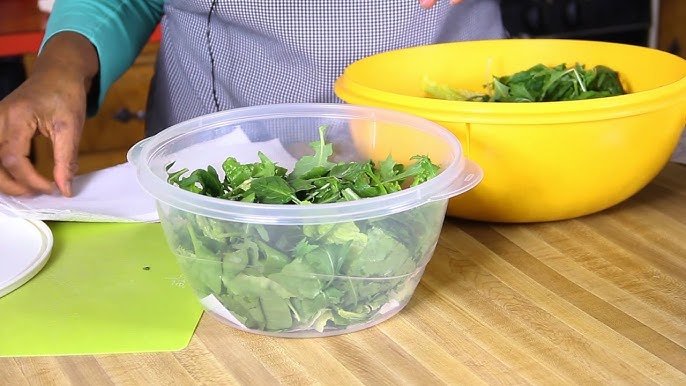
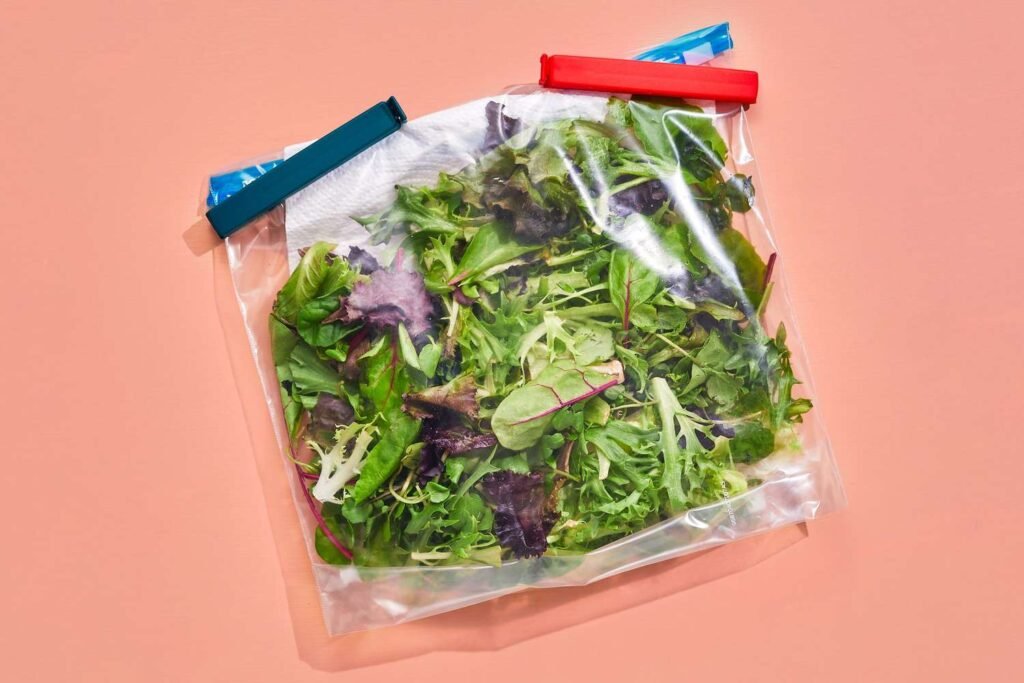
A. Layered Paper Towels
- Place a dry or slightly damp paper towel at the bottom of a container or bag.
- Layer greens on top, adding another paper towel layer if storing multiple types.
- The paper towels absorb excess moisture and prevent sogginess.
B. Stackable Containers
- Use stackable plastic or glass containers to save refrigerator space.
- Containers with adjustable vents maintain proper humidity while optimizing airflow.
C. Mesh or Perforated Bags
- Reusable mesh or perforated produce bags allow ventilation while containing greens.
- Ideal for small fridges or limited counter space.
D. Hanging Storage
- Consider hanging baskets or vertical racks in limited kitchen spaces for washed, dried greens.
- Hanging storage promotes air circulation and keeps greens visible for easy use.
5. Washing and Drying Techniques
Proper washing and drying prolong shelf life and preserve crispness.
Washing Tips
- Use cold water to remove dirt, grit, or insects.
- Wash in a large bowl or salad spinner to prevent damaging delicate leaves.
Drying Tips
- Use a salad spinner for gentle and efficient water removal.
- For small kitchens, pat leaves dry with clean paper towels.
- Excess moisture leads to mold and sliminess, shortening shelf life.
6. Natural Preservation Techniques
Natural techniques help extend the life of salad greens without chemical preservatives.
A. Vinegar Wash
- Soak greens in a solution of 1 part vinegar to 3 parts water for a few minutes, then rinse and dry.
- Vinegar reduces microbial growth while maintaining leaf integrity.
B. Cold Water Soak Before Consumption
- For greens nearing the end of storage, a quick soak in ice water revitalizes wilting leaves.
- Drains well to prevent additional moisture accumulation.
C. Citrus Juice
- Lightly spraying or tossing pre-cut greens with lemon or lime juice can slow oxidation.
- Useful for short-term storage or pre-prepped salad portions.
7. Avoiding Common Storage Mistakes
Even small errors can significantly reduce green longevity.
| Mistake | Effect | Solution |
|---|---|---|
| Storing wet leaves | Promotes mold and sliminess | Dry thoroughly before storage |
| Overcrowding containers | Crushes leaves, increases decay | Use multiple small containers or layers |
| Refrigerating near ethylene-producing produce | Accelerates wilting | Store separately from fruits like apples, bananas, tomatoes |
| Using airtight bags without ventilation | Traps moisture | Use perforated bags or slightly open containers |
| Mixing delicate and hearty greens | Hearty greens dominate airflow | Store separately to optimize freshness for each type |
8. Monitoring Salad Greens in Small Kitchens
Routine inspection maintains quality in confined spaces.
Tips
- Check greens every 1–2 days for yellowing, soft spots, or moisture accumulation.
- Remove damaged leaves immediately to prevent spoilage from spreading.
- Rotate older greens to the front for consumption first.
Regular monitoring reduces waste and ensures crisp leaves for meals.
9. Nutrient Preservation in Stored Salad Greens
Leafy greens are rich in vitamins A, C, K, fiber, and antioxidants, which degrade if stored improperly.
Tips for Preserving Nutrients
- Maintain cool, high-humidity storage conditions.
- Minimize exposure to air and light to prevent oxidation.
- Wash only before use to reduce water-induced nutrient loss.
- Avoid prolonged storage beyond recommended timeframes; use delicate greens within 3–5 days, sturdier greens within 7–10 days.
10. Culinary Uses of Fresh Salad Greens
Proper storage ensures greens remain versatile in vegetarian meals.
Ideas
- Salads: Fresh, crisp leaves for daily meals.
- Wraps and Sandwiches: Use sturdy leaves like romaine or kale for filling.
- Smoothies: Blend delicate greens like spinach or arugula for nutrient-rich beverages.
- Sautéed or Stir-Fried Greens: Extend usability beyond raw consumption.
- Garnishes: Add fresh leaves to soups, grain bowls, or tacos.
Maintaining freshness maximizes both flavor and nutritional value.
11. Sustainable and Eco-Friendly Practices
Efficient storage in small kitchens can support environmentally responsible habits.
Suggestions
- Use reusable containers, mesh bags, or glass jars instead of single-use plastics.
- Compost spoiled leaves rather than discarding them.
- Store only the amount of greens you can realistically consume to reduce waste.
- Optimize fridge organization to reduce energy use and improve visibility of stored items.
Conclusion
Storing salad greens in small kitchens requires attention to selection, handling, storage conditions, container choice, and natural preservation techniques. Firm, vibrant leaves stored in perforated containers, paper towel layers, or mesh bags at 0–4°C maintain crispness, flavor, and nutrient content for days or even a week. Implementing natural preservation techniques like vinegar washes, cold water revitalization, and citrus juice treatments further extends shelf life.
By following these strategies, salad greens can remain fresh, flavorful, and nutritionally dense, even in limited kitchen spaces. Proper storage not only enhances the taste and texture of meals but also reduces food waste and promotes sustainable kitchen practices, making fresh, healthy greens accessible every day.