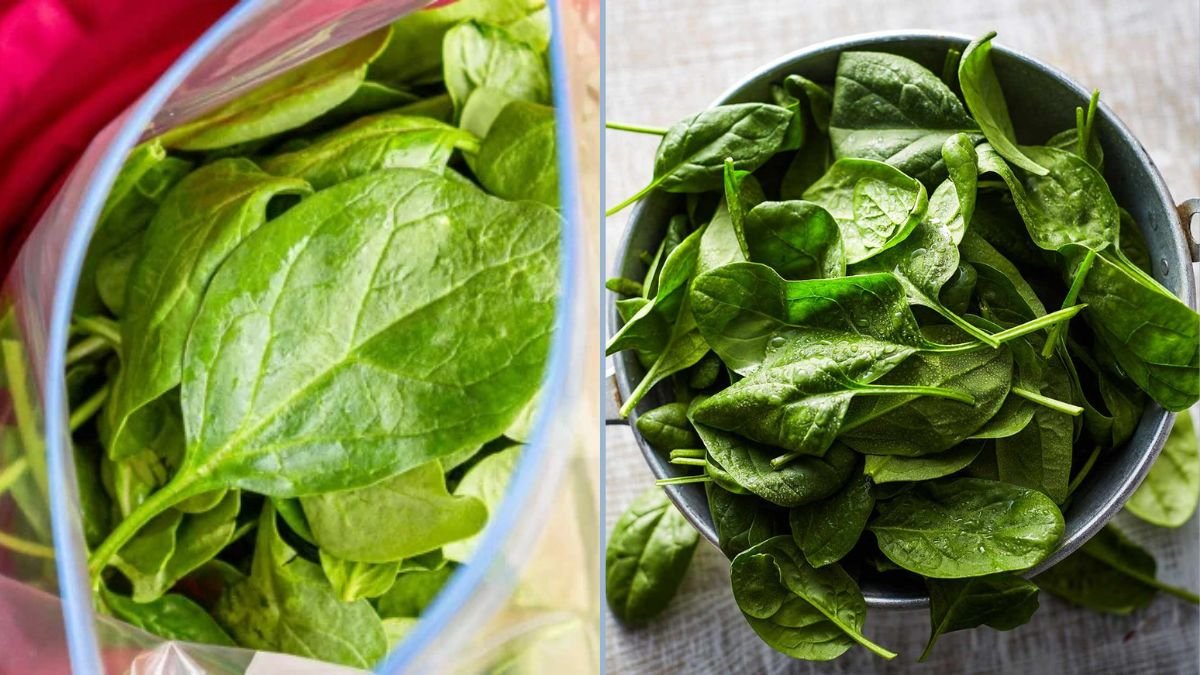
Spinach is one of the most nutritious leafy greens, valued for its rich content of iron, calcium, vitamins A, C, and K, folate, and antioxidants. It is a versatile ingredient in vegetarian diets, enhancing salads, soups, smoothies, sautés, and casseroles. However, spinach is highly perishable, with fresh leaves wilting within a few days even under refrigeration. Freezing spinach is a practical and effective method to extend its shelf life while retaining nutrients, flavor, and color.
Proper freezing preserves spinach for months, reduces food waste, and ensures a consistent supply for home cooking. This article explores easy, effective, and vegetarian-friendly techniques for freezing spinach, including selection, preparation, blanching, packaging, and storage tips.
1. Selecting Spinach for Freezing
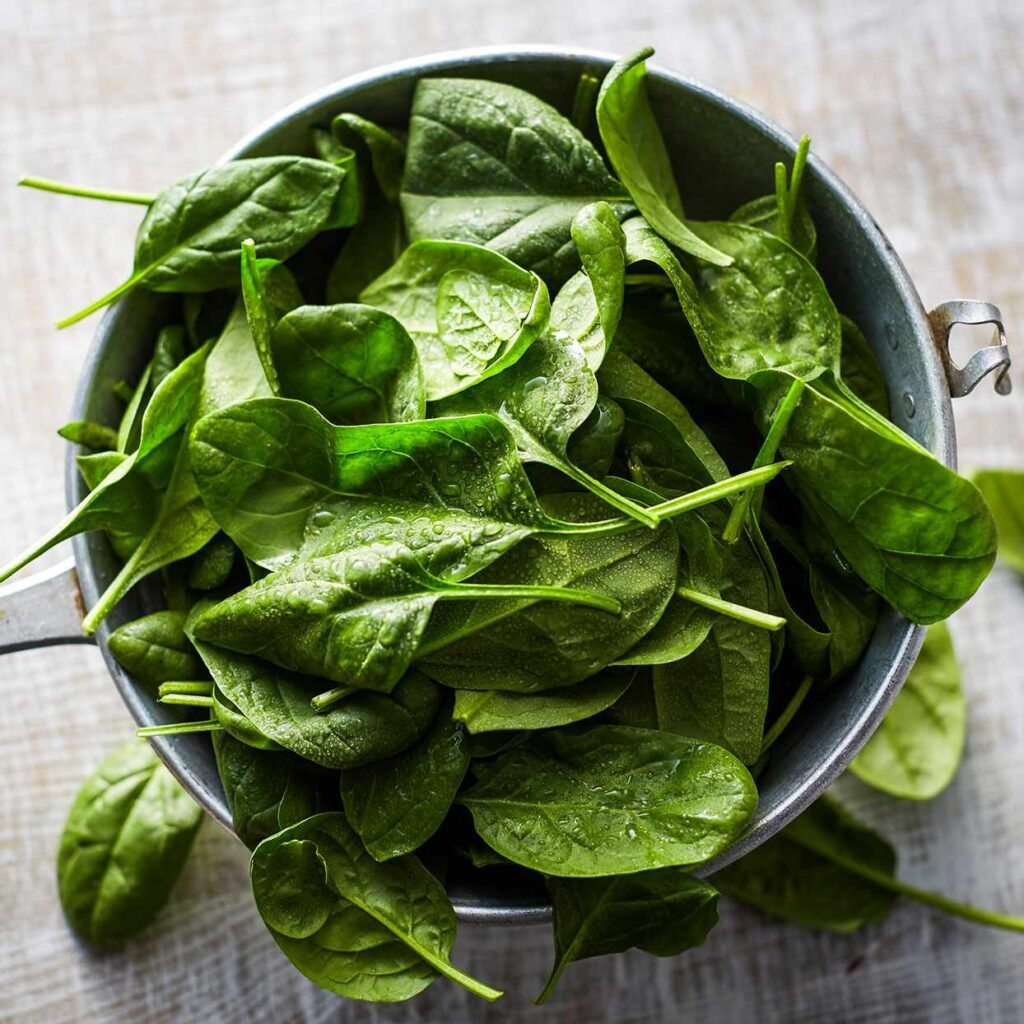
The first step toward successful freezing is choosing high-quality spinach.
Tips for Selection
- Freshness: Choose vibrant, dark green leaves with no yellowing or wilting.
- Leaf Size: Baby spinach freezes well, but mature leaves are also suitable if they are tender and healthy.
- Condition: Avoid leaves with insect damage, bruises, or slimy texture.
- Harvest Timing: Spinach harvested in the morning has higher water content and flavor, which helps retain quality during freezing.
Selecting healthy spinach ensures optimal texture, taste, and nutrient retention after freezing.
2. Preparing Spinach for Freezing
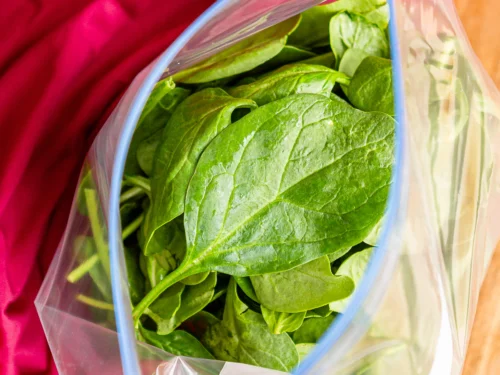
Proper preparation is essential to prevent ice crystals, spoilage, and nutrient loss.
Step 1: Washing
- Rinse leaves thoroughly under cold running water to remove soil, sand, and potential contaminants.
- Multiple rinses may be necessary for homegrown spinach.
Step 2: Draining and Drying
- Use a salad spinner to remove excess water, or pat dry gently with a clean towel.
- Excess water can cause ice crystals, damage cell structure, and result in mushy spinach after thawing.
Step 3: Trimming
- Remove thick stems or damaged leaves for a uniform texture.
- Cut leaves into manageable portions suitable for recipes.
3. Blanching Spinach Before Freezing
Blanching is a critical step that preserves color, flavor, and nutritional value while preventing enzymatic activity that can cause spoilage.
Blanching Process
- Bring a large pot of water to a boil.
- Immerse the spinach leaves for 1–2 minutes (time depends on leaf size).
- Immediately transfer the leaves to a bowl of ice-cold water to stop the cooking process.
- Drain thoroughly and remove excess water by gently pressing or patting dry.
Benefits of Blanching
- Preserves vibrant green color.
- Retains vitamins and antioxidants.
- Reduces microbial load and extends storage life.
- Softens leaves slightly, making them easier to pack and use later.
Tip: Some cooks prefer steam blanching, which reduces water content and better retains nutrients.
4. Freezing Techniques for Spinach
There are several effective methods to freeze spinach for long-term storage.
A. Loose Leaf Freezing
- Spread blanched and dried leaves on a baking tray in a single layer.
- Flash freeze for 1–2 hours until solid.
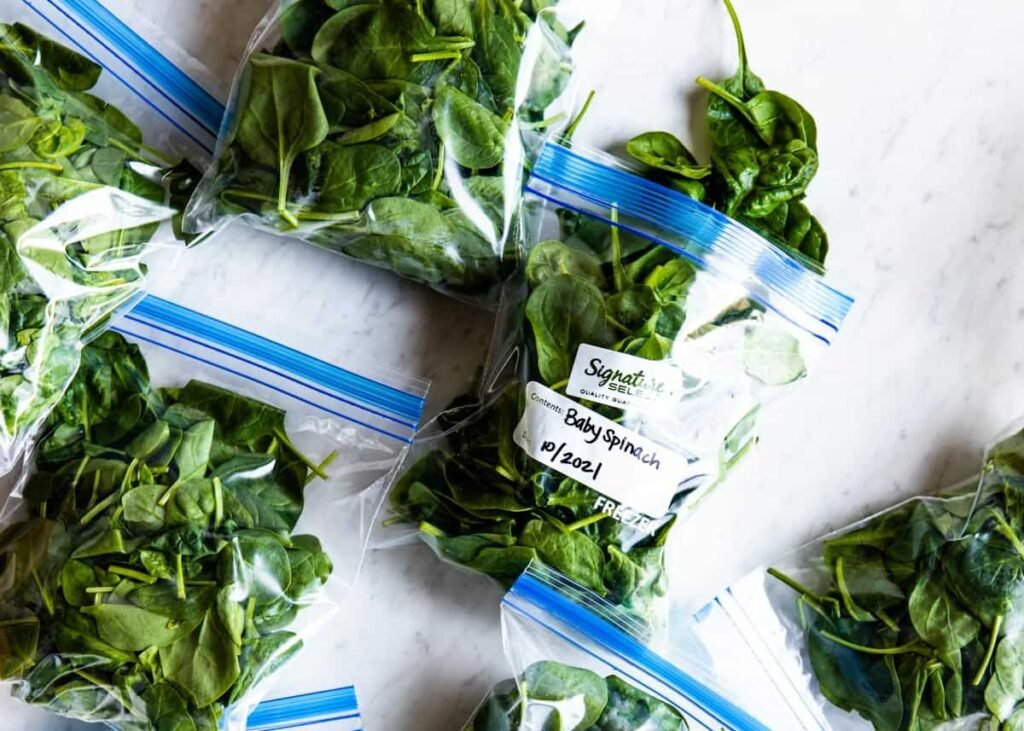
- Transfer frozen leaves to airtight freezer bags or containers, removing excess air.
- Label with the date.
Advantages: Leaves remain separate, making it easy to portion for cooking.
B. Portion-Freezing in Ice Cube Trays
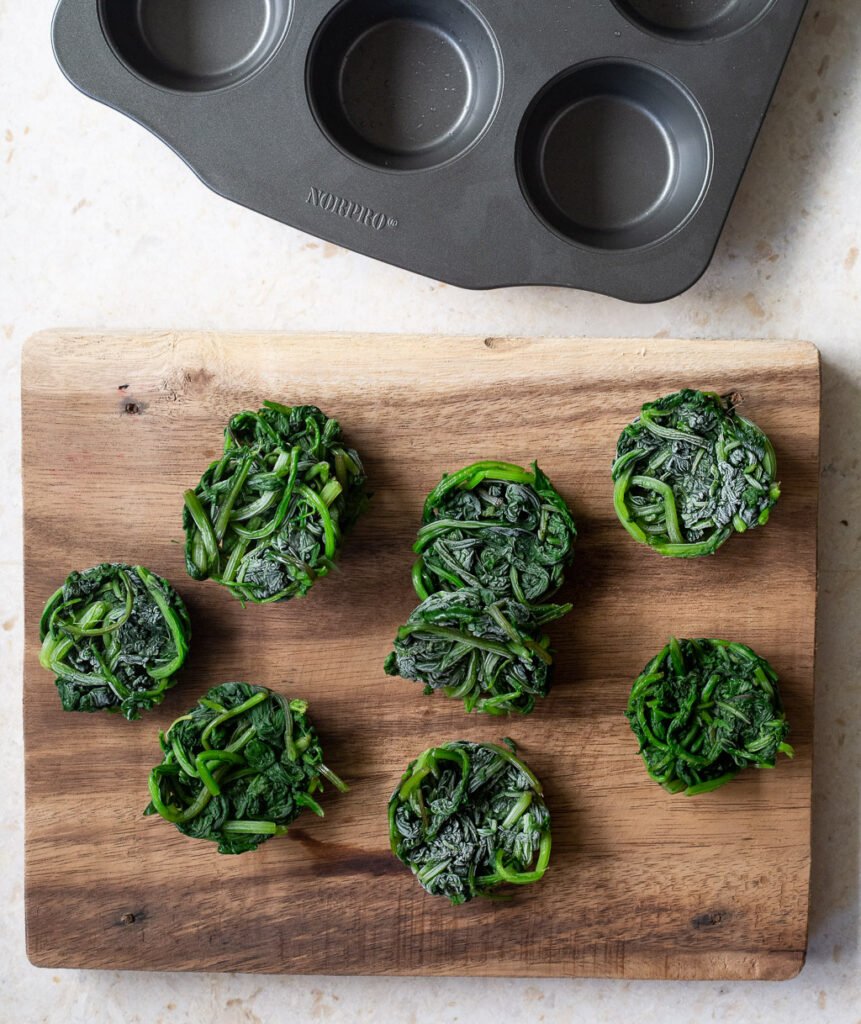
- Chop blanched spinach finely.
- Fill ice cube trays with 1–2 tablespoons per compartment.
- Freeze until solid, then transfer cubes to freezer bags.
Advantages: Convenient for soups, sauces, and smoothies. Ice cube portions prevent overuse and waste.
C. Vacuum-Sealed Freezing
- Use a vacuum sealer to remove air after flash freezing or portioning.
- Reduces oxidation and freezer burn.
- Ideal for spinach intended for storage longer than six months.
5. Packaging and Storage Tips
Proper packaging is crucial for maintaining quality, texture, and flavor.
Guidelines
- Use airtight containers or freezer bags to prevent moisture loss and ice crystal formation.
- Remove excess air from freezer bags to reduce freezer burn.
- Label containers with the date and type of spinach.
- Portion appropriately to match typical recipe requirements.
Spinach stored properly can maintain high quality for 8–12 months.
6. Avoiding Common Freezing Mistakes
Even minor errors can compromise frozen spinach quality.
| Mistake | Effect | Solution |
|---|---|---|
| Freezing wet leaves | Ice crystals, mushy texture | Dry leaves thoroughly before freezing |
| Not blanching | Loss of color and nutrients | Blanch 1–2 minutes before freezing |
| Overpacking containers | Leaves stick together, uneven freezing | Flash freeze first or use smaller containers |
| Using thin bags | Freezer burn | Use thick freezer bags or airtight containers |
| Storing near strong-smelling foods | Absorbs odors | Keep spinach in odor-free areas or sealed containers |
Correcting these mistakes ensures nutrient-rich, flavorful spinach after thawing.
7. Thawing and Using Frozen Spinach
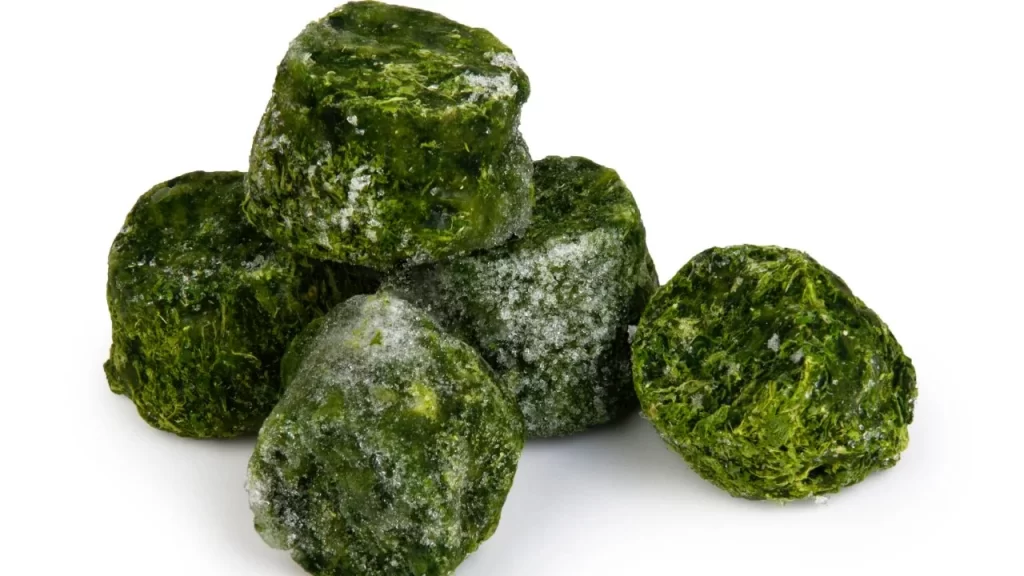
Frozen spinach is versatile and convenient. Proper thawing preserves flavor and texture.
Tips
- Cooking Directly: Add frozen spinach directly to soups, stews, or sautés without thawing.
- Defrosting: For salads or recipes requiring thawed spinach, place it in the refrigerator or submerge in cold water. Drain thoroughly.
- Avoid Microwaving to Thaw: Rapid heat can release excess water and affect texture.
Proper thawing ensures the spinach remains vibrant, flavorful, and nutritionally intact.
8. Nutrient Preservation in Frozen Spinach
Spinach is highly nutritious, and freezing properly helps retain its vitamins and minerals.
Key Tips
- Blanching before freezing prevents degradation of vitamin C and carotenoids.
- Store in airtight containers to minimize oxidation of antioxidants.
- Avoid repeated thawing and refreezing, which reduces nutrient content.
Frozen spinach retains most of its nutritional value for months, making it an excellent addition to vegetarian meals year-round.
9. Sustainable Practices for Freezing Spinach
Freezing spinach can also align with eco-friendly kitchen habits.
Suggestions
- Use reusable freezer containers or silicone bags instead of disposable plastic.
- Compost stems and scraps to reduce food waste.
- Plan freezing quantities according to your cooking needs.
- Label clearly to prevent food waste due to forgotten frozen spinach.
Sustainable practices reduce environmental impact while ensuring a steady supply of nutritious greens.
10. Culinary Uses of Frozen Spinach
Properly frozen spinach is highly versatile in vegetarian cooking.
Ideas
- Soups and Stews: Add directly from freezer; no thawing required.
- Smoothies: Blend frozen spinach with fruits for nutrient-packed drinks.
- Sautéed Dishes: Sauté with garlic and olive oil for a simple side.
- Casseroles and Lasagna: Mix frozen spinach directly into dishes.
- Dips and Sauces: Prepare spinach dips, purees, or pasta sauces using frozen portions.
Freezing spinach ensures you have a ready-to-use ingredient for a wide range of recipes while maintaining freshness and flavor.
Conclusion
Freezing spinach properly is a practical solution for extending its shelf life while preserving nutrients, flavor, and color. By selecting fresh leaves, washing and drying carefully, blanching, and using effective freezing techniques—such as loose leaf freezing, portion freezing, or vacuum sealing—spinach can remain a versatile and nutritious ingredient for months. Proper packaging, labeling, and storage further prevent freezer burn and quality loss.
Implementing these strategies not only reduces food waste but also ensures a continuous supply of healthy, delicious spinach for vegetarian cooking throughout the year. Frozen spinach provides convenience, versatility, and nutrition, making it an indispensable component of a sustainable, health-conscious kitchen.