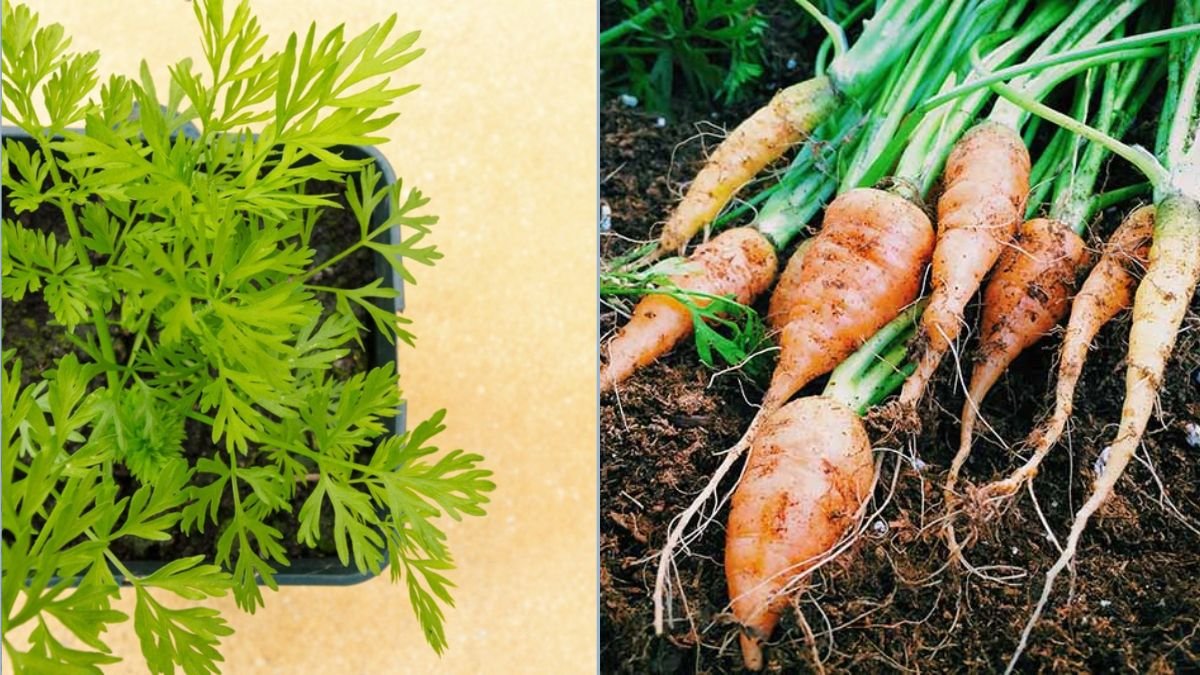
Growing your own vegetables at home can be a rewarding experience, and baby carrots are among the easiest and most versatile crops for container gardening. Whether you live in an apartment, have a small balcony, or simply want to enjoy fresh produce year-round, planting baby carrots in containers is an excellent choice. This article provides comprehensive guidance on selecting seeds, containers, soil, and care techniques to ensure a successful and bountiful harvest.
Why Grow Baby Carrots in Containers?
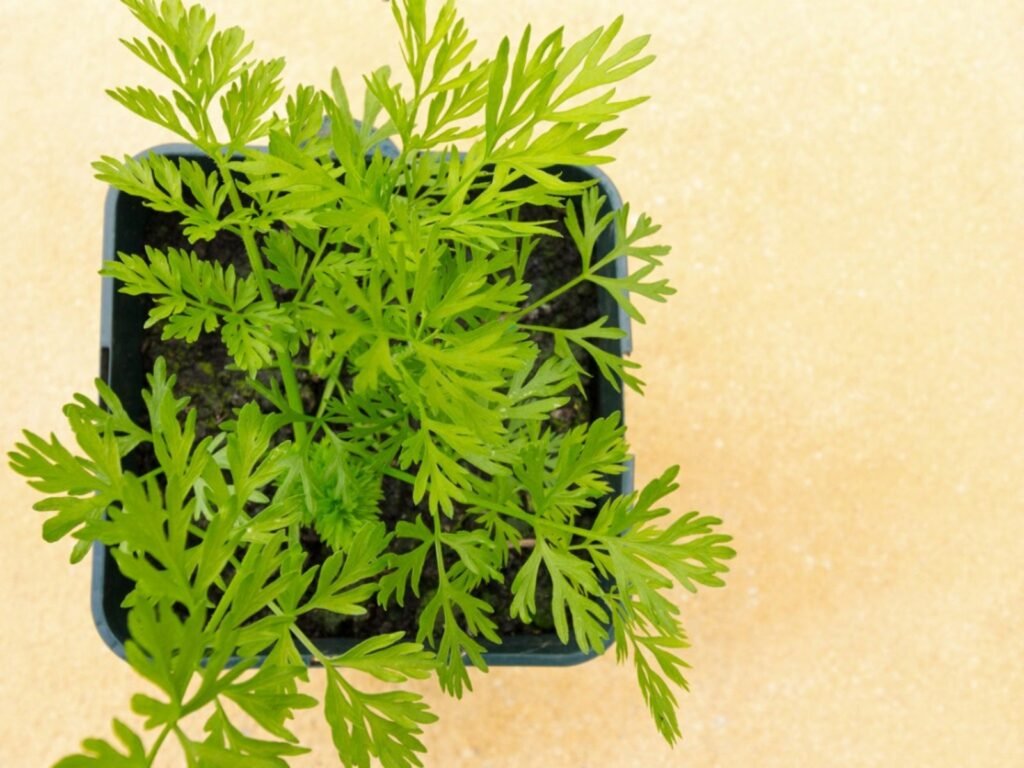
Container gardening offers many advantages for busy households, urban dwellers, and those with limited outdoor space:
- Space Efficiency: Containers allow you to grow crops in small areas, such as balconies, patios, or windowsills.
- Mobility: Containers can be moved to take advantage of sunlight or protected during harsh weather.
- Soil Control: Using container soil reduces the risk of pests and soil-borne diseases, ensuring healthier carrots.
- Year-Round Gardening: With proper indoor lighting or greenhouse setups, container-grown carrots can be cultivated in all seasons.
Baby carrots, in particular, thrive in containers because their compact size requires less root depth than full-sized varieties.
Selecting the Right Variety

Choosing the appropriate carrot variety is crucial for container gardening success. Baby carrots are typically harvested early, before they reach full maturity, but some varieties are specifically bred for container growth:
- Thumbelina: A small, round carrot ideal for shallow containers.
- Little Finger: Slender and tender, perfect for small pots and fast harvests.
- Paris Market: Globe-shaped, excellent for container cultivation.
Select a variety suited to your container depth and desired harvest size. For container gardening, baby carrots that grow 2–4 inches long are ideal.
Choosing Containers
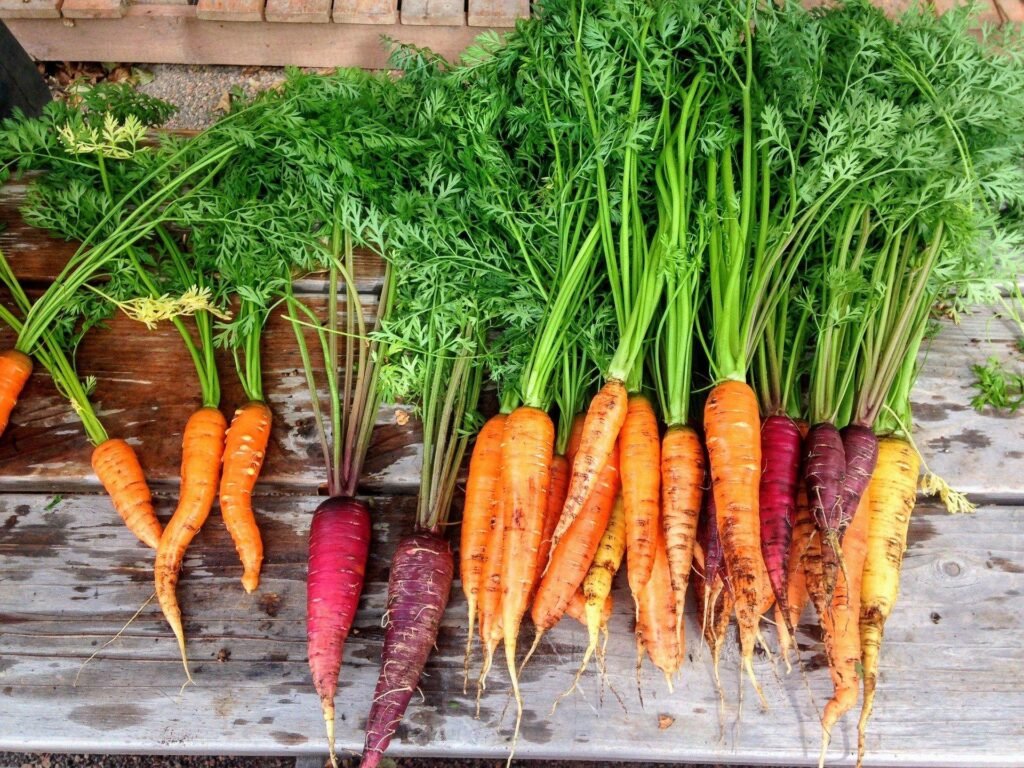
The container is one of the most critical factors for successful carrot growth. Carrots need space for roots to develop straight and strong:
- Depth: Baby carrots require a minimum depth of 8–12 inches, with deeper containers allowing better root development.
- Diameter: A wide container is preferable to allow multiple plants to grow without crowding. A container 12–16 inches wide can accommodate 6–8 baby carrots comfortably.
- Material: Terra-cotta, plastic, ceramic, or wooden containers are suitable. Plastic retains moisture longer, while terra-cotta allows better aeration.
- Drainage: Ensure your container has drainage holes to prevent waterlogging, which can cause root rot.
Using lightweight containers makes it easy to move plants for sunlight or seasonal changes.
Preparing the Soil
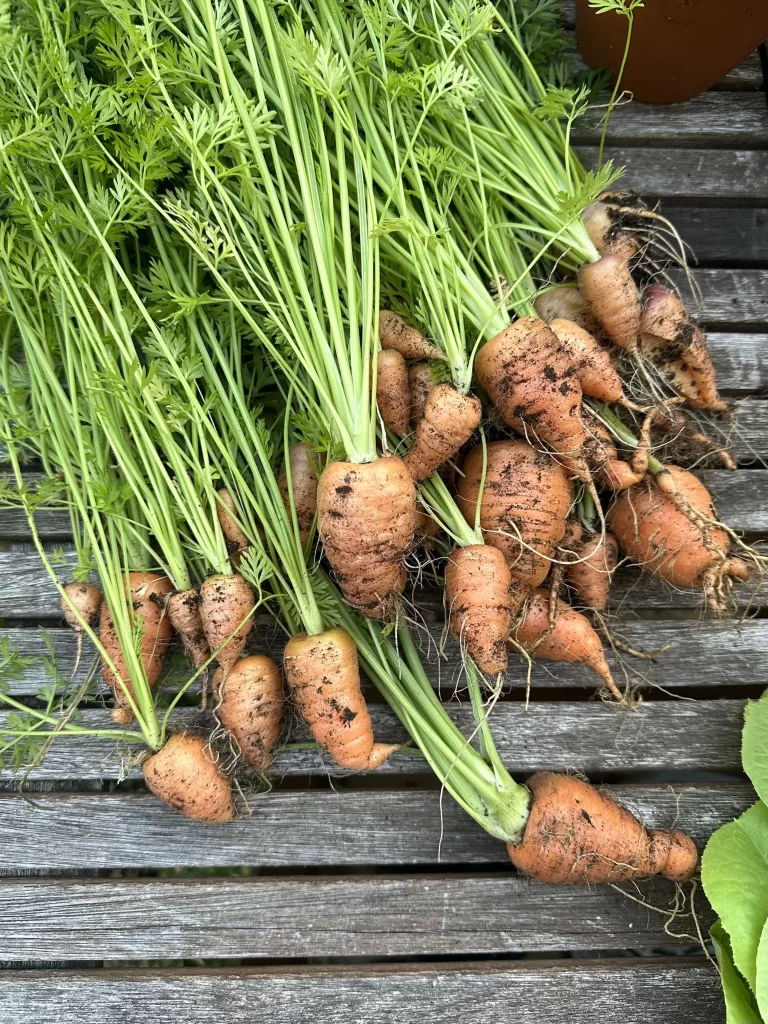
Carrots require loose, well-draining soil to grow straight and healthy. Dense soil can cause stunted or forked roots.
- Soil Mix: Combine high-quality potting soil with compost and sand or perlite to improve drainage and fertility. Avoid garden soil alone, which may compact in containers.
- pH Level: Carrots prefer slightly acidic to neutral soil, with a pH range of 6.0–6.8. You can adjust the pH using natural amendments like lime or peat moss if necessary.
- Fertilization: Incorporate organic compost or a balanced, plant-based fertilizer into the soil before planting. Avoid excessive nitrogen, which encourages leafy growth at the expense of roots.
Well-prepared soil ensures strong root development and a flavorful harvest.
Sowing Seeds
Planting baby carrot seeds requires care and attention to spacing:
- Timing: Carrots grow best in cool weather. Sow seeds in spring or fall, depending on your climate. Indoor containers can extend the growing season year-round.
- Planting Depth: Sow seeds ¼ to ½ inch deep. Cover lightly with soil and gently water.
- Spacing: Thin seedlings to 1–2 inches apart once they are a few centimeters tall to prevent overcrowding. Overcrowding can result in small or misshapen carrots.
- Succession Planting: For a continuous harvest, plant seeds every 2–3 weeks.
Patience is key, as carrot seeds may take 10–20 days to germinate depending on temperature and soil conditions.
Watering Techniques
Proper watering is essential for smooth, tender carrots:
- Consistency: Keep the soil evenly moist but not soggy. Inconsistent watering can lead to cracking or splitting.
- Watering Method: Water gently at the soil level to avoid washing away seeds or disturbing young roots.
- Mulching: Apply a thin layer of organic mulch, such as shredded leaves or straw, to retain moisture and regulate soil temperature.
Using a self-watering container or a drip system can help busy families maintain consistent soil moisture.
Light Requirements
Carrots do not require full sun like some vegetables, but adequate light is crucial for healthy growth:
- Natural Light: Place containers in a location that receives at least 4–6 hours of indirect sunlight daily.
- Artificial Light: If natural sunlight is limited, LED grow lights can supplement light for indoor containers. Position lights 6–12 inches above plants and provide 12–14 hours of light daily.
Balanced lighting encourages uniform root growth and prevents weak or elongated foliage.
Fertilization During Growth
While carrots are moderate feeders, periodic fertilization enhances root development and flavor:
- Organic Fertilizers: Use compost tea, seaweed extract, or plant-based liquid fertilizers every 3–4 weeks.
- Avoid High Nitrogen: Excess nitrogen promotes leafy tops rather than root growth. Focus on fertilizers rich in phosphorus and potassium for strong root development.
- Micronutrients: Ensure adequate calcium and magnesium to support healthy roots and prevent deformities.
Regular but moderate feeding helps produce plump, tender carrots suitable for harvesting.
Managing Pests and Diseases
Even in containers, carrots are susceptible to pests and diseases, though risk is lower than in garden beds:
- Common Pests: Aphids, carrot flies, and fungus gnats can occasionally affect container crops. Introduce beneficial insects, such as ladybugs, or use natural remedies like neem oil.
- Disease Prevention: Avoid waterlogging, rotate container locations, and remove any diseased foliage promptly.
- Hygiene: Clean containers and tools regularly to prevent fungal growth or bacterial contamination.
Proactive care minimizes problems and ensures a healthy crop.
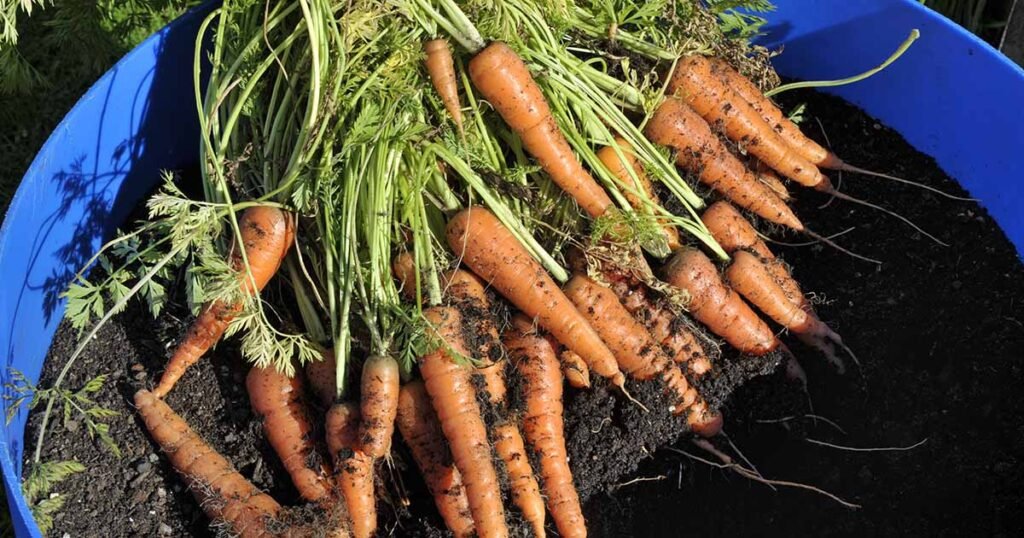
Harvesting Baby Carrots
Harvesting at the right time is crucial for the best flavor and texture:
- Timing: Baby carrots are typically ready to harvest 50–70 days after sowing, depending on variety.
- Appearance: Harvest when roots reach 2–4 inches long and the tops are bright green.
- Technique: Gently loosen the soil with a hand fork and pull carrots carefully to avoid breaking roots. Regular harvesting encourages continuous growth if multiple sowings are planted.
Freshly harvested baby carrots can be enjoyed raw, steamed, or incorporated into family meals.
Space-Saving and Creative Container Ideas
Busy families and urban gardeners can optimize space while growing baby carrots:
- Vertical Gardening: Use tiered containers or planter boxes to grow multiple rows of carrots efficiently.
- Windowsill Gardens: Shallow trays can accommodate baby carrots alongside herbs for dual-purpose use.
- Recycled Containers: Large buckets, wooden crates, or deep planter boxes can be repurposed with proper drainage holes.
Creative container solutions allow families to maintain productive indoor or balcony gardens, even in small spaces.
Conclusion
Planting baby carrots in containers is a practical, rewarding, and space-efficient way to grow fresh vegetables at home. With proper variety selection, container choice, soil preparation, watering, and care, families can enjoy a bountiful harvest without the need for a traditional garden. Indoor or balcony container gardening offers numerous benefits, including stress relief, educational opportunities for children, and access to nutritious homegrown produce. By following these detailed steps, busy families can cultivate healthy, flavorful baby carrots year-round, fostering sustainable and enjoyable gardening practices.
Container-grown baby carrots demonstrate that with thoughtful planning and care, anyone can experience the joy of homegrown vegetables, regardless of space constraints or busy schedules.