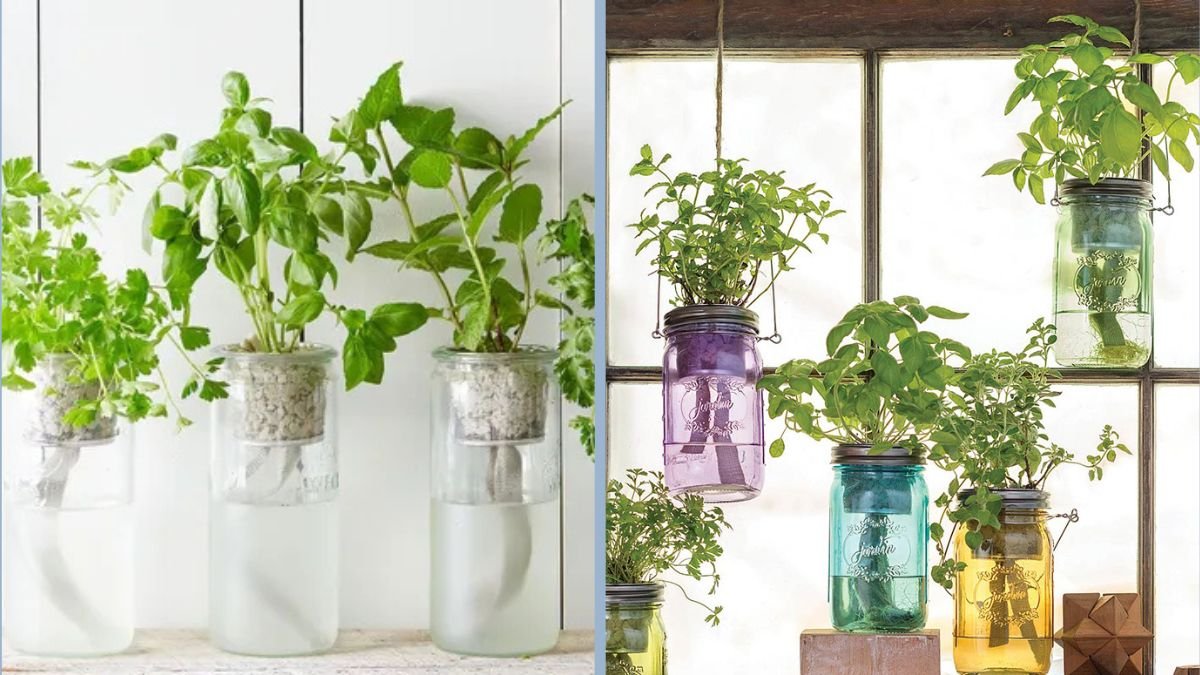
Herbs are indispensable in plant-based kitchens, offering flavor, aroma, and nutritional benefits to everyday meals. Growing your own herbs ensures a fresh, sustainable supply while reducing reliance on store-bought alternatives. For those with limited space, such as apartment kitchens, jar gardening provides a practical, aesthetically pleasing solution. Utilizing jars as containers allows indoor gardeners to cultivate herbs on windowsills, countertops, or shelves, making fresh ingredients accessible year-round. This article provides a detailed guide on starting a kitchen herb garden in jars, covering herb selection, planting techniques, care, and sustainable practices.
Benefits of Growing Herbs in Jars
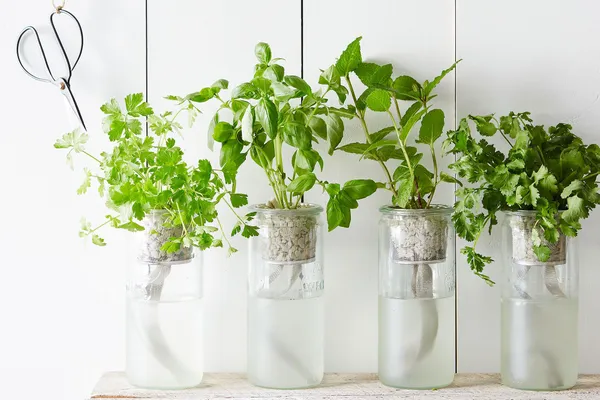
- Space Efficiency: Ideal for small kitchens or urban living spaces.
- Year-Round Access: Indoor conditions allow for continuous harvesting, regardless of season.
- Sustainability: Reduces reliance on commercially packaged herbs, lowering carbon footprint.
- Cost-Effective: Seeds and jars are inexpensive, and herbs can be propagated for long-term use.
- Aesthetic Appeal: Jar gardens provide a decorative, green focal point in kitchens.
With minimal investment, gardeners can cultivate a variety of herbs, enhancing both culinary and wellness applications.
Choosing the Right Herbs for Jar Gardening
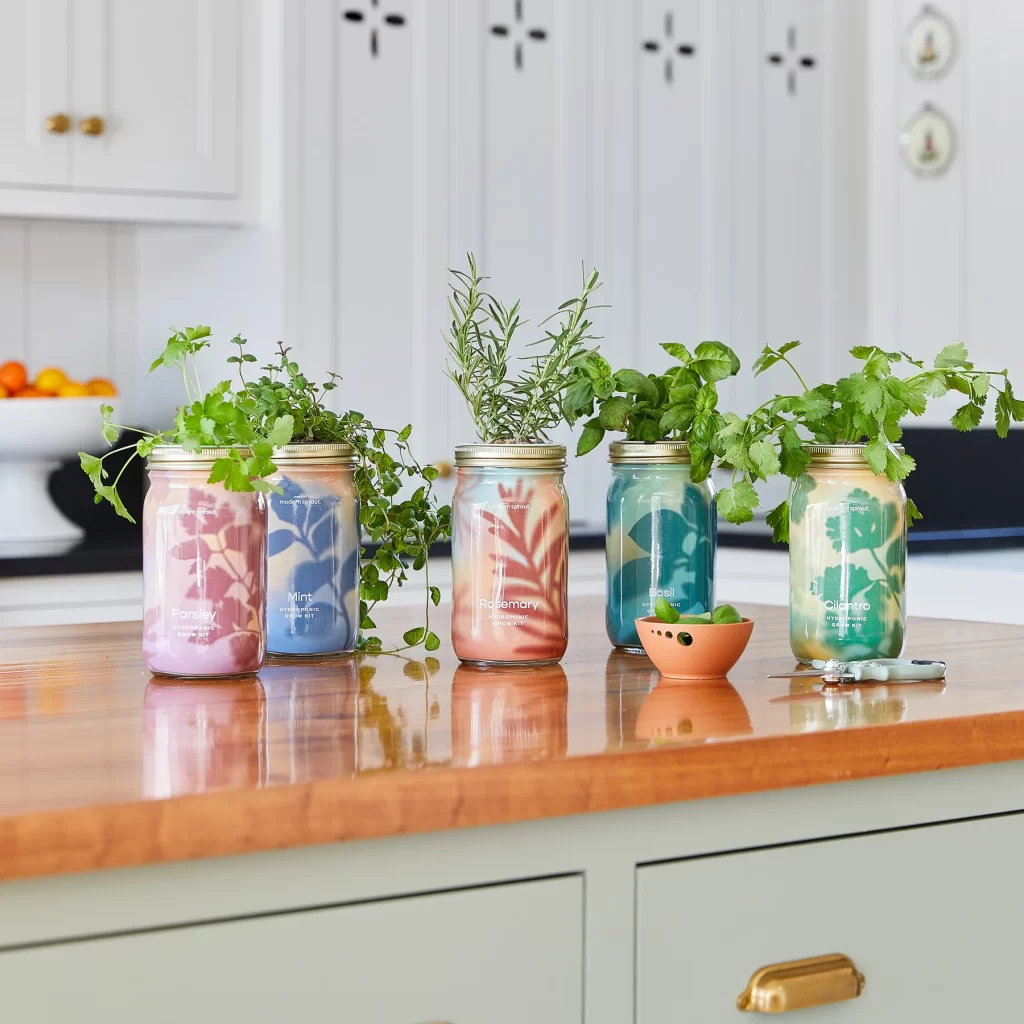
Not all herbs thrive in small, confined containers. Ideal herbs for jar gardens are compact, fast-growing, and low-maintenance:
- Basil (Ocimum basilicum): Aromatic, versatile for sauces, salads, and teas.
- Parsley (Petroselinum crispum): Nutrient-dense, slow-growing, ideal for continuous harvest.
- Cilantro (Coriandrum sativum): Bright, citrusy flavor; best used fresh.
- Mint (Mentha spp.): Vigorous growth requires containment; perfect for beverages and desserts.
- Thyme (Thymus vulgaris): Woody, compact, suitable for small jars.
- Chives (Allium schoenoprasum): Hardy and productive in small containers.
- Oregano (Origanum vulgare): Thrives in controlled indoor environments; robust flavor.
Selecting compact or slow-spreading varieties ensures manageable growth in limited spaces.
Selecting and Preparing Jars
Proper container selection is crucial for healthy herb growth:
- Size: Minimum 10–15 cm in diameter and depth for most herbs. Deeper jars are preferred for roots to develop fully.
- Material: Glass jars are ideal for visibility, though ceramic or metal jars also work.
- Drainage: Drill holes at the base or add a layer of gravel or pebbles for drainage to prevent root rot.
Preparation Steps:
- Clean jars thoroughly to eliminate bacteria or residue.
- Place a drainage layer (gravel, small stones, or coarse sand).
- Add a high-quality, plant-based potting mix enriched with compost.
Proper preparation ensures healthy root systems and reduces the risk of overwatering.
Planting Herbs in Jars
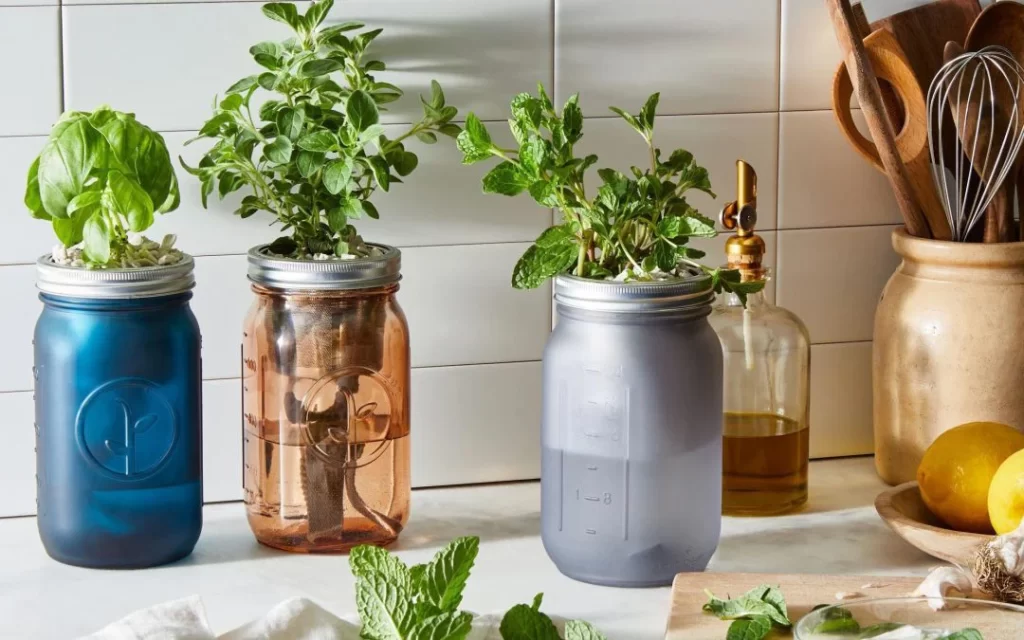
Herbs can be grown from seeds or seedlings. Both methods are effective in jars:
1. From Seeds
- Fill the jar with soil, leaving 2–3 cm at the top.
- Sprinkle seeds evenly; cover lightly with soil according to seed depth requirements.
- Water gently using a spray bottle to avoid displacing seeds.
- Cover with a clear lid or plastic wrap to maintain humidity until germination.
- Place the jar in a sunny windowsill or under grow lights.
2. From Seedlings
- Gently remove seedlings from their original containers.
- Create a small hole in the jar’s soil and place the roots carefully.
- Firm soil around the base and water lightly.
- Ensure adequate sunlight or supplemental grow lights for strong growth.
Light and Temperature Requirements
Herbs in jars require proper light and temperature to thrive:
- Sunlight: 4–6 hours for leafy herbs; 6–8 hours for sun-loving varieties.
- Grow Lights: Use LED or fluorescent lights to supplement natural light, especially during winter.
- Temperature: Maintain 18–25°C indoors; avoid drafts or extreme heat from stoves or heaters.
Rotating jars periodically ensures even light exposure, promoting balanced growth.
Watering and Maintenance
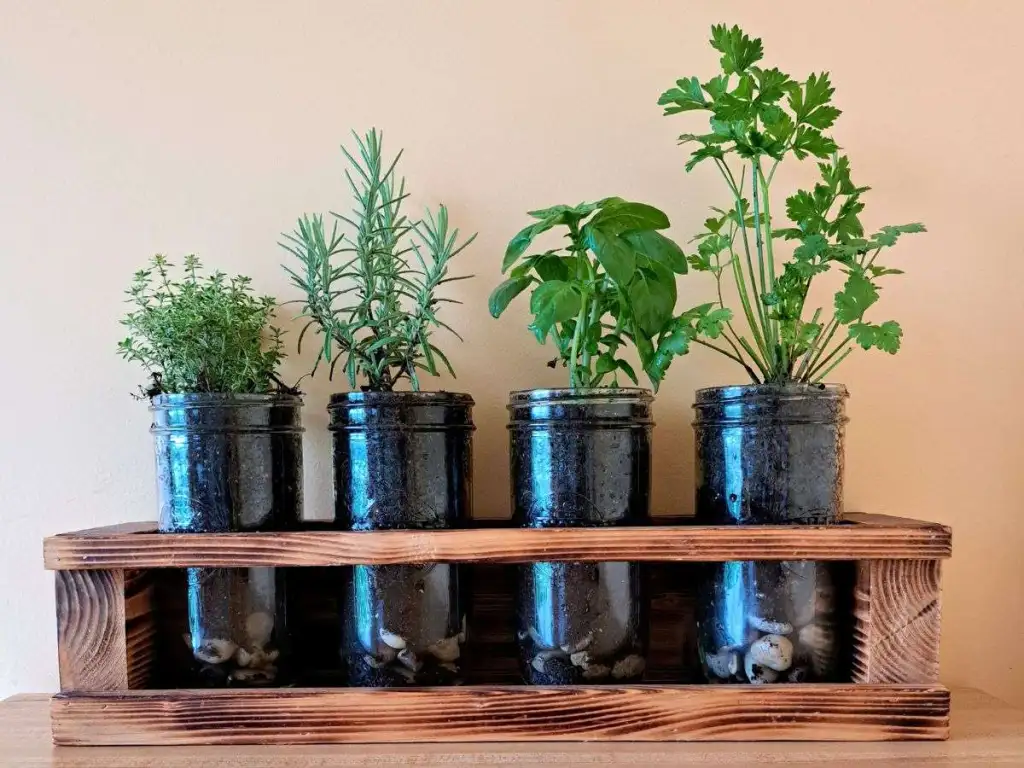
Herbs in jars need careful watering due to limited drainage and small soil volume:
- Frequency: Check soil moisture daily; water when the top 1–2 cm feels dry.
- Method: Use a spray bottle or small watering can to water at the base.
- Avoid Overwatering: Excess moisture can cause root rot or fungal growth.
- Pruning: Regularly pinch or trim herbs to encourage bushier growth and prevent legginess.
Fertilize occasionally with plant-based liquid fertilizer or compost tea to maintain healthy, vigorous herbs.
Harvesting Herbs in Jars
Frequent, mindful harvesting prolongs productivity:
- Basil and Mint: Pinch off top leaves to encourage branching.
- Parsley and Cilantro: Harvest outer leaves first, leaving inner growth intact.
- Thyme, Oregano, and Chives: Trim small portions without removing more than one-third of the plant at a time.
Harvesting early in the day ensures maximum flavor and nutrient content.
Pest Management in Indoor Jar Gardens
Even indoor herbs may encounter minor pests:
- Common Pests: Aphids, spider mites, and fungus gnats.
- Plant-Based Solutions: Neem oil, garlic-chili spray, or companion planting with pest-deterring herbs.
- Preventive Practices: Ensure proper airflow, avoid overwatering, and maintain clean jars.
Sustainable pest management maintains plant health while avoiding chemical pesticides.
Storage and Preservation of Fresh Herbs
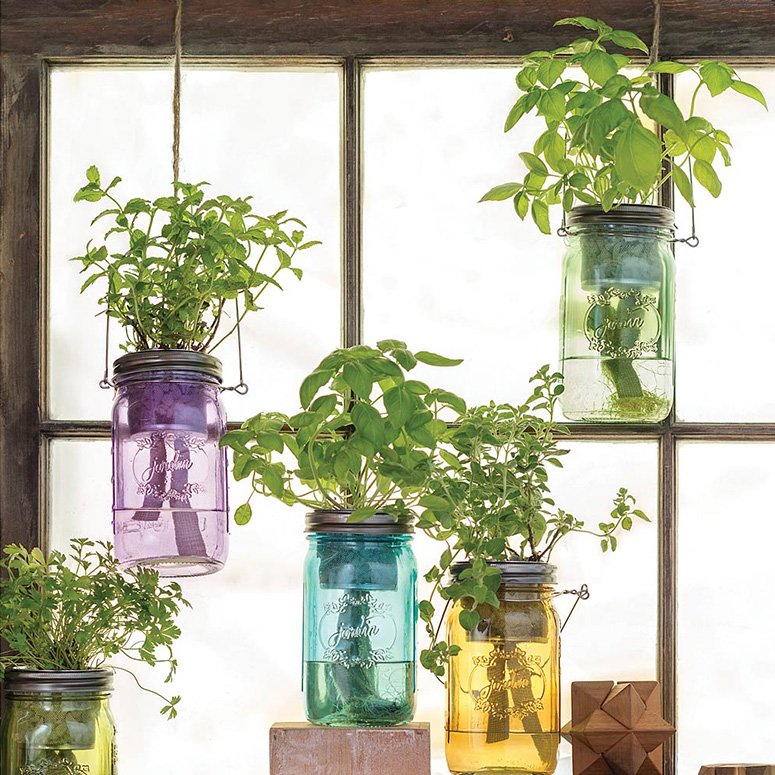
Freshly harvested herbs can be stored or preserved for future use:
- Refrigeration: Wrap stems in damp paper towels and place in a jar or bag; lasts up to two weeks.
- Freezing: Chop herbs, place in ice cube trays with water or plant-based oil, and freeze for long-term storage.
- Drying: Air dry or use a dehydrator; store in airtight containers for up to 12 months.
Proper storage ensures the aromatic and nutritional properties are maintained for culinary and medicinal applications.
Culinary Applications of Jar-Grown Herbs
Herbs grown in jars enhance plant-based meals in various ways:
- Salads: Fresh parsley, cilantro, or chives add flavor and color.
- Sauces and Dressings: Blend basil, thyme, or oregano into plant-based sauces or dressings.
- Soups and Stews: Add herbs at the end of cooking to preserve flavor.
- Herbal Teas: Mint, dill, or basil can be steeped for aromatic, plant-based teas.
- Garnishes: Fresh herbs elevate the presentation and taste of dishes.
Sustainable Practices for Jar Herb Gardens
- Organic Soil: Use compost, vermicompost, or plant-based fertilizers.
- Water Efficiency: Moderate watering and self-watering jars conserve water.
- Continuous Harvesting: Regularly pinch leaves to encourage regrowth and prolong productivity.
- Composting: Reuse trimmings for compost or teas, reducing waste.
These practices maximize yield and support environmentally responsible indoor gardening.
Troubleshooting Common Challenges
- Leggy Growth: Ensure adequate light; rotate jars and prune regularly.
- Yellowing Leaves: May indicate overwatering or nutrient deficiency; adjust watering and fertilize.
- Pests or Mold: Maintain airflow, reduce humidity, and use plant-based pest control.
- Root Binding: Transplant to larger jars if herbs outgrow the container.
Regular observation and proactive care ensure healthy, productive herb jars.
Conclusion
Starting a kitchen herb garden in jars is a practical, sustainable, and aesthetically pleasing method to cultivate fresh herbs year-round. Herbs such as basil, parsley, cilantro, mint, thyme, oregano, and chives thrive in jars when provided with proper soil, light, water, and care. Frequent harvesting, mindful pruning, and plant-based pest management maintain healthy growth and continuous production. Additionally, proper storage techniques, including refrigeration, freezing, and drying, preserve flavor, aroma, and nutrients for culinary and wellness applications. With minimal space and investment, jar herb gardens enhance plant-based cooking, support sustainable living, and bring fresh greenery into kitchens, making them an ideal solution for urban gardeners and indoor plant enthusiasts.