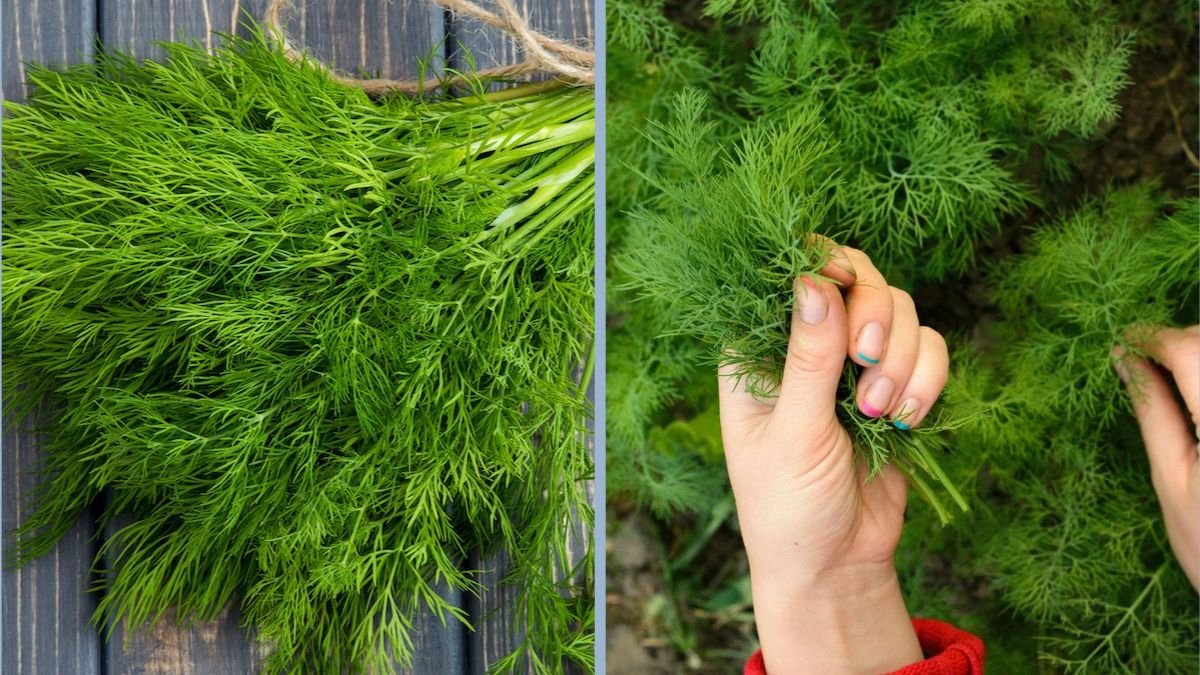
Dill (Anethum graveolens) is a fragrant, delicate herb highly valued in plant-based cooking for its bright, tangy flavor and aromatic foliage. It is widely used in salads, soups, sauces, and pickling, as well as in herbal teas and natural remedies. Despite its versatility, dill is a tender annual herb that requires proper harvesting and storage to maintain its flavor, aroma, and nutritional benefits. Improper handling can result in wilting, flavor loss, or rapid deterioration. This article provides a detailed guide for harvesting and storing fresh dill effectively, emphasizing sustainable, plant-based practices suitable for home gardens and kitchen use.
Understanding Dill Growth
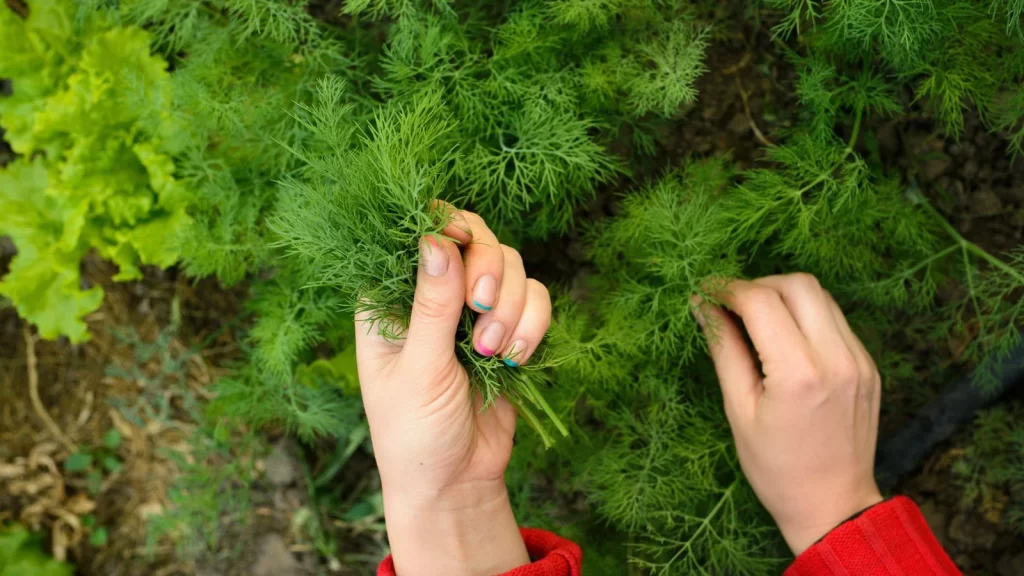
Dill is an annual herb that grows quickly and prefers temperate conditions. Understanding its growth patterns helps ensure optimal harvests:
- Stems and Leaves: The feathery, bright green leaves (fronds) are the most commonly used culinary part.
- Flowers: Dill produces yellow umbels in midsummer, which can also be used for seed collection.
- Roots: Shallow roots absorb water and nutrients efficiently, allowing rapid leaf growth.
Fresh leaves have the highest flavor concentration before the plant begins to flower. Once dill bolts (produces flowers), the foliage may become coarser and lose aromatic intensity.
Growing Conditions for Healthy Dill
Proper cultivation ensures abundant, flavorful leaves suitable for harvesting:
- Light: Full sun (6–8 hours per day) promotes strong, aromatic growth.
- Soil: Loose, well-draining soil enriched with plant-based compost or organic matter.
- Watering: Keep soil evenly moist; avoid waterlogging to prevent root rot.
- Temperature: Dill prefers cool to moderate temperatures (15–24°C).
- Spacing: Plant seeds 20–30 cm apart to allow airflow and reduce disease risk.
Container gardening is also suitable for small kitchens or limited spaces, with pots at least 20–25 cm deep.
Optimal Time for Harvesting Dill
The timing of harvest affects both flavor and nutritional content:
- Leaves: Best harvested when the plant reaches 20–30 cm in height, before flowering.
- Flowers: Harvest umbels just as buds open for seed production or herbal infusions.
- Seeds: Collect once umbels turn brown and seeds are fully mature.
Regular harvesting encourages new growth and prolongs the productive life of the plant.
Harvesting Techniques
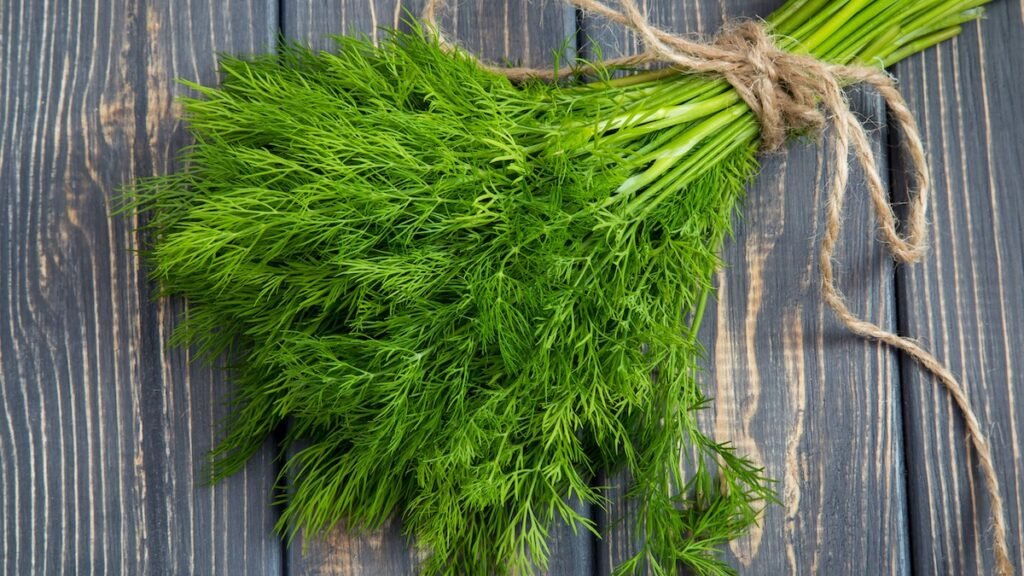
Proper techniques preserve flavor, aroma, and plant health:
- Tools: Use clean scissors or sharp garden shears to avoid damaging stems.
- Leaf Harvesting:
- Cut outer leaves or stems near the base.
- Leave central growth intact to allow continued development.
- Flower and Seed Harvesting:
- Snip flowering umbels with care.
- For seed collection, dry umbels and shake seeds into containers.
- Frequency: Harvest every 1–2 weeks for continuous supply.
Avoid harvesting more than one-third of the plant at a time to prevent stress and encourage regrowth.
Cleaning Fresh Dill
Cleaning is essential to remove dust, insects, or debris:
- Gently rinse fronds in cool water.
- Shake off excess moisture and pat dry with a clean cloth or paper towel.
- Avoid prolonged soaking, which can leach flavor compounds.
Methods for Storing Fresh Dill
Proper storage maintains aroma, color, and nutritional quality:
1. Refrigeration
- Place dill stems in a jar with 2–3 cm of water.
- Cover loosely with a plastic or biodegradable bag.
- Store in the refrigerator for up to 1–2 weeks.
- Replace water every 2–3 days to maintain freshness.
2. Freezing
- Whole Stems: Place cleaned stems in freezer-safe bags; remove excess air.
- Chopped Leaves: Chop dill and freeze in ice cube trays with a small amount of water or plant-based oil.
- Duration: Frozen dill retains flavor for up to 6 months.
3. Drying
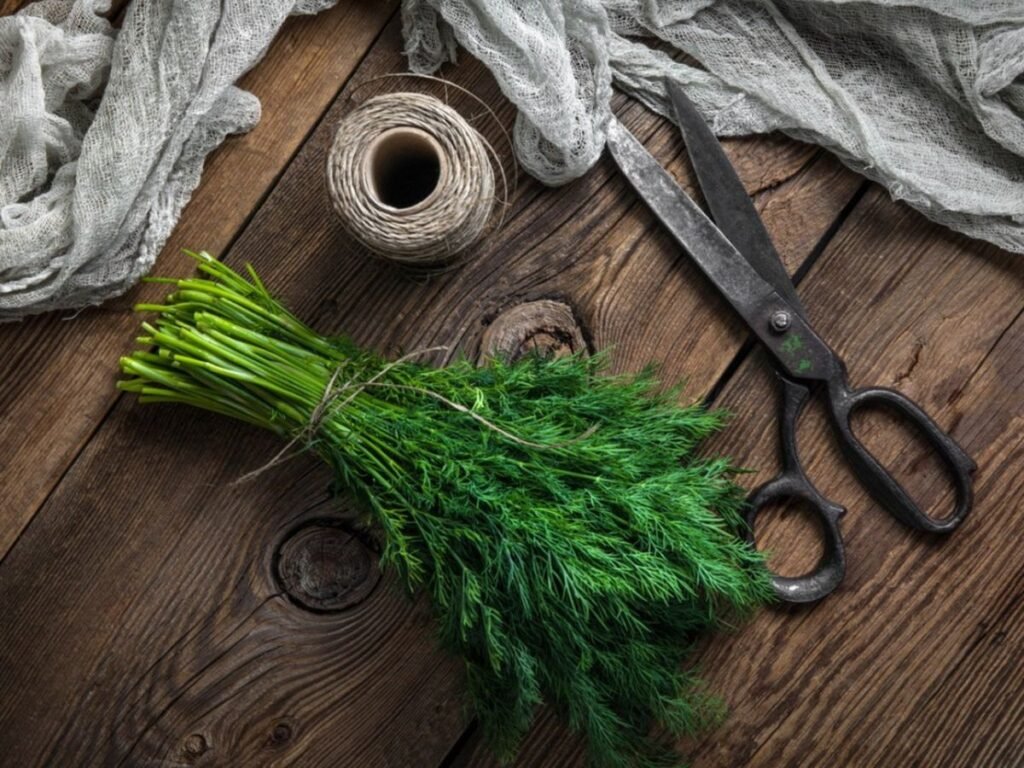
- Air Drying: Tie small bundles and hang in a dark, well-ventilated area.
- Dehydrator: Set temperature to 35–40°C; dry until leaves crumble easily.
- Oven Drying: Use low heat (35–45°C) with door slightly ajar to allow airflow.
- Storage: Store dried dill in airtight containers away from light and moisture.
Drying preserves flavor for up to 12 months and is ideal for sauces, soups, or teas.
Tips for Maintaining Flavor and Nutritional Value
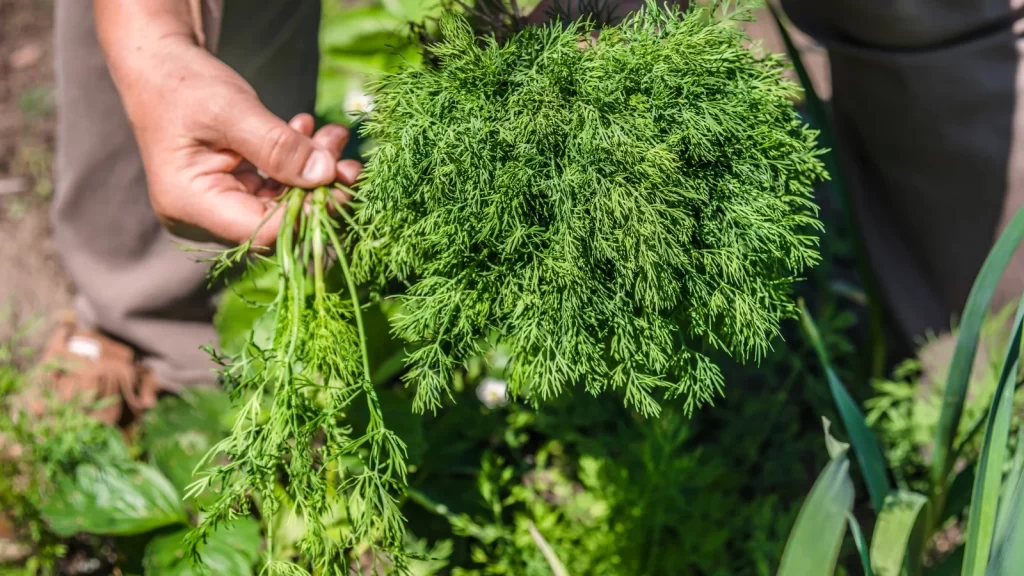
- Harvest in the Morning: Leaves contain maximum essential oils and aromatic compounds early in the day.
- Gentle Handling: Avoid crushing leaves during washing or chopping to prevent flavor loss.
- Minimal Exposure to Heat: Store or process dill quickly after harvest; heat can degrade delicate compounds.
- Proper Containers: Use glass jars, metal tins, or plant-based containers for long-term storage.
Culinary Uses of Fresh Dill
Dill’s bright, tangy flavor enhances a variety of plant-based dishes:
- Salads: Add chopped fronds to green salads, potato salads, or grain bowls.
- Sauces and Dressings: Blend dill with lemon juice, plant-based yogurt, or olive oil for fresh, flavorful sauces.
- Soups and Stews: Stir dill into soups or plant-based stews near the end of cooking to preserve aroma.
- Pickling: Dill is a key ingredient in pickling vegetables such as cucumbers and carrots.
- Herbal Infusions: Steep fronds in hot water for a refreshing dill tea with digestive benefits.
Medicinal and Wellness Benefits
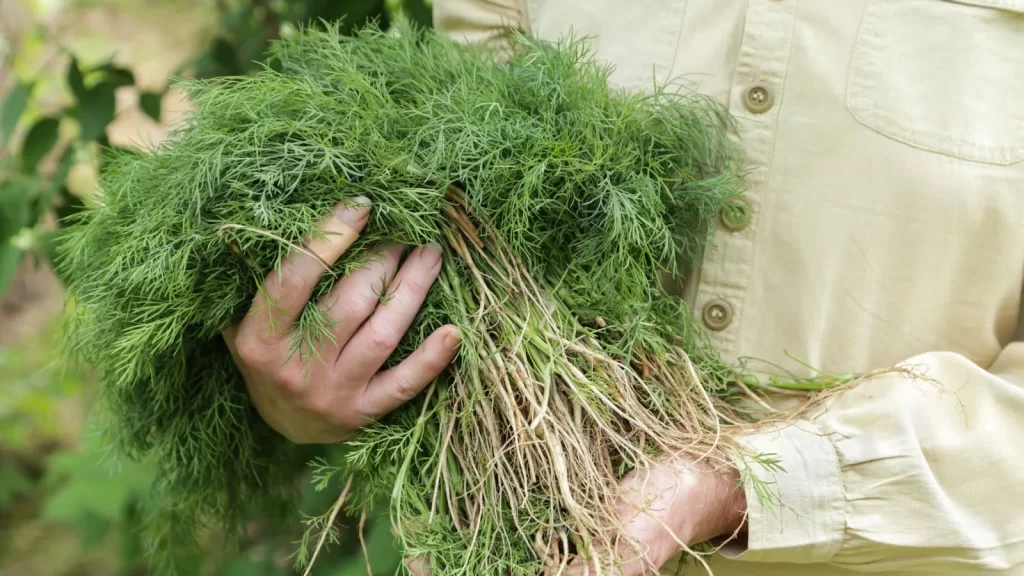
Fresh dill has long been used for its potential health-promoting properties:
- Digestive Aid: Supports digestion and may relieve mild bloating.
- Antioxidants: Contains plant-based flavonoids and vitamins that combat oxidative stress.
- Calming Effect: Dill tea may provide mild relaxation and support wellness routines.
- Nutrient-Rich: Offers vitamins A, C, and minerals such as calcium and iron.
Integrating fresh dill into plant-based meals enhances both flavor and nutritional intake.
Sustainable and Plant-Based Practices
- Organic Growing: Use compost, vermicompost, or plant-based fertilizers instead of chemical alternatives.
- Water Management: Moderate watering and self-watering containers prevent waste and promote healthy roots.
- Continuous Harvesting: Rotate leaf, flower, and seed harvesting to ensure a sustainable supply.
- Waste Reduction: Use trimmed fronds for teas, flavoring, or composting.
Sustainable practices maximize yield while maintaining environmental responsibility.
Common Challenges and Solutions
- Bolting: Cilantro may bolt in hot temperatures; harvest frequently to delay flowering.
- Wilting: Ensure consistent moisture and store dill immediately after harvest.
- Pests: Aphids and caterpillars may appear; control with neem oil or companion planting.
- Flavor Loss: Store properly and minimize prolonged exposure to heat or light.
Proper management ensures a continuous supply of flavorful, fresh dill.
Conclusion
Fresh dill is a highly aromatic and flavorful herb essential for plant-based cooking and wellness. Successful harvesting and storage depend on understanding growth patterns, optimal harvest timing, and proper post-harvest handling. Techniques such as refrigeration, freezing, and drying preserve flavor, aroma, and nutrients, providing year-round availability. Culinary applications range from salads, sauces, and soups to pickling and herbal teas, while wellness benefits include digestive support and antioxidant intake. By employing sustainable, plant-based practices in cultivation, harvesting, and storage, gardeners can maintain a reliable supply of fresh dill without compromising quality or environmental responsibility. With careful management, dill enhances the culinary and wellness potential of any plant-based kitchen.