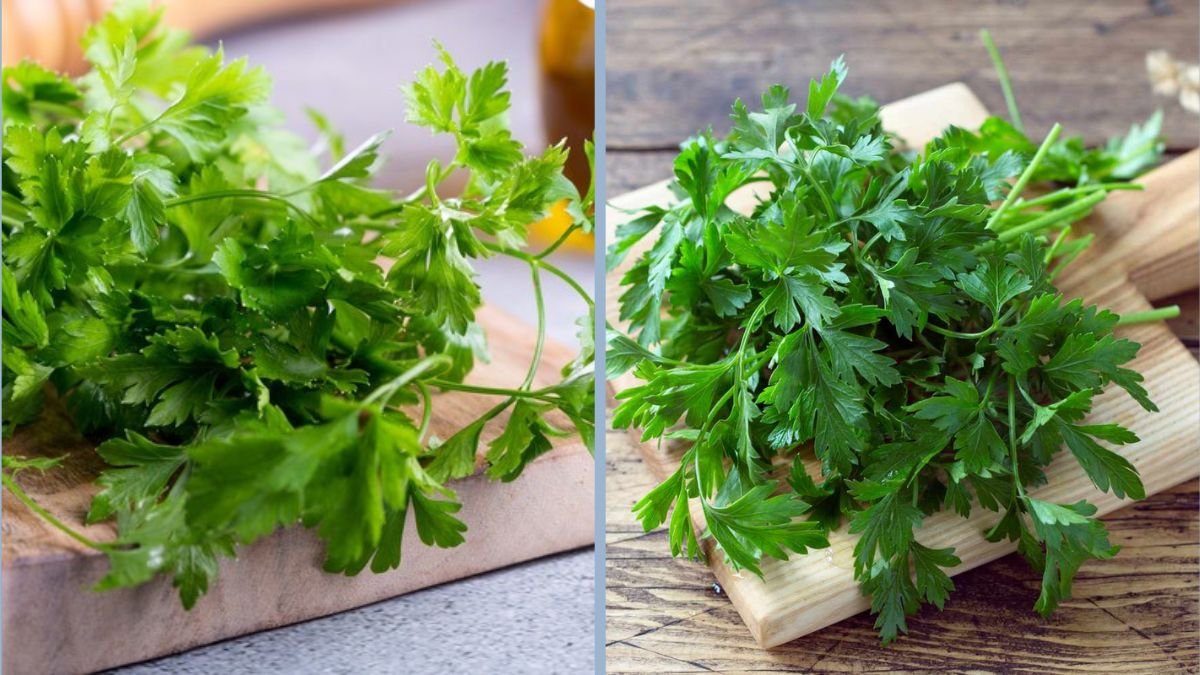
Parsley (Petroselinum crispum) and cilantro (Coriandrum sativum) are two of the most versatile and aromatic herbs in plant-based cooking. Valued for their fresh flavor, vibrant color, and nutritional benefits, these herbs enhance both simple and complex dishes. While often used as garnishes, parsley and cilantro can also serve as central ingredients in sauces, salads, marinades, and beverages. Cultivating fresh herbs at home ensures year-round access, and their incorporation into meals supports plant-based diets rich in flavor, vitamins, and minerals. This article explores methods to grow, store, and cook with fresh parsley and cilantro, providing practical, detailed guidance for home kitchens.
Nutritional and Culinary Overview
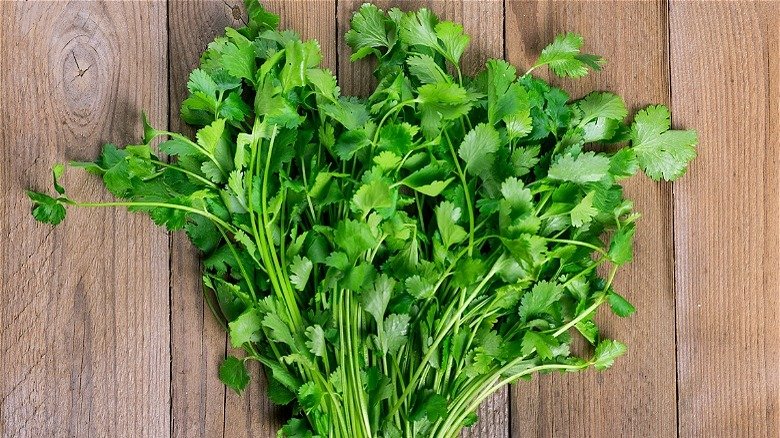
Both parsley and cilantro are nutrient-dense, low-calorie herbs packed with vitamins and antioxidants:
- Parsley: Rich in vitamins A, C, and K, folate, and iron; contains flavonoids and antioxidants that support plant-based wellness.
- Cilantro: High in vitamins A, C, and K; contains potassium, calcium, and plant-based phytonutrients with potential anti-inflammatory properties.
Flavor profiles differ: parsley has a mild, slightly peppery taste, while cilantro offers a bright, citrus-like flavor. Understanding these characteristics allows effective culinary pairing and application.
Growing Fresh Parsley and Cilantro at Home
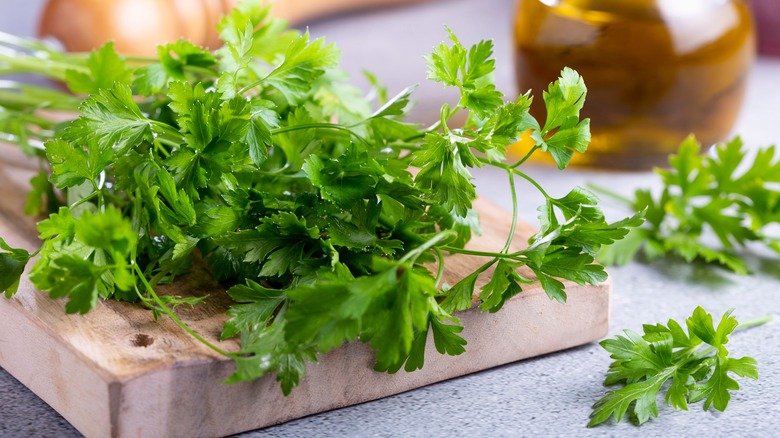
Cultivating fresh herbs ensures consistent flavor, aroma, and nutritional content. Both parsley and cilantro grow well in small spaces and can thrive in containers or garden beds.
Parsley Cultivation
- Light: Requires 4–6 hours of sunlight or supplemental grow lights.
- Soil: Fertile, well-draining soil enriched with plant-based compost.
- Watering: Maintain consistently moist soil; avoid waterlogging.
- Propagation: Grow from seeds or cuttings; seeds germinate in 2–3 weeks.
Harvesting Tips:
- Cut outer leaves first, leaving inner growth for continued production.
- Frequent trimming promotes bushier, healthier plants.
Cilantro Cultivation
- Light: Prefers full sun (6–8 hours) but tolerates partial shade indoors.
- Soil: Loose, well-draining soil with organic compost.
- Watering: Keep soil evenly moist.
- Propagation: Sow seeds directly into containers or garden beds; germination in 7–14 days.
Harvesting Tips:
- Use leaves before the plant bolts (produces flowers), which reduces flavor intensity.
- Cut stems near the base for continuous regrowth.
Container Gardening: Both herbs thrive in pots, window boxes, and raised beds, making them ideal for kitchens with limited space.
Storage of Fresh Parsley and Cilantro
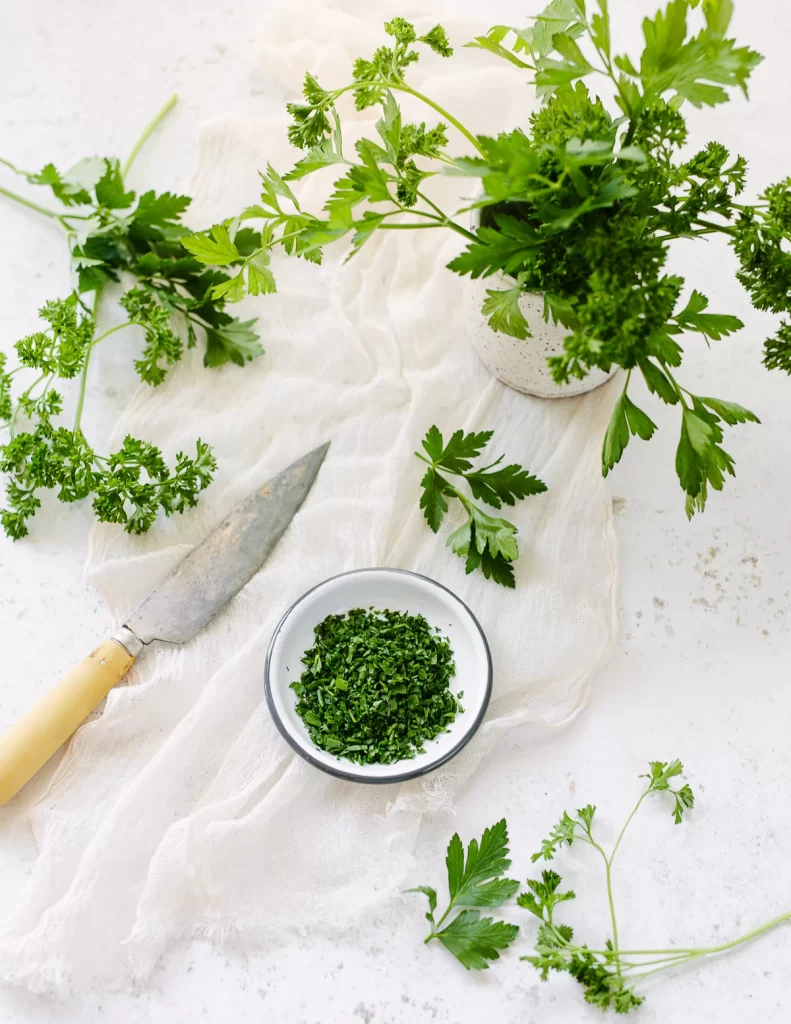
Proper storage preserves flavor and freshness for culinary use:
- Refrigeration:
- Place stems in a jar with water, cover loosely with a plastic bag, and refrigerate.
- Replace water every 2–3 days; leaves stay fresh up to two weeks.
- Freezing:
- Chop leaves and freeze in ice cube trays with a small amount of water or plant-based oil.
- Ideal for sauces, soups, and stews.
- Drying:
- Air-dry or use a dehydrator at low temperatures.
- Store dried herbs in airtight containers away from light and moisture.
Fresh herbs retain flavor and bioactive compounds longer when stored carefully.
Cooking With Parsley
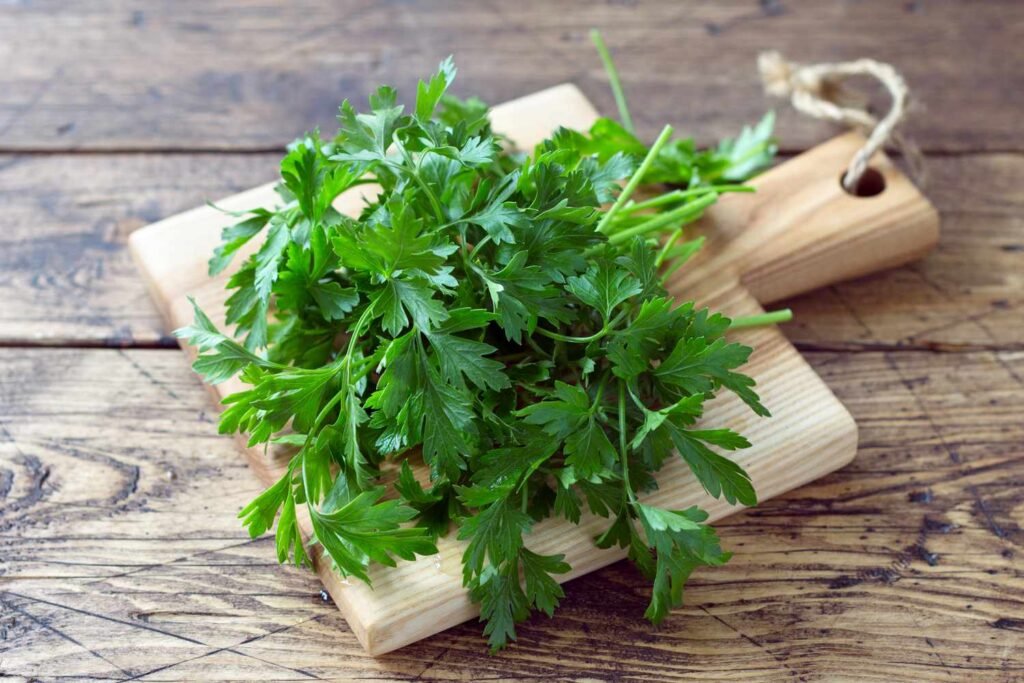
Parsley’s mild, slightly peppery taste complements a wide range of plant-based dishes:
1. Salads
- Fresh parsley can be chopped and added to green salads, grain salads, or tabbouleh.
- Combines well with tomatoes, cucumbers, olive oil, lemon juice, and other fresh herbs.
2. Sauces and Pestos
- Blend parsley with garlic, nuts, olive oil, and lemon juice to create vibrant plant-based sauces.
- Use as a topping for roasted vegetables, grains, or plant-based proteins.
3. Soups and Stews
- Stir chopped parsley into soups or plant-based stews at the end of cooking to retain flavor and nutrients.
- Pairs well with root vegetables, beans, lentils, and grains.
4. Garnishes
- Sprinkle fresh parsley on finished dishes for visual appeal and added freshness.
- Enhances flavor without additional calories or fat.
5. Infusions and Teas
- Parsley leaves can be infused in hot water for mild herbal teas that support hydration and plant-based wellness.
Cooking With Cilantro
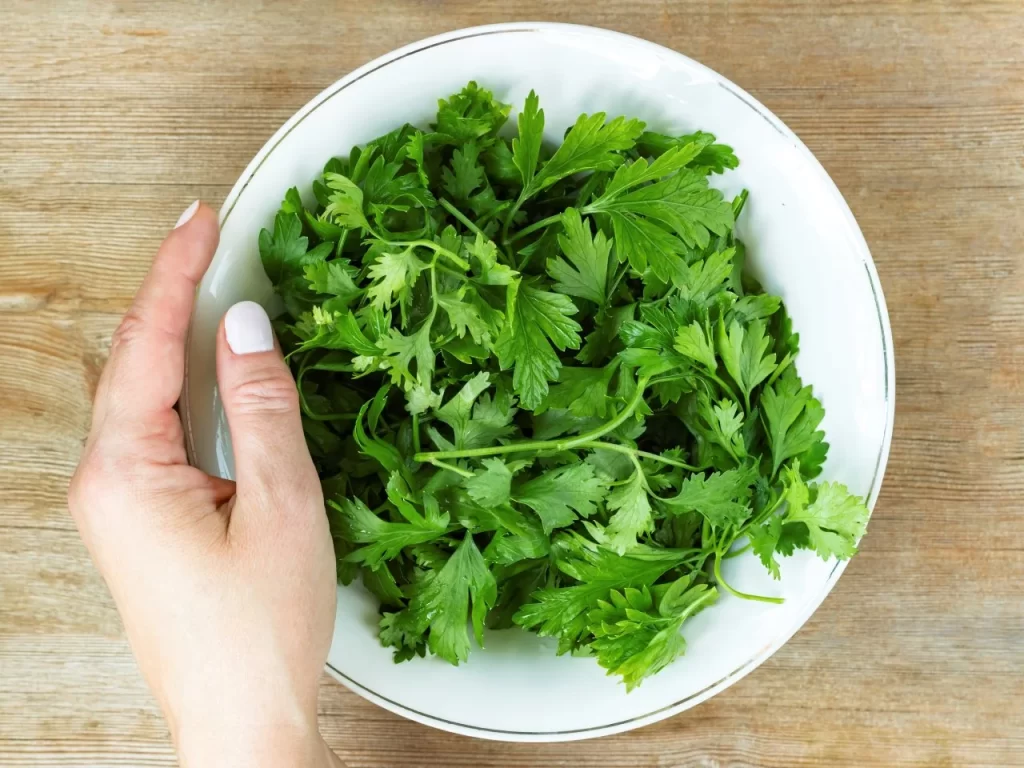
Cilantro’s bright, citrus-like flavor makes it a central ingredient in global plant-based cuisines:
1. Salsas and Dips
- Combine chopped cilantro with tomatoes, onions, lime juice, and plant-based seasonings for fresh salsas.
- Adds brightness to guacamole and bean dips.
2. Curries and Stir-Fries
- Add cilantro at the end of cooking to preserve flavor; it complements plant-based curries, tofu dishes, and vegetable stir-fries.
3. Rice and Grain Dishes
- Mix chopped cilantro into cooked rice, quinoa, or couscous for a refreshing, aromatic touch.
4. Beverages
- Use cilantro in green smoothies, herb-infused water, or detox drinks for subtle flavor and added nutrients.
5. Garnishes
- Sprinkle over soups, salads, and roasted vegetables to enhance aroma and visual appeal.
Combining Parsley and Cilantro
Parsley and cilantro can be used together or separately depending on flavor preferences:
- Flavor Balancing: Parsley adds mildness while cilantro adds citrusy brightness.
- Culinary Pairings: Combine in plant-based salads, grain bowls, pestos, or fresh herb sauces.
- Textural Contrast: Use finely chopped parsley and larger cilantro leaves for layered flavor and texture.
Their complementary profiles make them versatile ingredients in plant-based cooking.
Tips for Maximizing Flavor and Nutrition
- Harvest Timing:
- Pick leaves in the morning for maximum aroma and essential oil content.
- Gentle Handling:
- Avoid crushing leaves during washing or chopping to prevent flavor loss.
- Cooking Order:
- Add parsley at the end of cooking for delicate dishes; add cilantro after cooking or at the end to preserve flavor.
- Flavor Pairings:
- Combine with lemon, garlic, olive oil, tomatoes, and mild spices for plant-based dishes.
Medicinal and Wellness Uses
Both herbs offer health benefits that complement plant-based diets:
- Parsley: Supports digestion, acts as a mild diuretic, and provides antioxidants.
- Cilantro: May aid detoxification, support heart health, and offer anti-inflammatory compounds.
- Herbal Teas: Steep leaves for refreshing, plant-based beverages.
- Infusions and Sauces: Incorporate into daily meals for nutritional enhancement.
Sustainable Practices for Home Herb Use
- Organic Cultivation:
- Use compost, vermicompost, or plant-based liquid fertilizers.
- Water Efficiency:
- Water plants moderately; use self-watering containers if possible.
- Continuous Harvesting:
- Regularly trim leaves to encourage bushy growth and prevent bolting (especially for cilantro).
- Waste Reduction:
- Use trimmings for compost or herbal teas, reducing plant-based waste.
Conclusion
Parsley and cilantro are versatile, aromatic, and nutrient-rich herbs that elevate plant-based cooking and wellness practices. By cultivating fresh herbs at home, storing them properly, and incorporating them thoughtfully into meals, home cooks can enjoy a continuous supply of vibrant flavor and nutrition. Parsley’s mild, peppery taste and cilantro’s bright, citrus-like notes offer complementary culinary applications ranging from salads and sauces to teas and garnishes. Sustainable, plant-based practices in growing, harvesting, and using these herbs maximize their benefits while supporting environmental responsibility. With proper care and creativity, parsley and cilantro become essential ingredients for any plant-based kitchen, enhancing flavor, nutrition, and visual appeal year-round.