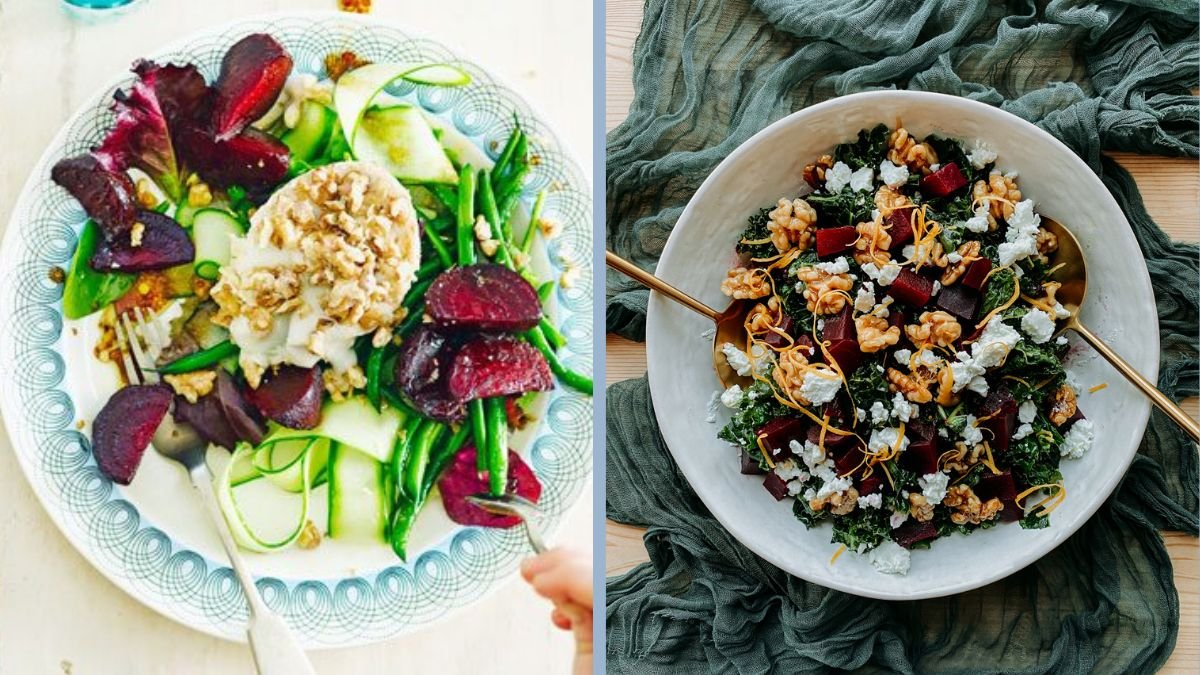
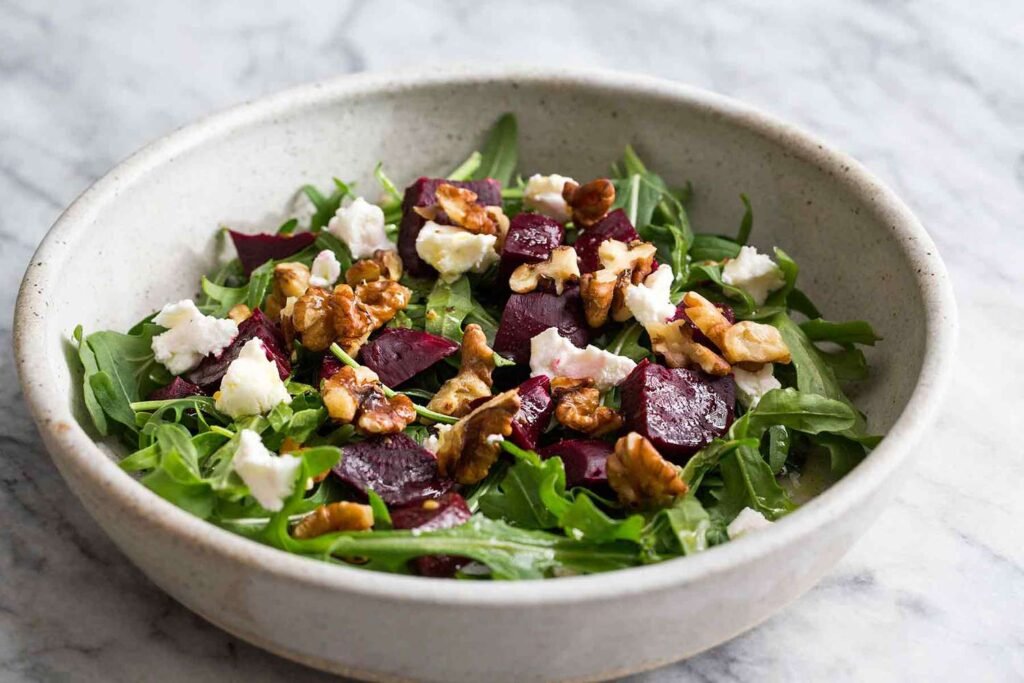
Salads are often celebrated for their versatility, vibrant colors, and nutrient density, providing a convenient way to incorporate a variety of vegetables, fruits, proteins, and healthy fats into the diet. Among them, roasted beet salad with goat cheese and walnuts stands out for its balance of earthy, creamy, and crunchy textures. This salad combines roasted beets’ natural sweetness with the tang of goat cheese and the rich, nutty flavor of walnuts, creating a visually appealing and nutritionally balanced dish.
This article explores the nutritional benefits of this salad, the key ingredients, preparation techniques, variations, and practical tips for assembling a flavorful, healthful, and visually attractive dish suitable for vegetarian and plant-based diets.
Nutritional Benefits
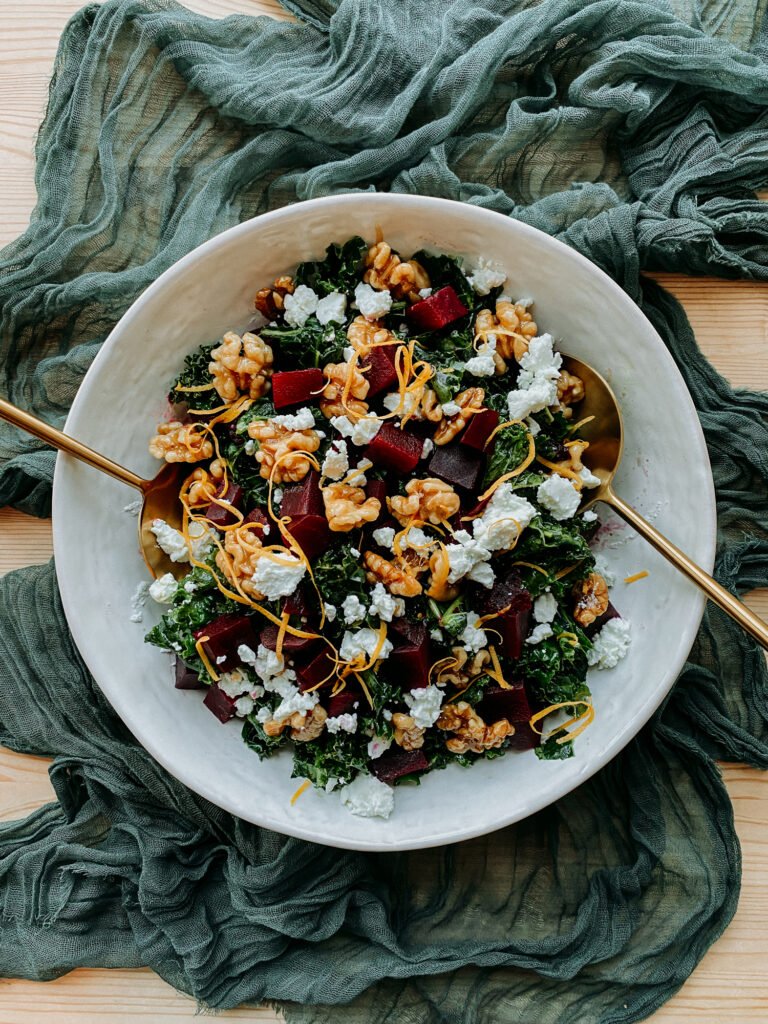
Roasted beet salad with goat cheese and walnuts is more than just a colorful side dish; it provides multiple health benefits:
- Beets: Rich in dietary nitrates, which improve blood flow and support cardiovascular health. Beets are also a good source of fiber, folate, manganese, potassium, and antioxidants such as betalains, which have anti-inflammatory properties.
- Goat Cheese: Adds a creamy texture and provides protein, calcium, and vitamin B12. Plant-based alternatives like cashew cheese can offer similar creaminess while keeping the salad fully vegan.
- Walnuts: High in omega-3 fatty acids, protein, fiber, and antioxidants. They support heart health, cognitive function, and satiety.
- Greens: Mixed salad greens or arugula add vitamins A, C, and K, as well as fiber and phytonutrients.
- Dressing: Olive oil and vinegar dressings enhance flavor and provide heart-healthy monounsaturated fats. Lemon juice adds vitamin C and freshness.
Together, these ingredients form a nutrient-dense, well-balanced salad suitable for a main course or side dish.
Essential Ingredients
To prepare a roasted beet salad with goat cheese and walnuts, the following components are required:
Vegetables and Greens:
- 3–4 medium beets, washed, peeled, and cut into wedges
- 4 cups mixed greens (arugula, spinach, or mesclun mix)
Protein and Healthy Fats:
- ½ cup crumbled goat cheese or plant-based cheese alternative
- ¼ cup walnuts, toasted
Dressing:
- 2 tablespoons extra-virgin olive oil
- 1 tablespoon balsamic vinegar or lemon juice
- 1 teaspoon Dijon mustard
- Salt and black pepper to taste
Optional: fresh herbs such as parsley, chives, or thyme for garnish.
Step-by-Step Preparation
1. Roast the Beets
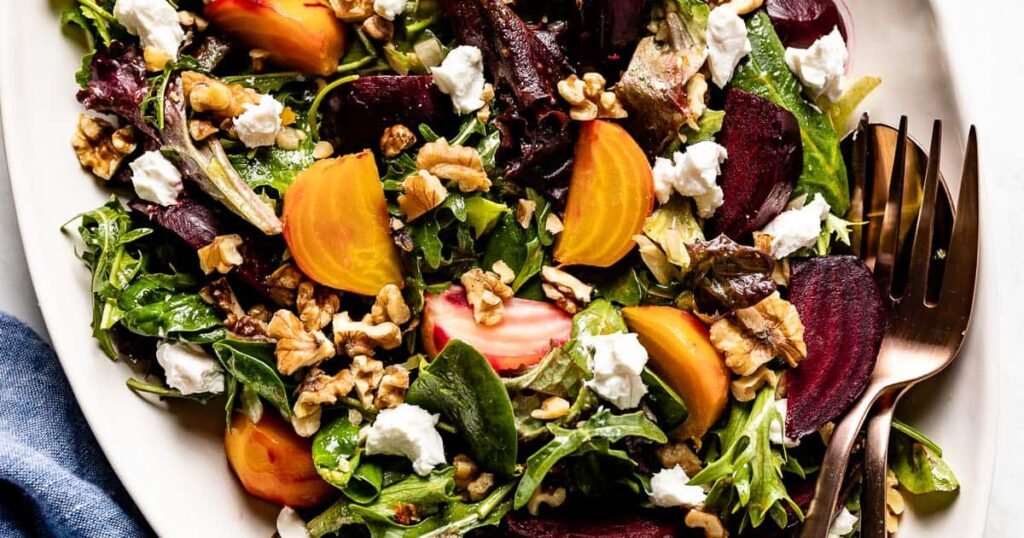
Preheat the oven to 400°F (200°C). Toss beet wedges with a small amount of olive oil, salt, and pepper. Spread them on a baking sheet lined with parchment paper. Roast for 30–40 minutes, turning halfway, until tender and slightly caramelized. Allow the beets to cool to room temperature.
2. Toast the Walnuts
Toast walnuts in a dry skillet over medium heat for 3–5 minutes, shaking frequently, until fragrant. This enhances their flavor and crunch.
3. Prepare the Dressing
Whisk together olive oil, balsamic vinegar or lemon juice, Dijon mustard, salt, and black pepper in a small bowl. Adjust acidity and seasoning to taste.
4. Assemble the Salad
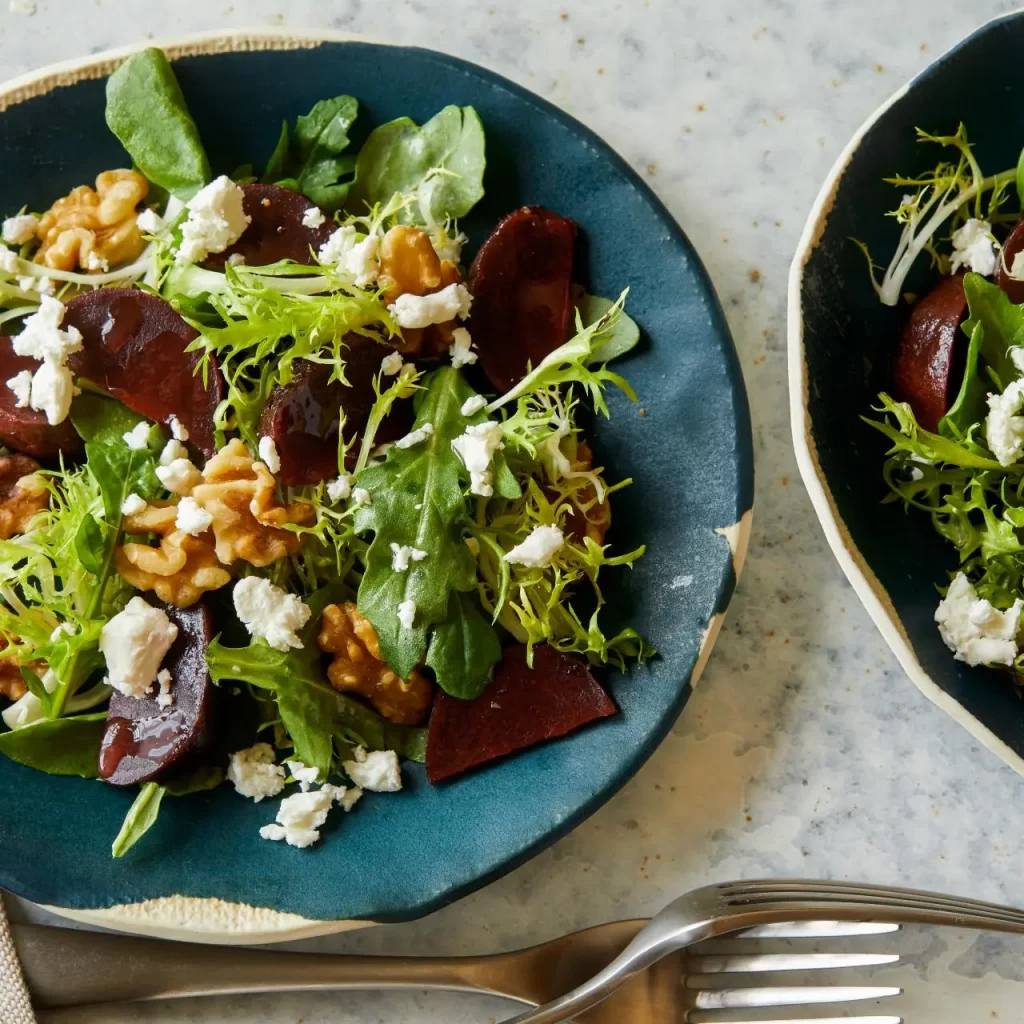
Place the mixed greens in a large salad bowl. Arrange roasted beet wedges on top. Sprinkle crumbled goat cheese and toasted walnuts evenly over the salad. Drizzle the dressing just before serving and gently toss or leave layered for a visually appealing presentation.
5. Garnish
Add fresh herbs such as parsley, chives, or thyme to enhance aroma and presentation. Serve immediately to maintain texture and freshness.
Flavor Profile and Textural Balance
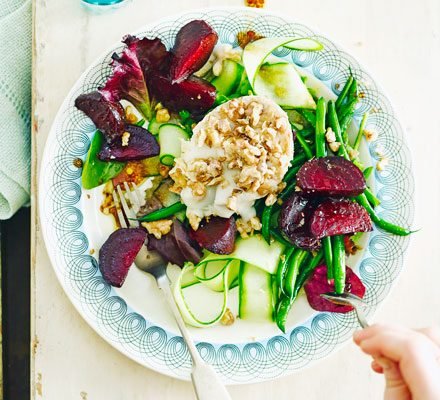
Roasted beet salad with goat cheese and walnuts is notable for its complex flavor and texture profile:
- Sweetness: Roasted beets bring natural sweetness and earthy depth.
- Tanginess: Goat cheese or plant-based cheese provides a creamy, tangy contrast.
- Crunch: Toasted walnuts add a satisfying crunch and nutty richness.
- Freshness: Salad greens provide crispness and a slightly bitter or peppery note, depending on the variety.
- Acidity: Balsamic vinegar or lemon juice brightens flavors and balances richness.
This combination ensures every bite delivers a harmonious blend of taste and texture, appealing to both the palate and visual senses.
Variations and Enhancements
This salad is versatile and can be customized for different flavors, textures, and dietary needs:
- Vegan Option: Replace goat cheese with cashew cheese, almond ricotta, or tofu-based cheese for a plant-based alternative.
- Additional Vegetables: Add roasted carrots, sweet potatoes, or beets of different colors for a rainbow effect and added nutrients.
- Fruit Additions: Include sliced oranges, apples, or pomegranate seeds for natural sweetness and color contrast.
- Grain Boost: Incorporate cooked quinoa, farro, or brown rice for a more filling, protein-rich salad.
- Spice and Herb Variations: Sprinkle with smoked paprika, cumin, or fresh basil to add aromatic complexity.
These variations allow the salad to be adapted seasonally or for specific nutritional goals while maintaining its core appeal.
Health Benefits and Functional Properties
Cardiovascular Health
Beets and walnuts contribute to heart health through dietary nitrates, antioxidants, and omega-3 fatty acids, promoting healthy blood pressure and reducing inflammation.
Digestive Support
Fiber from beets, greens, and walnuts promotes gut health, regularity, and satiety, making this salad a functional addition to a balanced diet.
Bone and Cognitive Support
Calcium from goat cheese (or fortified plant-based alternatives) supports bone health, while omega-3s in walnuts contribute to brain function.
Antioxidant Support
Beets, greens, and walnuts provide antioxidants that reduce oxidative stress and support immune function.
Practical Tips for the Perfect Salad
- Uniform Roasting: Cut beets into similar-sized pieces to ensure even cooking.
- Avoid Overdressing: Dress salad just before serving to prevent wilting and maintain crispness.
- Balance Ingredients: Ensure proportional quantities of beets, greens, cheese, and nuts for consistent flavor and texture.
- Storage: Store components separately if preparing in advance. Dress just before serving for optimal freshness.
- Presentation: Layer ingredients to create visual appeal; contrasting colors enhance appetite and presentation.
Environmental and Dietary Considerations
Roasted beet salad with goat cheese and walnuts aligns with sustainable and vegetarian dietary practices:
- Plant-Based Components: Beets, greens, and walnuts are plant-based, reducing reliance on animal products.
- Seasonal Vegetables: Using seasonal, locally sourced beets and greens supports environmental sustainability.
- Minimal Processing: Fresh ingredients maintain nutrient density and reduce packaging waste.
- Meal Versatility: Suitable for lunch, dinner, or festive gatherings, reducing the need for multiple dishes and conserving resources.
By emphasizing plant-forward, seasonal ingredients, this salad combines health benefits with environmentally conscious eating.
Serving Suggestions
- As a Main Dish: Add cooked grains like quinoa or farro for a complete, protein-rich meal.
- As a Side Salad: Pair with roasted vegetables, soups, or whole-grain bread for balanced meals.
- For Entertaining: Serve on a large platter with layered colors and garnished with herbs for a visually appealing presentation.
- Make-Ahead Option: Roast beets in advance and assemble the salad shortly before serving to save time without compromising freshness.
Conclusion
Roasted beet salad with goat cheese and walnuts is a nutrient-dense, flavorful, and visually appealing dish suitable for vegetarian diets and plant-forward meals. Its combination of roasted beets, creamy cheese, crunchy walnuts, and fresh greens offers a balance of taste, texture, and nutrition, making it an ideal dish for daily meals, festive gatherings, or health-conscious dining.
Careful preparation—roasting beets evenly, toasting walnuts, and assembling ingredients just before serving—ensures optimal flavor, texture, and nutrient retention. The salad’s versatility allows for seasonal adaptations, vegan alternatives, and additional grains or fruits, creating opportunities for customization while maintaining its core appeal.
This dish exemplifies how simple, whole ingredients can be transformed into a functional, delicious, and visually stunning salad. Rich in antioxidants, healthy fats, fiber, and essential vitamins and minerals, roasted beet salad with goat cheese and walnuts is more than a side dish—it is a balanced, healthful, and satisfying culinary experience suitable for modern vegetarian and plant-based diets.