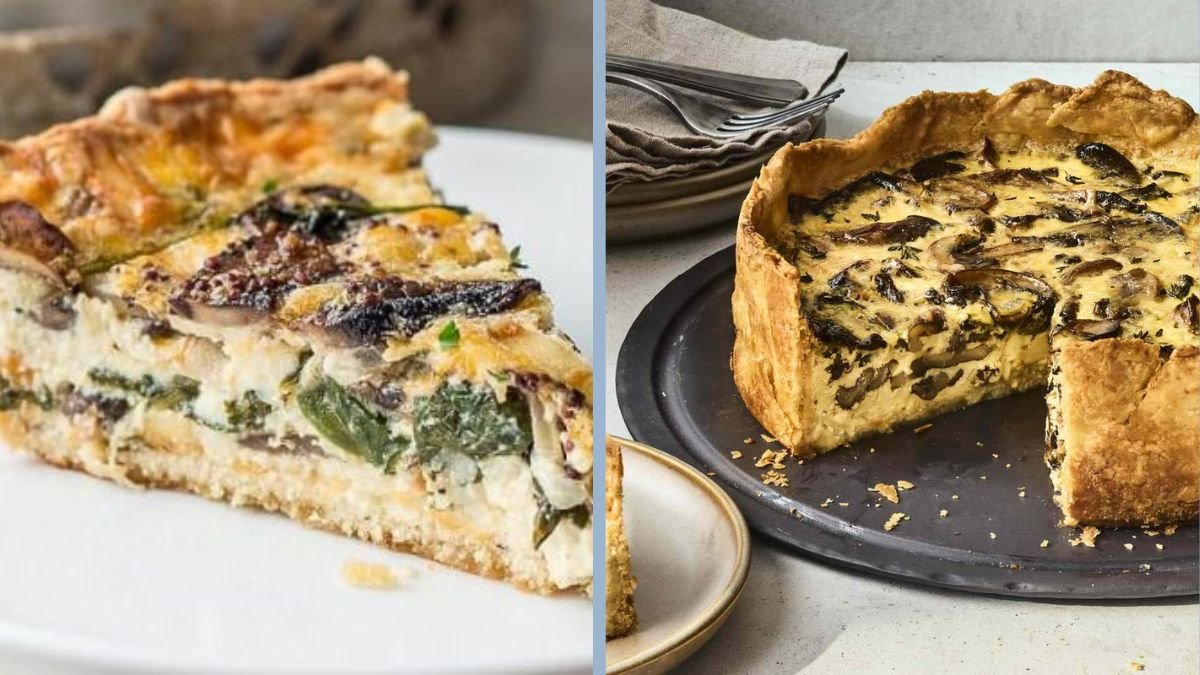
Quiche is a versatile, savory dish that has been celebrated for centuries in European cuisine. Known for its rich custard filling baked in a flaky crust, quiche can be enjoyed for breakfast, brunch, lunch, or dinner. The combination of mushrooms and spinach in a quiche creates a balance of earthy and vibrant flavors while providing essential nutrients and a high-protein, vegetarian-friendly meal. This article explores the nutritional benefits, ingredient selection, preparation methods, flavor variations, and serving suggestions for a savory mushroom and spinach quiche.
Nutritional Benefits of Mushroom and Spinach Quiche
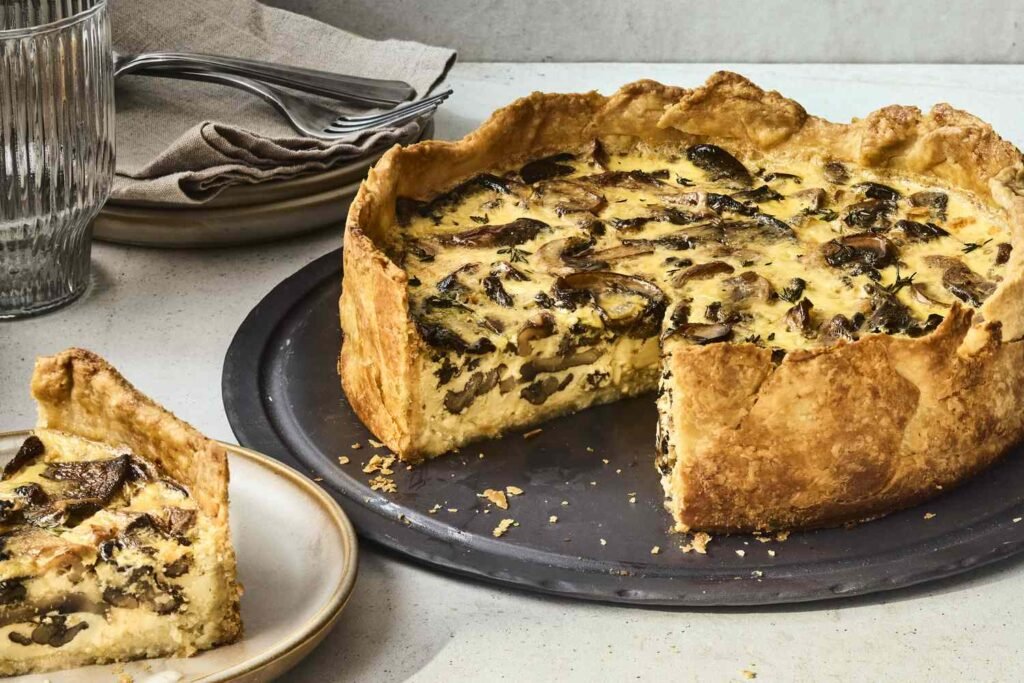
Mushroom and spinach quiche is more than just a flavorful dish; it is nutritionally rich and supports a balanced vegetarian diet:
- Mushrooms: Low in calories yet packed with antioxidants, B vitamins, and minerals such as selenium and potassium. Mushrooms support immune function and provide umami flavor without added fat.
- Spinach: High in iron, calcium, magnesium, and vitamins A, C, and K. Spinach contributes fiber and antioxidants, promoting cardiovascular health and digestion.
- Eggs or Vegan Alternatives: Eggs provide high-quality protein and essential amino acids. For vegan quiches, plant-based egg substitutes, such as chickpea flour or silken tofu, offer protein and a custard-like texture.
- Dairy or Plant-Based Milk: Adds creaminess while providing calcium and vitamin D. Plant-based alternatives, such as almond or soy milk, make the quiche suitable for vegan diets.
- Whole-Grain or All-Purpose Flour: Used in the crust, it provides energy, dietary fiber, and minerals. Whole-grain options increase nutrient density.
Together, these ingredients create a balanced meal, providing protein, vitamins, minerals, fiber, and antioxidants in a satisfying and flavorful dish.
Essential Ingredients
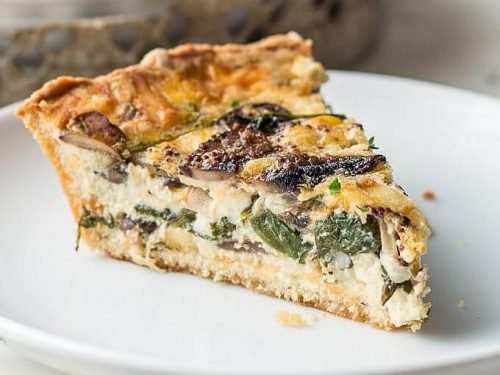
For the Crust:
- 1 ¼ cups all-purpose flour (or half whole wheat flour for added fiber)
- ½ cup cold unsalted butter or vegan butter
- 2–3 tablespoons cold water
- A pinch of salt
For the Filling:
- 1 cup mushrooms, sliced (cremini, button, or portobello)
- 2 cups fresh spinach, washed and chopped
- ½ cup milk or plant-based milk
- 3–4 eggs or vegan egg substitute
- ¼ cup grated cheese or vegan cheese alternative (optional)
- 1 teaspoon olive oil
- ½ teaspoon salt
- ¼ teaspoon black pepper
- ¼ teaspoon nutmeg (optional)
Step-by-Step Preparation
1. Prepare the Crust
Combine flour and salt in a large bowl. Cut in cold butter using a pastry cutter or fingertips until the mixture resembles coarse crumbs. Gradually add cold water, one tablespoon at a time, until the dough forms a disc. Chill in the refrigerator for 30 minutes to firm up and relax the gluten.
2. Pre-Bake the Crust
Roll out the chilled dough to fit a 9-inch pie pan. Press gently into the pan, trim excess edges, and crimp the edges for decoration. Blind bake the crust at 375°F (190°C) for 10 minutes to prevent sogginess during baking.
3. Sauté Vegetables
Heat olive oil in a pan over medium heat. Sauté mushrooms until lightly browned and any released moisture evaporates. Add spinach and cook until wilted. Season with salt, pepper, and optional nutmeg. Allow the mixture to cool slightly.
4. Prepare the Custard
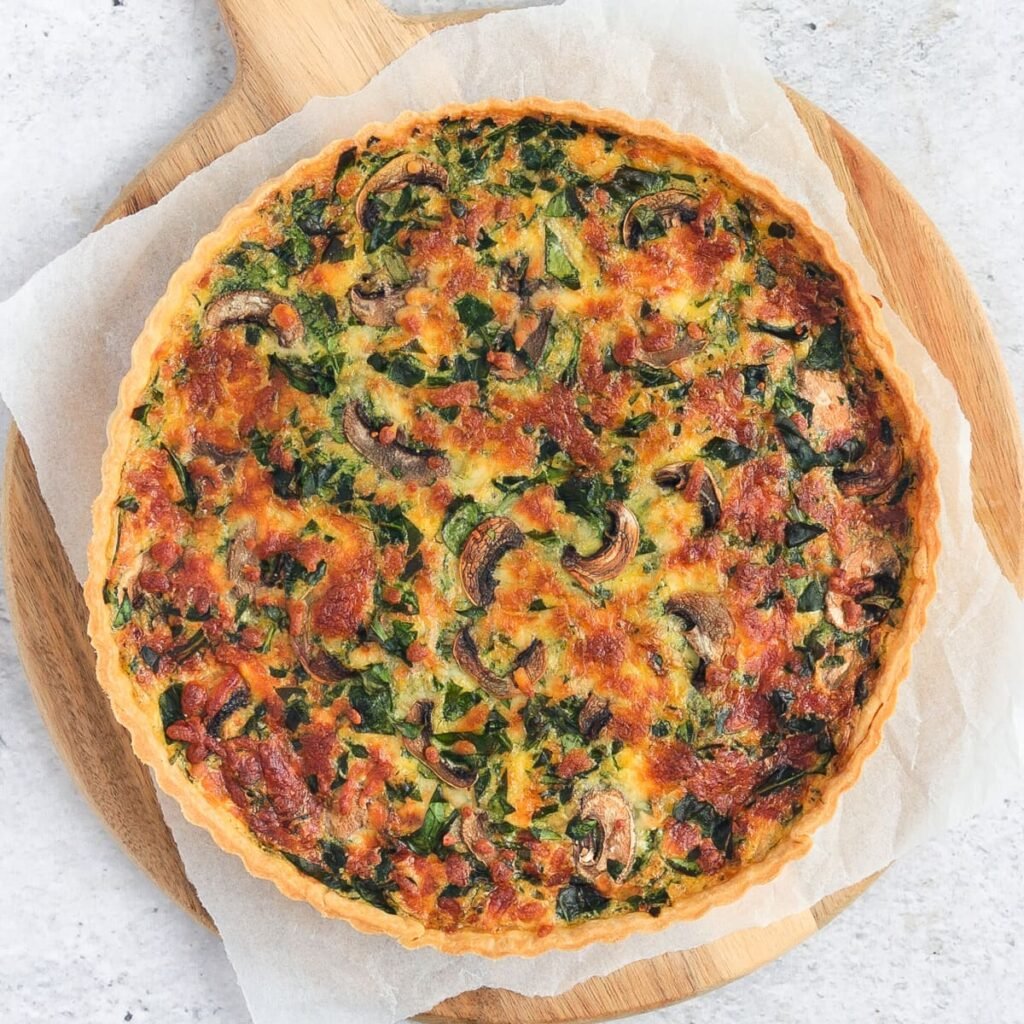
In a bowl, whisk together eggs (or vegan substitute), milk, and a pinch of salt and pepper. Add optional grated cheese for extra flavor. Ensure the custard is smooth and well-combined.
5. Assemble the Quiche
Spread the mushroom and spinach mixture evenly over the pre-baked crust. Pour the custard over the vegetables, ensuring it fills the spaces evenly. Tap the pan gently to remove air bubbles.
6. Bake the Quiche
Bake at 375°F (190°C) for 30–40 minutes, or until the custard is set and the top is lightly golden. Avoid overbaking, as this can cause cracks or a dry texture.
7. Cool and Serve
Allow the quiche to cool for 10–15 minutes before slicing. This ensures the custard sets properly and enhances flavor. Serve warm or at room temperature.
Flavor Variations
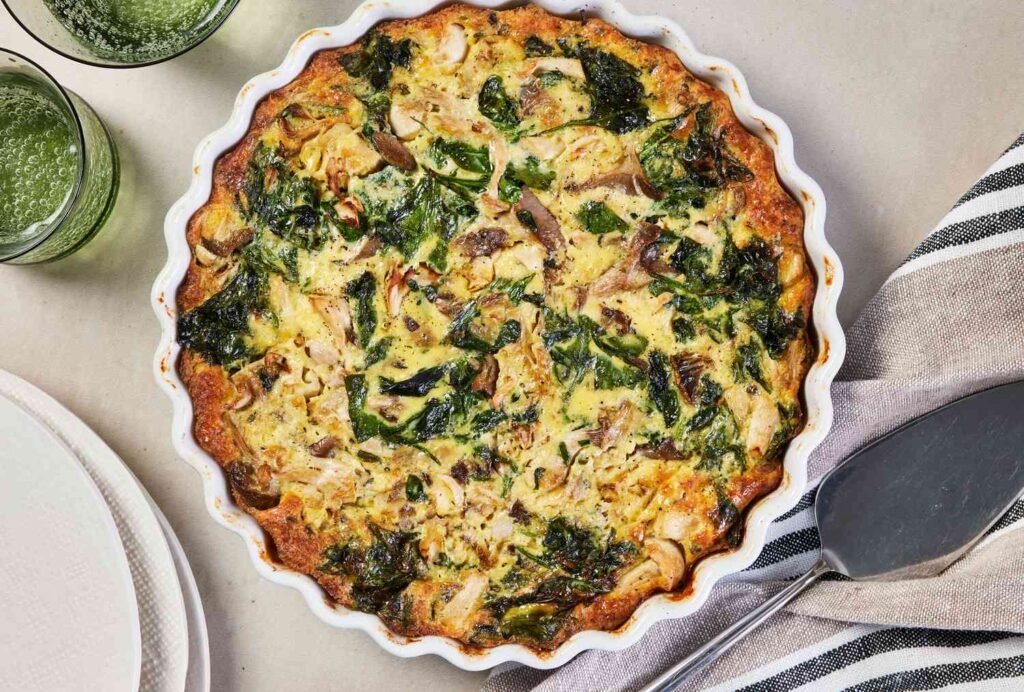
Savory mushroom and spinach quiche can be adapted in multiple ways to suit taste preferences and dietary needs:
- Cheese Variations: Use feta, goat cheese, or vegan cheese alternatives to add richness.
- Herbs: Incorporate fresh herbs like thyme, rosemary, or parsley for aromatic complexity.
- Additional Vegetables: Add bell peppers, onions, zucchini, or tomatoes to increase color, texture, and nutrient content.
- Spice Enhancements: Use garlic powder, smoked paprika, or chili flakes for an extra kick.
- Crust Alternatives: Use phyllo dough, gluten-free crusts, or no-crust quiche variations for dietary flexibility.
These variations demonstrate the versatility of quiche, allowing it to be adapted for different seasons, meals, and personal preferences.
Health Benefits and Functional Properties
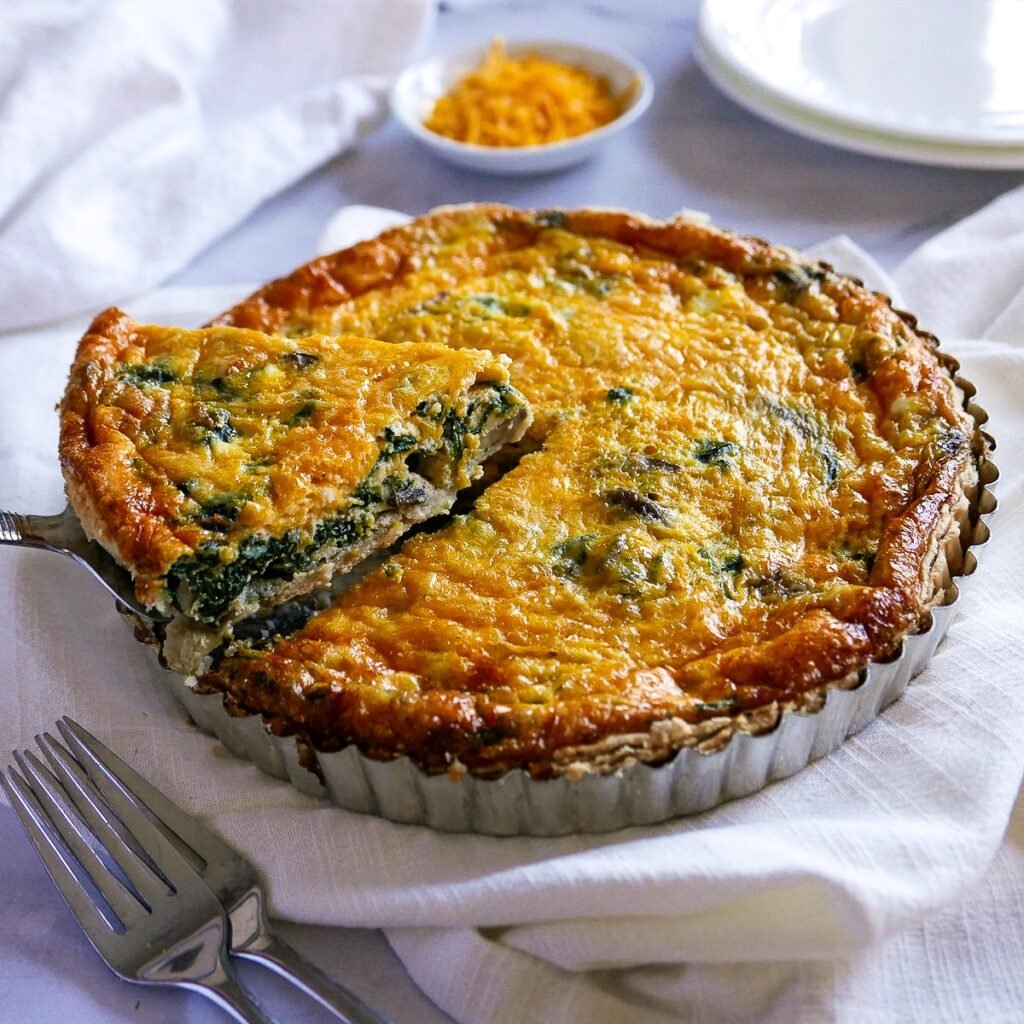
Mushroom and spinach quiche provides several functional benefits for a balanced vegetarian diet:
- Protein-Rich: Eggs or plant-based substitutes provide essential amino acids for tissue repair and satiety.
- Heart-Healthy: Fiber from vegetables and whole-grain crusts promotes cardiovascular health.
- Bone and Eye Health: Spinach and cheese contribute calcium, vitamin K, and antioxidants like lutein and zeaxanthin.
- Digestive Support: Fiber-rich vegetables and optional whole-grain crusts support digestive health and regularity.
- Immune Support: Mushrooms provide selenium and antioxidants that strengthen immune function.
This combination makes quiche suitable as a meal that is both nourishing and indulgent.
Practical Tips for a Perfect Quiche
- Avoid Overcooking Custard: Check doneness by gently shaking the pan; the center should be slightly jiggly.
- Use Cold Ingredients for Crust: Ensures flakiness and prevents tough dough.
- Drain Vegetables Well: Excess moisture can make the quiche soggy.
- Even Distribution: Spread vegetables evenly to ensure each slice has a balanced combination of ingredients.
- Storage: Refrigerate leftovers for up to 3–4 days or freeze portions for up to one month.
Serving Suggestions
Savory mushroom and spinach quiche is highly versatile in presentation and pairing:
- Breakfast or Brunch: Serve with fresh fruit or a side salad for a complete meal.
- Lunch or Dinner: Pair with roasted vegetables or a light soup for a satisfying meal.
- Individual Portions: Prepare mini quiches in muffin tins for portion control and easy serving.
- Entertaining: Serve as part of a buffet or brunch spread; garnish with fresh herbs for visual appeal.
Environmental and Dietary Considerations
Mushroom and spinach quiche aligns with sustainable and vegetarian dietary practices:
- Plant-Based Ingredients: Mushrooms, spinach, and optional vegan substitutes reduce reliance on animal products.
- Seasonal Vegetables: Using locally sourced spinach and mushrooms supports sustainable agriculture.
- Minimal Waste: Quiche allows flexible use of leftover vegetables and herbs, reducing food waste.
- Energy Efficiency: Baking one quiche provides multiple servings, reducing the need for repeated cooking.
By emphasizing plant-based and locally sourced ingredients, this dish supports environmental sustainability as well as healthy eating.
Conclusion
Savory mushroom and spinach quiche is a nutrient-rich, versatile, and flavorful dish that exemplifies the art of combining plant-based ingredients with protein-rich custard. Its balance of earthy mushrooms, vibrant spinach, and a flaky crust provides a satisfying and wholesome meal suitable for breakfast, brunch, or dinner.
Careful preparation—from chilling the crust and sautéing vegetables to creating a smooth custard—ensures a quiche that is tender, flavorful, and visually appealing. Variations in herbs, cheese, and additional vegetables allow for endless customization while maintaining the integrity of the classic mushroom and spinach combination.
Mushroom and spinach quiche demonstrates how a simple vegetarian dish can be transformed into a sophisticated, nutrient-dense meal. It combines protein, fiber, vitamins, minerals, and antioxidants, making it a functional, delicious, and sustainable option for plant-based diets and beyond.