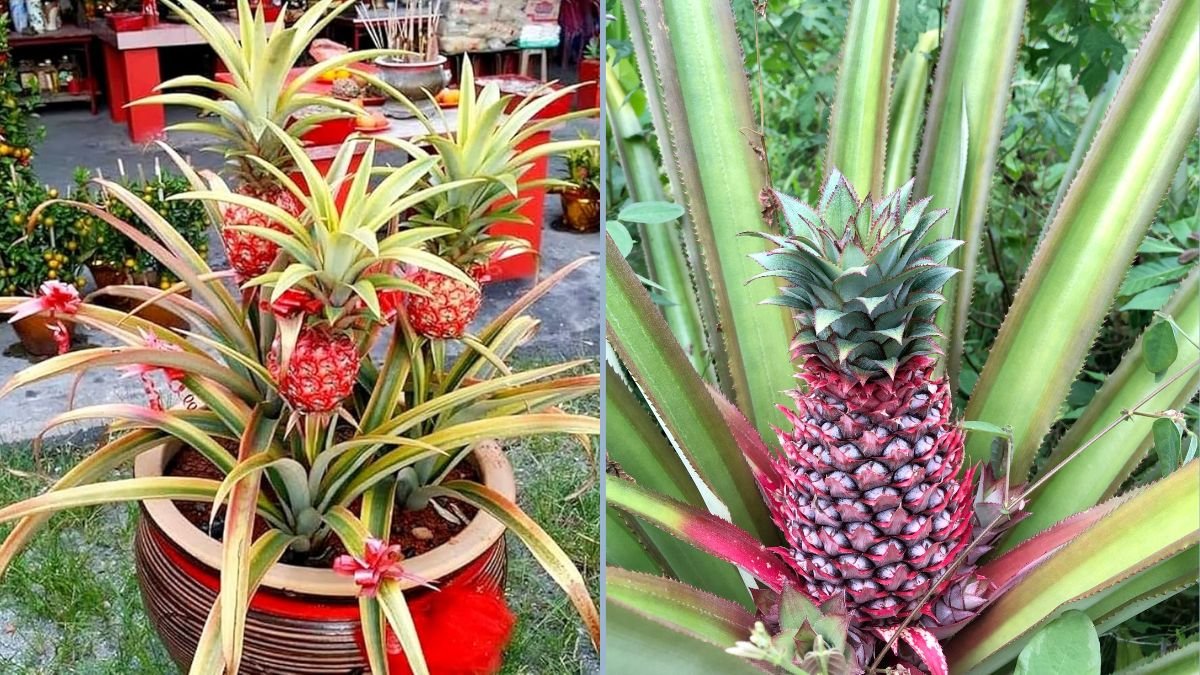
Pineapples are one of the world’s most beloved tropical fruits, admired for their sweet, tangy flavor and striking appearance. Among the many varieties available, the Red Spanish pineapple stands out for its vivid color, unique aroma, and delightful taste. While growing and caring for pineapples requires patience and attention, the rewards are extraordinary—imagine harvesting a fruit that’s as visually stunning as it is delicious.
In this guide, we’ll explore everything you need to know about Red Spanish pineapples, from their origin and characteristics to cultivation tips, care practices, and enjoying your harvest.
Why Choose Red Spanish Pineapple?
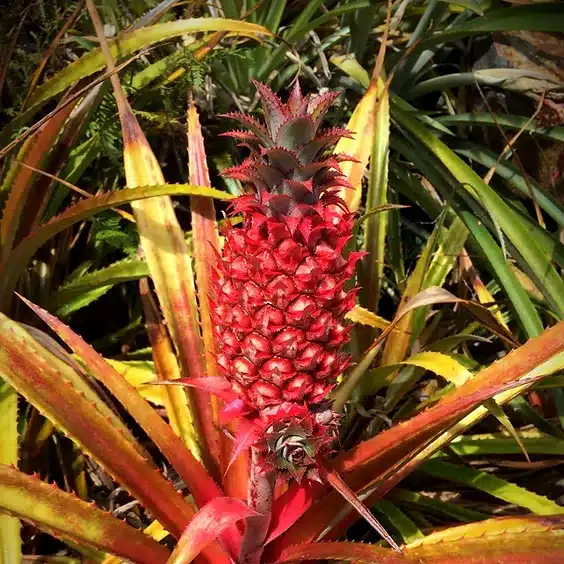
The Red Spanish pineapple is a tropical favorite, known for its distinct flavor and appearance. Some reasons gardeners and pineapple enthusiasts choose this variety include:
- Vibrant Red Color: The fruit has a slightly reddish hue, making it visually striking and unique compared to traditional pineapples.
- Sweet-Tart Flavor: It balances sweetness with a mild tang, making it perfect for fresh eating, juices, and desserts.
- Fragrant Aroma: The fruit emits a delightful tropical scent that enhances its appeal.
- Ornamental Value: The plant itself, with spiky leaves and colorful fruit, adds charm to a garden or tropical display.
- Adaptability: While tropical in origin, Red Spanish pineapple can be grown in subtropical climates and in controlled environments elsewhere.
Whether grown for personal enjoyment or as part of a tropical garden collection, this pineapple variety provides both aesthetic and culinary benefits.
Origin and Characteristics
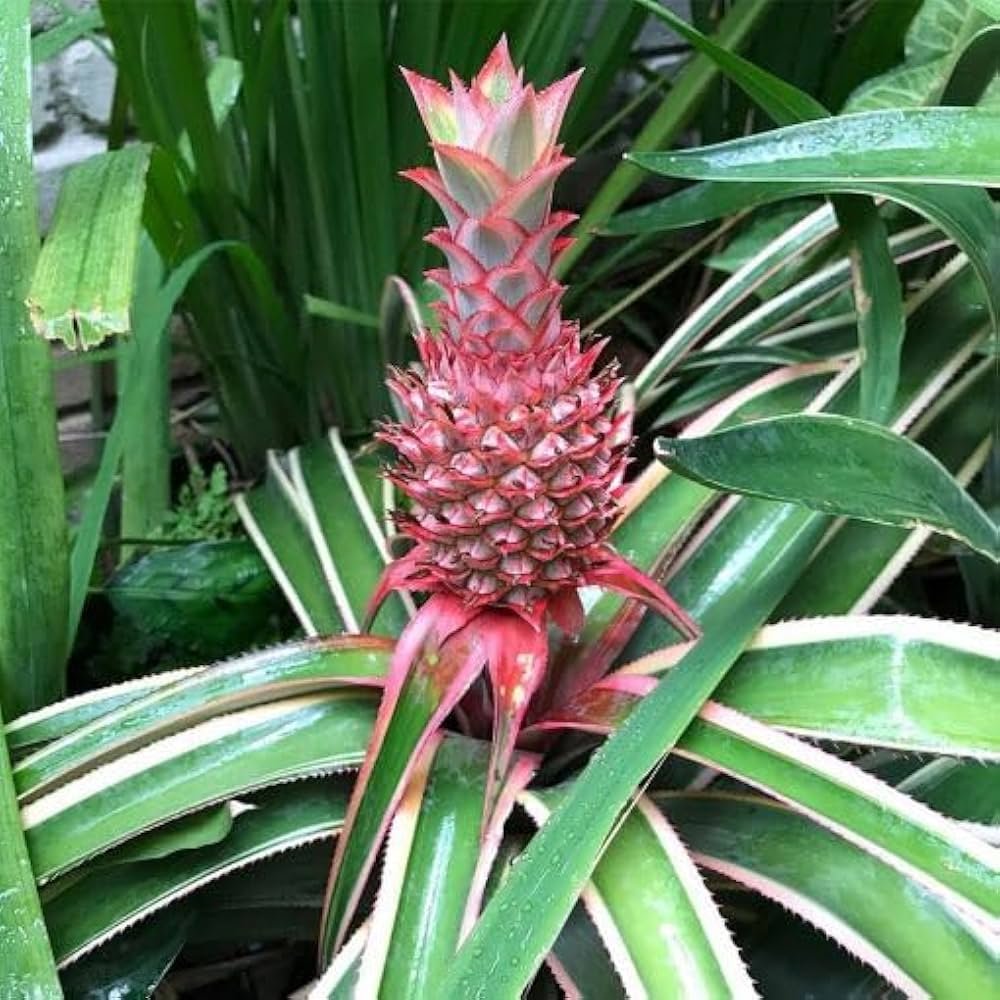
The Red Spanish pineapple is native to Caribbean and Central American regions, where it thrives in warm, humid climates. Its key characteristics include:
- Size: Medium-sized fruit, usually weighing between 3–5 pounds.
- Skin Color: Reddish or bronze exterior when mature, sometimes with golden undertones.
- Flesh: Bright yellow, juicy, and tender.
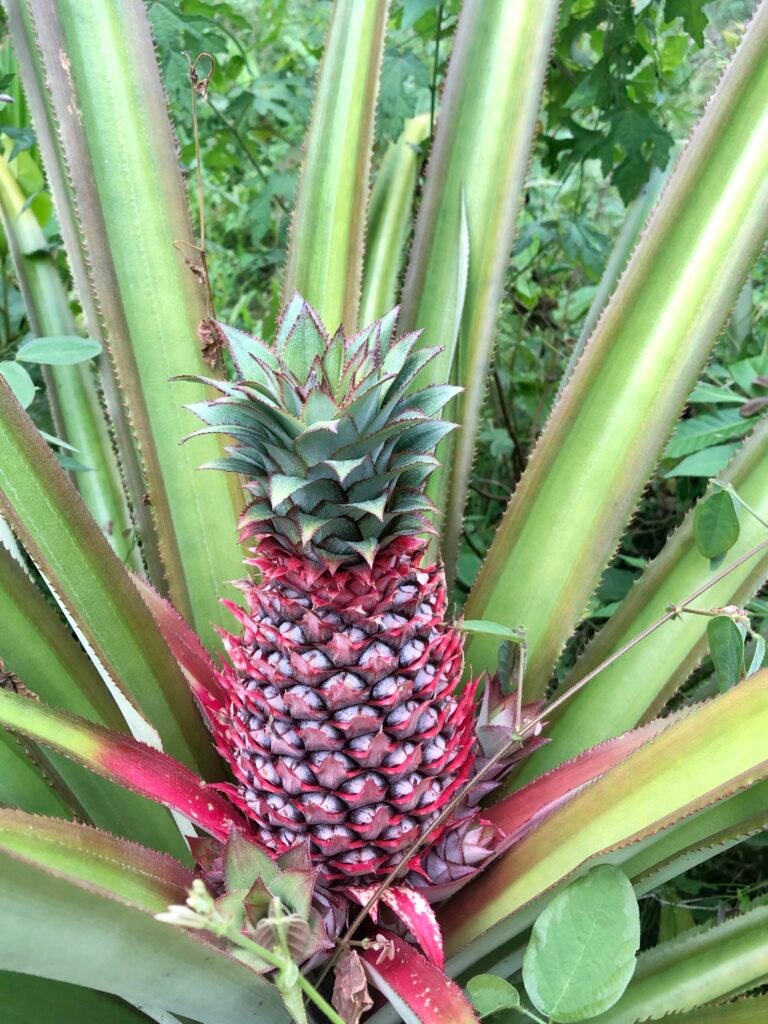
- Leaves: Long, spiky, and green with a hint of red at the base.
- Growth Habit: Forms a rosette of leaves, with a single fruit growing from the center after flowering.
This variety is particularly valued for its balance of sweetness and acidity, which sets it apart from standard pineapples.
Starting Your Red Spanish Pineapple Plant
Pineapples are propagated primarily from crowns, slips, or suckers, rather than seeds. Here’s how to start your Red Spanish pineapple:
1. Selecting a Healthy Crown
- Choose a pineapple with healthy, green leaves and no signs of disease.
- Remove any fruit flesh to prevent rot.
2. Preparing the Crown
- Twist or cut the crown from the fruit.
- Trim the lower leaves to expose the base for planting.
- Allow the crown to dry for 1–2 days to reduce the risk of rot.
3. Planting
- Use a well-draining potting mix with organic matter.
- Plant the crown upright, burying only the base.
- Water lightly to settle the soil.
4. Location
- Place in a sunny spot receiving 6–8 hours of light daily.
- Pineapples can be grown indoors or in pots in cooler climates, but outdoor planting is ideal in tropical or subtropical regions.
Caring for Red Spanish Pineapple Plants
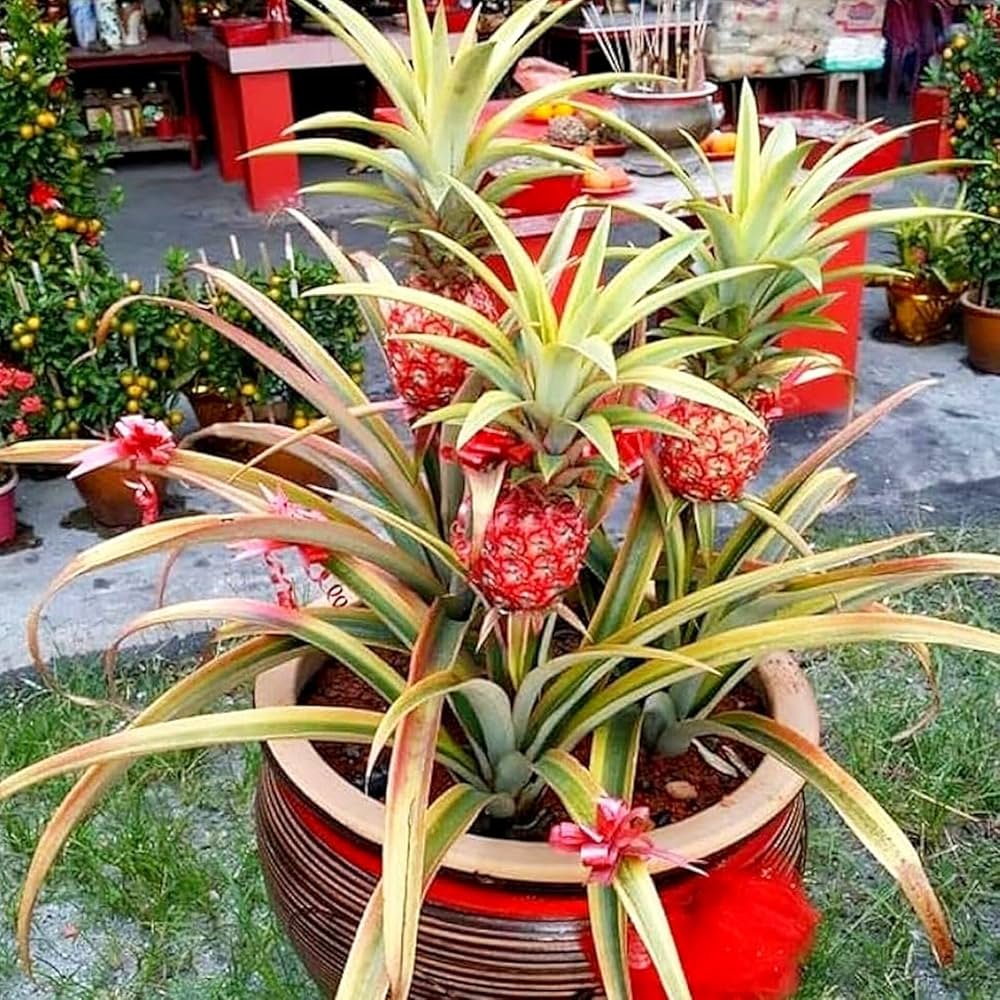
Pineapples are slow-growing plants that require consistent care, proper watering, and patience.
1. Watering
- Keep the soil moist but not waterlogged.
- Pineapples are drought-tolerant but perform best with regular, moderate watering.
- Avoid wetting the central rosette to prevent rot.
2. Fertilization
- Use a balanced fertilizer with nitrogen, phosphorus, and potassium.
- Fertilize every 6–8 weeks during active growth.
- Micronutrients like magnesium and iron can help maintain leaf health and fruit quality.
3. Sunlight
- Full sun is essential for fruit development.
- Provide 6–8 hours of direct sunlight per day for the best results.
4. Temperature
- Ideal temperatures are 65–95°F (18–35°C).
- Protect plants from frost or prolonged cold periods.
- In cooler climates, grow pineapples in containers to move them indoors during winter.
5. Mulching
- Mulch around the base to retain soil moisture and control weeds.
- Keep mulch away from the central rosette to prevent rot.
Flowering and Fruit Development
Red Spanish pineapples typically take 18–24 months from planting to produce fruit. Some key points about flowering and fruiting:
- Flower Induction: Pineapples produce a single flower cluster from the center of the plant.
- Pollination: While self-pollinating, the flowers can benefit from bee activity for optimal fruit formation.
- Fruit Development: The fruit matures gradually, changing color from green to red-bronze with yellow undertones.
- Fruit Size: Average fruits weigh 3–5 pounds, depending on care and conditions.
Patience is key, as it may take 1–2 years to enjoy your first harvest.
Harvesting Red Spanish Pineapples
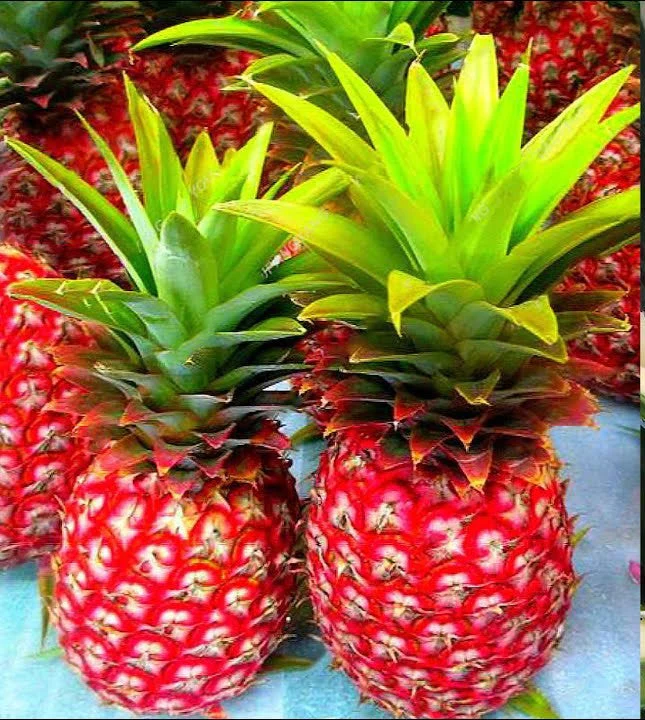
Knowing when to harvest is crucial for the best flavor and sweetness. Signs that your Red Spanish pineapple is ready include:
- Color: The fruit’s skin turns reddish-golden.
- Aroma: A sweet, tropical fragrance is noticeable at the base.
- Ease of Separation: The fruit should separate slightly from the leaves when gently twisted.
- Leaf Test: Lower leaves may begin to dry slightly, signaling maturity.
Carefully cut or twist the fruit from the plant to avoid damaging the leaves or stem.
Enjoying Red Spanish Pineapples
Red Spanish pineapples are incredibly versatile:
- Fresh Eating: Slice for a refreshing, sweet snack.
- Juices and Smoothies: Blend for tropical drinks.
- Desserts: Use in fruit salads, cakes, tarts, or grilled dishes.
- Garnish: The vibrant red exterior makes it a beautiful centerpiece.
Beyond their taste, Red Spanish pineapples add visual appeal and tropical flair to any culinary presentation.
Tips for Success
- Patience is Key: Pineapples grow slowly, so consistent care over months is essential.
- Sunlight Matters: Full sun ensures healthy leaves and optimal fruit development.
- Proper Watering: Avoid overwatering, especially near the central rosette.
- Nutrient Management: Fertilize regularly with macro and micronutrients to support growth.
- Protect from Pests: Watch for mealybugs, scale insects, and mites. Use insecticidal soap if necessary.
- Container Growing: In cooler climates, grow in pots to move plants indoors during winter.
Following these tips will maximize your fruit yield, flavor, and plant health.
The Joy of Red Spanish Pineapple
One of the unique aspects of Red Spanish pineapples is the connection between the grower and the plant. Many gardeners enjoy the sensory experience—listening to the subtle sounds of leaves in the wind, feeling the texture of the fruit, and observing the plant’s slow, methodical growth. Caring for this variety can be meditative and rewarding, making it much more than just a fruit-bearing plant.
Conclusion
The Red Spanish pineapple is a remarkable variety, combining stunning visual appeal, sweet flavor, and aromatic richness. While it requires patience and attentive care, the rewards are well worth the effort. From planting the crown to nurturing the leaves, encouraging flowering, and finally harvesting a ripe, fragrant pineapple, growing this variety is both an art and a joy.
Whether grown in a tropical garden, subtropical yard, or container indoors, Red Spanish pineapple offers unique aesthetics, delightful taste, and a satisfying gardening experience. Listening to, touching, and caring for this lovely variety connects gardeners to the rhythms of nature and the beauty of cultivating tropical fruit at home.
With proper care, patience, and love for the plant, you can enjoy a homegrown Red Spanish pineapple that is as delicious as it is beautiful.