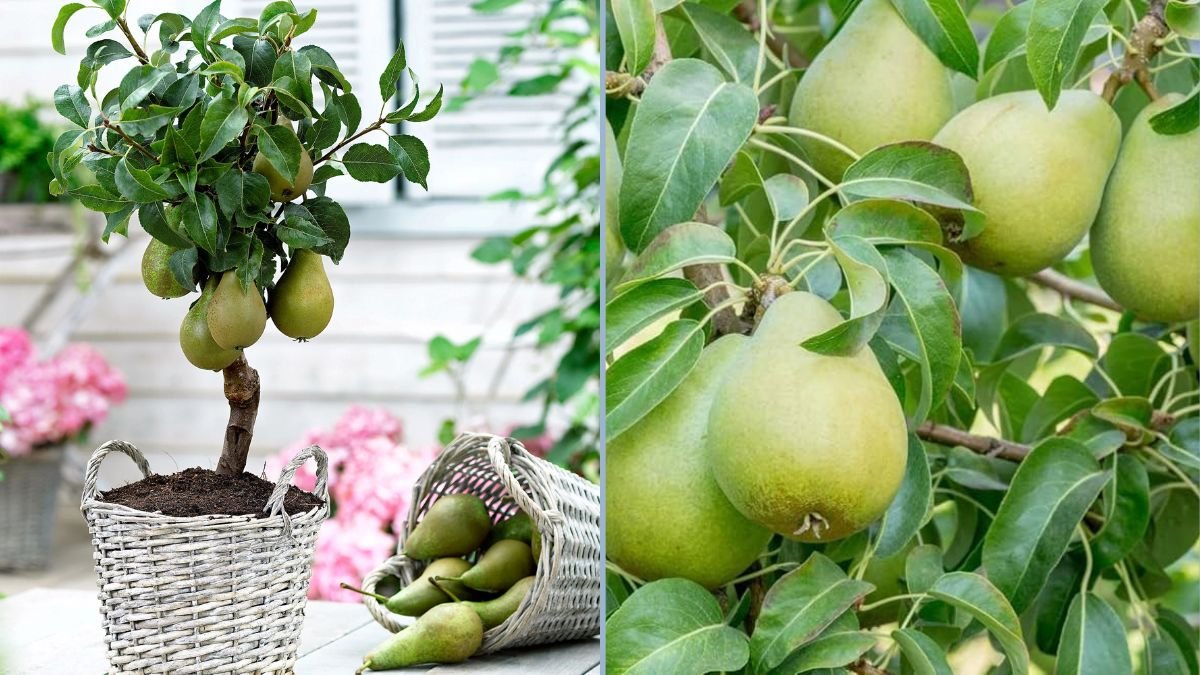
Pear trees are a delight to grow at home. Their aromatic blossoms, elegant foliage, and sweet, juicy fruits make them a favorite among gardeners. While traditionally grown in orchards, pear trees can thrive in pots or containers, allowing urban gardeners and terrace growers to enjoy fresh fruit without a full garden.
In Khanpur, Pakistan, home gardeners have been experimenting with container pear cultivation and successfully harvesting fruits. This guide will provide you with a step-by-step approach to growing pear trees in pots, care tips, and fruiting advice suitable for local climates like Khanpur’s.
1. Why Grow Pear Trees in Pots?
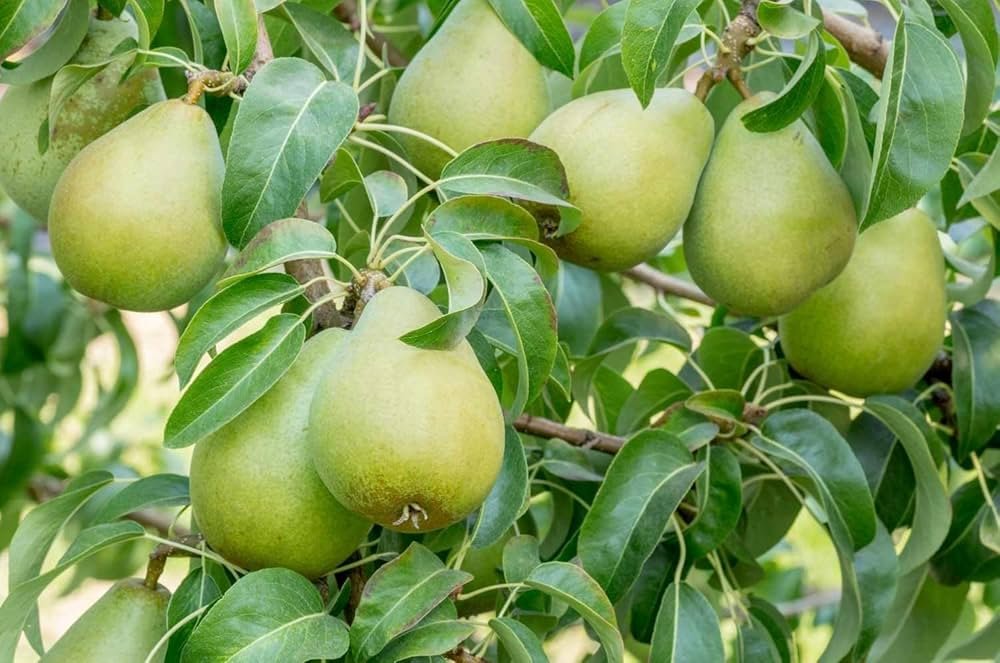
Growing pear trees in pots offers several advantages, especially for urban gardeners:
- Space-efficient: Ideal for terraces, balconies, and patios.
- Soil control: You can provide nutrient-rich, well-draining soil for optimal growth.
- Mobility: Move pots to maximize sunlight exposure or protect from extreme weather.
- Pest and disease management: Easier monitoring reduces the risk of infections.
- Aesthetic appeal: Flowering pear trees enhance the beauty of any space.
Container cultivation makes pear trees accessible even in small urban areas, such as houses in Khanpur with limited yard space.
2. Selecting the Right Pear Variety
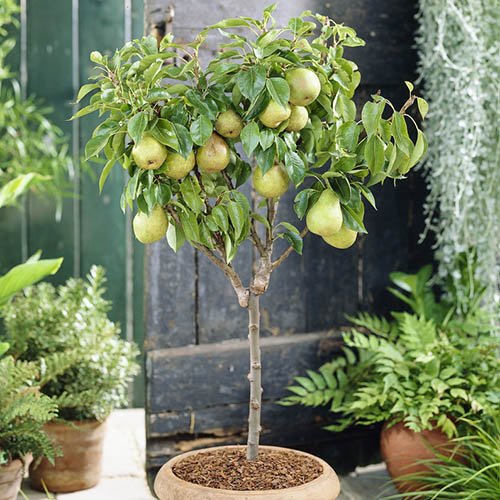
Not all pear varieties are suitable for pot cultivation. Dwarf or semi-dwarf trees are ideal because they remain compact and produce fruit sooner.
Recommended varieties for pots:
- Bartlett (Williams): Sweet, juicy, and popular worldwide.
- Anjou: Known for large, smooth fruits.
- Clapp’s Favorite: Early-maturing and prolific.
- Self-pollinating varieties: Good for single pots, although cross-pollination increases fruit yield.
Choosing the right variety ensures healthy growth, manageable size, and better fruiting.
3. Choosing the Right Pot or Container
Container size and type are critical for healthy pear trees.
Container requirements:
- Size: Minimum 18–24 inches deep and wide for dwarf varieties. Larger pots encourage better root growth.
- Material: Plastic, ceramic, or grow bags. Avoid metal containers that overheat.
- Drainage: Multiple drainage holes are essential to prevent waterlogging.
- Mobility: Lightweight grow bags can be moved to optimize sunlight exposure.
A large and well-drained container ensures root health and sustained fruit production.
4. Preparing the Soil Mix
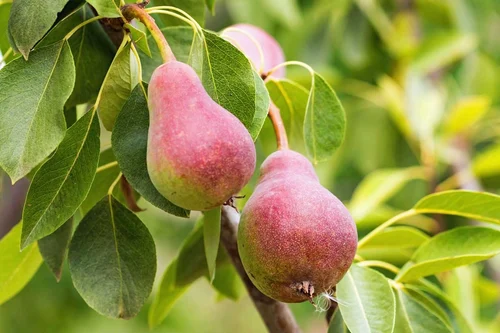
Pear trees thrive in well-draining, nutrient-rich soil. Proper soil mix promotes healthy roots and fruiting.
Recommended soil mix for potted pears:
- 40% garden soil
- 30% well-rotted compost or manure
- 20% peat moss or coco peat for moisture retention
- 10% perlite or coarse sand for aeration
💡 Tip: Avoid heavy clay soil that retains too much water, which can cause root rot.
5. Planting Pear Trees in Pots
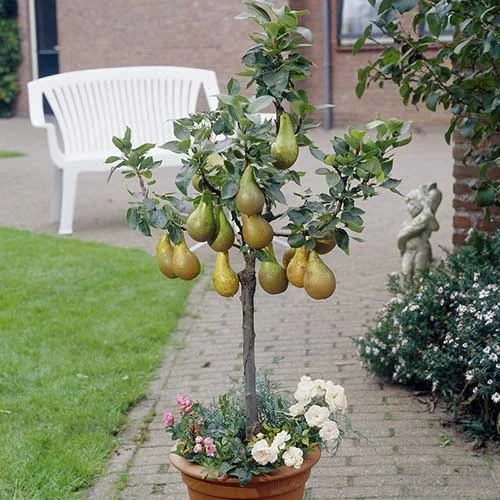
Proper planting ensures long-term health and fruit production.
Step-by-step planting:
- Fill the container with soil, leaving 2–3 inches from the top.
- Remove the tree from its nursery pot carefully.
- Place the tree in the center and backfill with soil.
- Firm the soil gently around the roots and water thoroughly.
- Apply a 2–3 inch layer of mulch to retain moisture.
💡 Tip: Keep the tree at the same depth as in its nursery container to prevent root stress.
6. Sunlight and Temperature Requirements
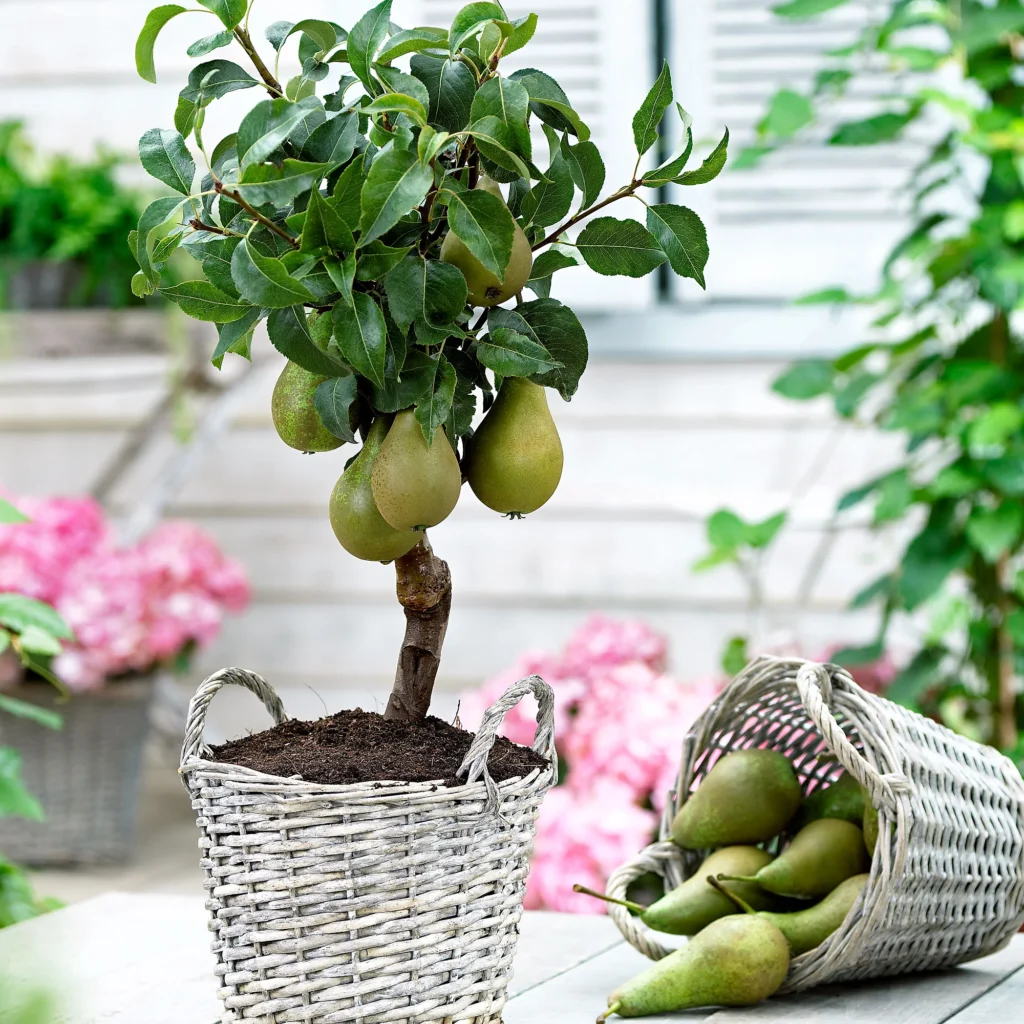
Sunlight and climate are critical for pear tree growth, especially in areas like Khanpur.
- Sunlight: Minimum 6–8 hours of direct sunlight per day.
- Temperature: Ideal range is 15–30°C (59–86°F). Protect young trees from frost.
- Air circulation: Proper airflow prevents fungal diseases and promotes fruiting.
Place the pot in a sunny and sheltered location to maximize growth and flower production.
7. Watering Pear Trees in Pots
Watering container-grown pear trees requires careful attention because pots dry out faster than ground soil.
Watering tips:
- Water deeply 2–3 times a week, adjusting based on weather conditions.
- Keep soil consistently moist but avoid waterlogging.
- Mulching helps retain moisture and maintain a stable root environment.
Regular and proper watering ensures healthy leaves, flowers, and fruit set.
8. Fertilization for Fruit Production
Fertilization supports growth, flowering, and fruiting in container pear trees.
Fertilization schedule:
- Spring: Apply a balanced organic fertilizer or compost.
- During flowering and fruit set: Use phosphorus- and potassium-rich fertilizers to support blooms and fruit development.
- Summer: Light fertilization to sustain fruit growth.
💡 Tip: Avoid excessive nitrogen, which leads to leafy growth at the expense of fruit.
9. Pruning and Shaping Pear Trees
Pruning helps maintain size, shape, and productivity, especially in containers.
Pruning tips:
- Remove dead, weak, or crowded branches.
- Maintain a compact shape suitable for container growth.
- Support branches with stakes if they become heavy with fruit.
- Prune lightly after harvest to encourage new growth.
Proper pruning improves sunlight penetration, airflow, and fruit yield.
10. Pollination Tips
Pear trees may require pollination to produce fruit, depending on the variety.
- Encourage pollinators like bees by planting flowers nearby.
- Hand-pollinate flowers indoors using a small brush if pollinators are scarce.
- Planting two compatible varieties nearby enhances fruit set and size.
Effective pollination ensures larger, sweeter fruits in potted pear trees.
11. Pest and Disease Management
Pests and diseases can affect fruit quality. Container trees are easier to manage but still require vigilance.
Common pests and diseases:
- Aphids and mites: Use neem oil or mild insecticidal soap.
- Powdery mildew and fungal infections: Ensure proper air circulation and avoid wetting foliage.
- Fruit flies: Cover fruit with nets as they ripen.
Regular monitoring and preventive care are key to healthy, high-quality fruit.
12. Harvesting Pears
Patience is important; container-grown pear trees may take 2–4 years to bear fruit.
Harvesting tips:
- Fruits are ripe when they develop vibrant color and slight softness.
- Taste-test for sweetness before picking.
- Harvest carefully to avoid damaging branches or surrounding fruits.
Frequent harvesting encourages continued flowering and fruiting.
13. Winter Care for Potted Pear Trees
Container-grown trees are more exposed to temperature changes, requiring protection in winter.
Winter care tips:
- Move pots to sheltered areas or indoors during frost.
- Wrap containers with insulating material to protect roots.
- Reduce watering as the tree enters dormancy.
- Minimal pruning during winter prepares trees for spring growth.
Proper winter care ensures survival and fruit production in the next season.
14. Long-Term Maintenance
Container pear trees require consistent care to thrive for many years.
Maintenance tips:
- Repot every 2–3 years to refresh soil and provide room for roots.
- Mulch regularly to retain moisture and regulate soil temperature.
- Fertilize seasonally for healthy growth and flowering.
- Prune annually to maintain shape and promote fruiting.
With proper care, container-grown pear trees can provide fresh, homegrown fruits for decades.
15. Final Thoughts: Enjoying Pears at Home in Khanpur
Growing pear trees in pots or containers in Khanpur is a practical and rewarding way to enjoy fresh, homegrown fruits. By choosing the right variety, providing proper soil, sunlight, watering, and care, you can cultivate healthy trees and enjoy sweet, juicy pears right from your balcony or terrace.
Container gardening allows you to create a mini-orchard at home, turning limited spaces into productive fruit gardens. With patience, attention, and proper care, your pear trees can thrive and provide years of delicious harvests.