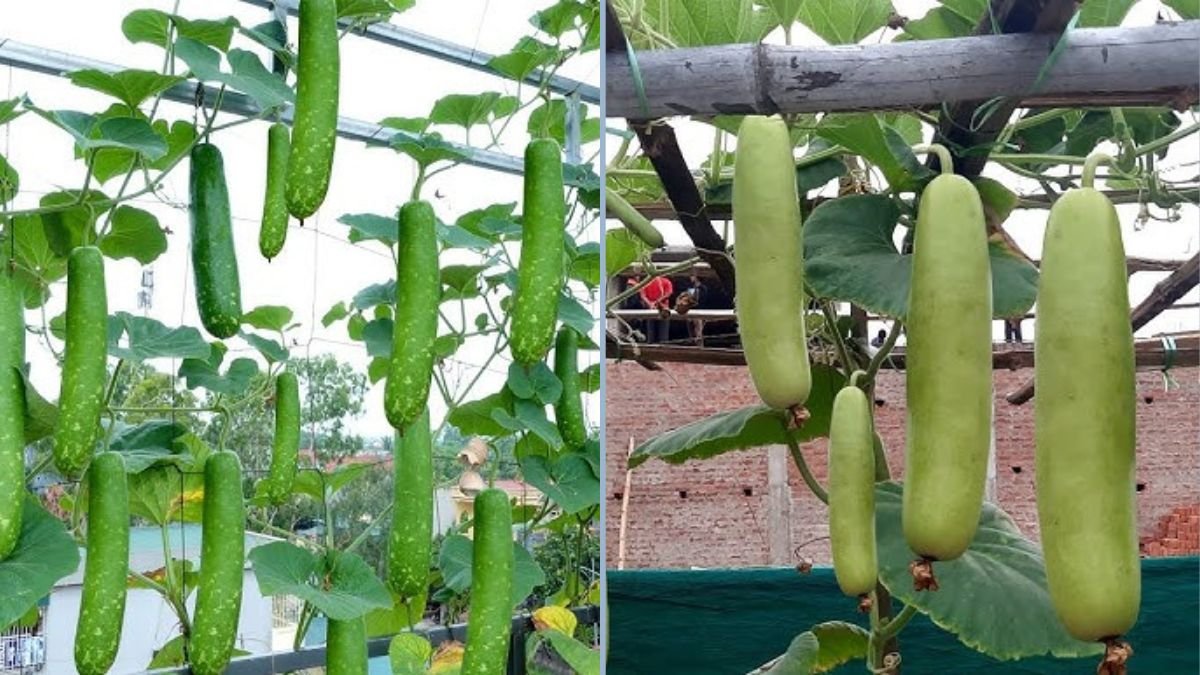
Bottle gourd, also known as Lagenaria siceraria, is a beloved vegetable in many households due to its mild flavor, versatility in cooking, and numerous health benefits. Traditionally grown in gardens or farms, bottle gourd can also be cultivated in small spaces at home using recycled plastic bottles. This method is not only eco-friendly but also space-saving and highly productive, making it perfect for urban gardeners.
Inspired by the YouTube video “Tips for Growing Organic Bottle Gourd in Plastic Bottles at Home for Many Fruits,” this blog post provides step-by-step guidance, tips, and tricks to grow bottle gourd in plastic bottles successfully and harvest an abundant supply of fruits.
Why Grow Bottle Gourd at Home?
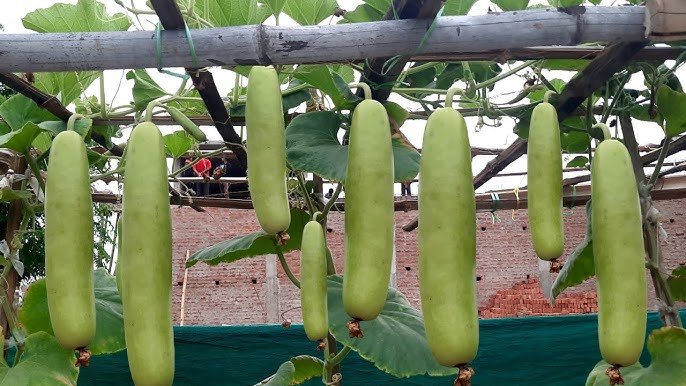
Growing bottle gourd at home offers numerous benefits:
- Fresh and chemical-free: By growing organically, you avoid harmful pesticides and fertilizers.
- Space-saving gardening: Perfect for balconies, terraces, or small patios.
- Cost-effective: Growing your own vegetables reduces grocery expenses.
- High yield: Proper care allows multiple fruits per plant.
- Eco-friendly: Reusing plastic bottles reduces waste and promotes sustainable gardening.
Homegrown bottle gourd is tender, flavorful, and nutritionally superior to store-bought options.
Understanding Bottle Gourd
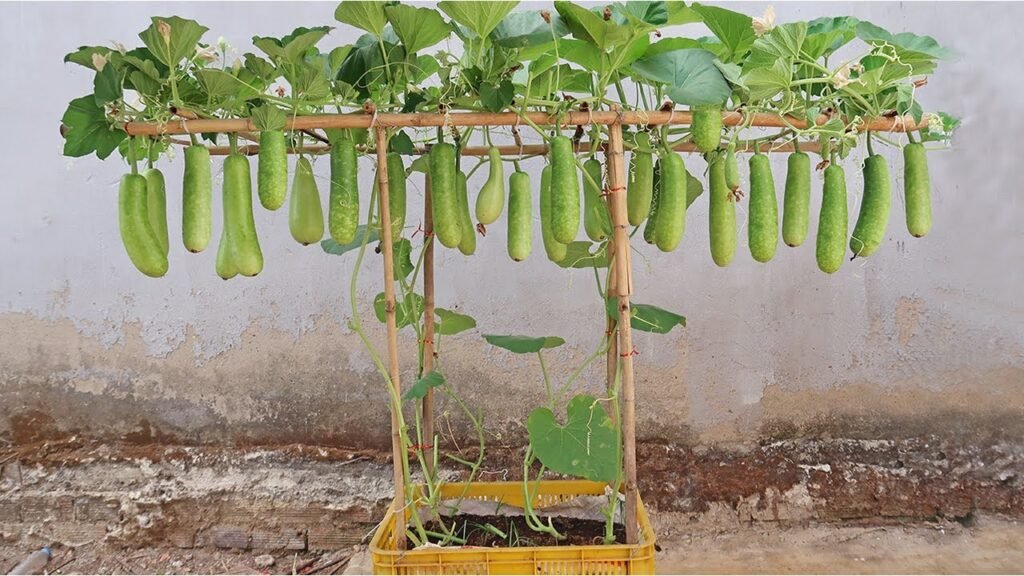
Bottle gourd is a fast-growing vine with long, green fruits that can reach 12–18 inches or longer. It belongs to the Cucurbitaceae family, along with cucumbers, pumpkins, and squash.
Key Growth Features:
- Sunlight: Requires full sun for at least 6–8 hours daily.
- Soil: Prefers fertile, well-draining soil rich in organic matter.
- Watering: Keep the soil consistently moist but not soggy.
- Support: Needs trellis or vertical support for climbing.
- Growth rate: Vine grows quickly and produces flowers in 4–5 weeks.
Understanding the growth habits of bottle gourd ensures strong vines, healthy leaves, and abundant fruit production.
Materials You’ll Need
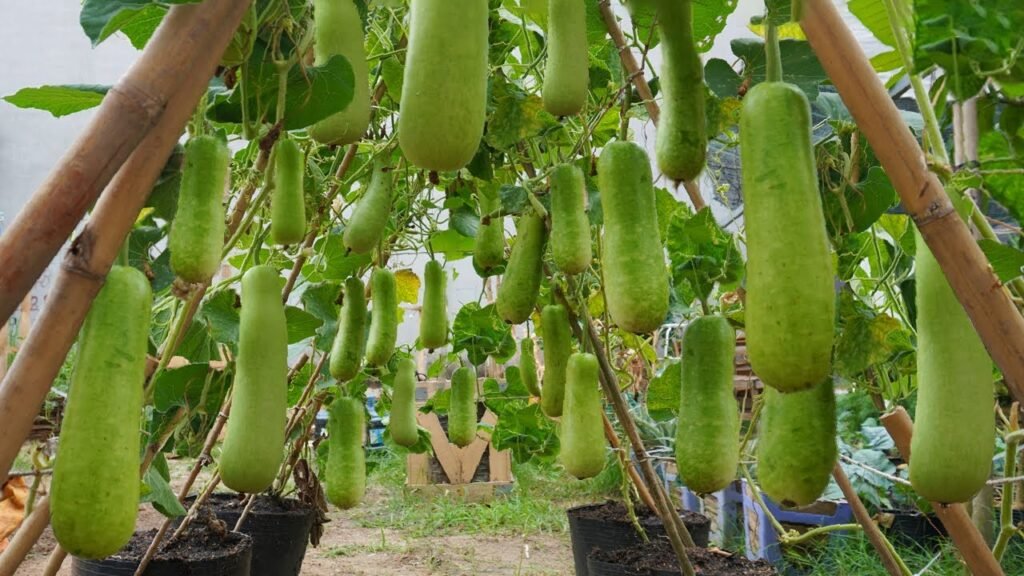
To grow bottle gourd in plastic bottles, gather the following:
- Plastic bottles (1.5–2 liters) – cleaned and with drainage holes
- Bottle gourd seeds – preferably organic varieties
- Potting mix – garden soil mixed with compost or organic manure
- Trellis or support frame – bamboo sticks, netting, or metal frame
- Watering can or spray bottle
- Optional: Mulch for moisture retention
This setup is inexpensive, eco-friendly, and beginner-friendly, making it ideal for urban gardening enthusiasts.
Step 1: Prepare the Plastic Bottles
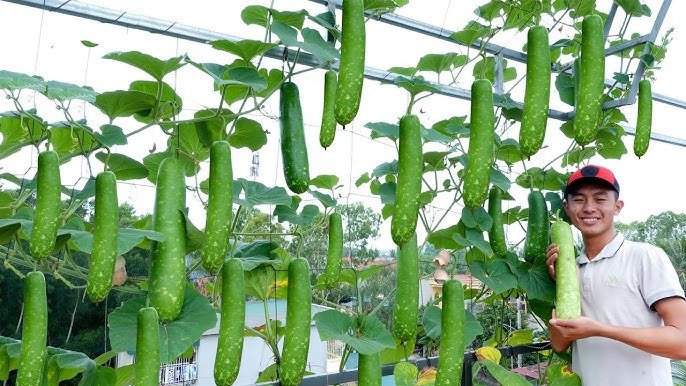
- Clean bottles thoroughly to remove any residue.
- Cut the bottle horizontally, leaving space for soil and roots. Typically, cut about one-third from the top.
- Make drainage holes at the bottom to prevent waterlogging.
- Optionally, add small stones or pebbles at the bottom for extra drainage.
- Fill the bottle with a nutrient-rich soil mix, leaving 1–2 inches from the rim for watering.
Proper bottle preparation ensures healthy root development and avoids common problems like root rot.
Step 2: Sow the Seeds
Bottle gourd seeds are large and easy to handle:
- Soak seeds in water for 12 hours to improve germination.
- Plant 1–2 seeds per bottle, about 1 inch deep in the soil.
- Cover lightly with soil and water gently.
Seeds usually germinate within 7–10 days, depending on temperature and soil moisture.
Step 3: Provide Proper Sunlight
Bottle gourd requires full sunlight for optimal growth:
- Place bottles in a location receiving 6–8 hours of direct sunlight daily.
- If indoors, supplement with a grow light.
- Rotate the bottles occasionally for even light exposure.
Adequate sunlight ensures strong, vigorous vines and better flower and fruit development.
Step 4: Support the Climbing Vine
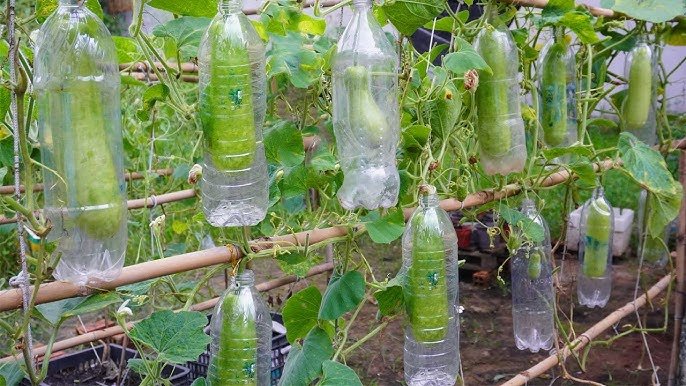
Since bottle gourd is a climbing vine, providing support is crucial:
- Use trellises, bamboo sticks, or netting for vines to climb.
- Tie the vine gently with soft twine to guide it upward.
- Make sure the support is sturdy to hold multiple heavy fruits.
Proper support reduces vine tangling, improves air circulation, and prevents diseases.
Step 5: Watering Your Bottle Gourd
Consistent moisture is key to healthy growth:
- Water regularly to keep the soil damp but avoid waterlogging.
- For young seedlings, mist the soil gently.
- Mulch the soil surface with dried leaves or straw to retain moisture.
Well-watered plants grow faster, develop stronger vines, and produce larger fruits.
Step 6: Fertilizing for High Yield
Bottle gourd is a heavy feeder, so fertilization improves fruit quantity and quality:
- Apply organic fertilizers like compost, cow dung, or vermicompost every 2–3 weeks.
- Liquid fertilizers such as fish emulsion or seaweed extract can enhance growth.
- Avoid over-fertilizing with nitrogen, which promotes leaf growth at the expense of fruit.
Balanced nutrition leads to healthy leaves, strong vines, and multiple fruits per plant.
Step 7: Pruning and Training the Vine
Pruning helps channel energy into fruit production:
- Remove weak, yellowing, or diseased leaves to improve airflow.
- Pinch off excess lateral shoots to focus energy on main vines.
- Train the vine along the trellis regularly to prevent tangling.
Pruning encourages higher fruit yield and healthier plants.
Step 8: Pollination
Bottle gourd produces male and female flowers, and proper pollination is necessary for fruit set:
- Bees and insects usually handle pollination naturally.
- In indoor or enclosed spaces, hand-pollinate by transferring pollen from male flowers to female flowers using a small brush.
Successful pollination ensures more fruits per plant and better yield.
Step 9: Harvesting Bottle Gourd
- Fruits are usually ready to harvest 50–70 days after sowing, depending on variety.
- Pick young, tender fruits for the best flavor, usually when 12–18 inches long.
- Regular harvesting encourages the plant to produce more fruits.
Avoid leaving fruits too long on the vine, as overripe gourds become tough and bitter.
Tips for Maximum Yield
- Water and fertilize consistently to sustain growth.
- Provide ample support for climbing vines.
- Prune excess leaves and shoots for better airflow and fruit production.
- Harvest frequently to encourage new fruit set.
- Ensure sunlight exposure and rotate bottles if necessary.
Following these tips ensures a high-yield bottle gourd plant even in small container setups.
Common Problems and Solutions
| Problem | Cause | Solution |
|---|---|---|
| Yellow leaves | Overwatering or nutrient deficiency | Adjust watering, add compost/fertilizer |
| Poor fruit set | Lack of pollination | Hand-pollinate flowers or attract pollinators |
| Pests | Aphids, fruit flies | Use neem oil spray or organic pest control |
| Weak vines | Insufficient sunlight | Move bottles to a sunnier location |
Most issues are minor and can be easily addressed with proper care and attention.
Culinary Uses of Bottle Gourd
Bottle gourd is highly versatile in the kitchen:
- Curries: Cook with coconut milk or tomato-based sauces.
- Stir-fries: Sauté with garlic, onions, and spices.
- Soups: Adds a mild, tender texture to broths.
- Juices: Fresh bottle gourd juice is popular for its detoxifying and health benefits.
- Stuffed dishes: Hollow out and fill with spices, grains, or meat.
Homegrown bottle gourd is tender, fresh, and flavorful, making your dishes more delicious and nutritious.
Environmental Benefits
Growing bottle gourd in recycled plastic bottles promotes sustainable gardening:
- Recycles plastic waste, giving single-use bottles a second life.
- Reduces dependence on store-bought vegetables, lowering carbon footprint.
- Encourages organic gardening, avoiding chemical pesticides and fertilizers.
- Promotes urban gardening, even in small apartments or terraces.
This method combines eco-consciousness, convenience, and productivity in a single gardening project.
Final Thoughts
Growing organic bottle gourd in plastic bottles is easy, cost-effective, and highly productive. With minimal space and resources, you can enjoy:
- Fresh, tender bottle gourd for daily meals
- Multiple fruits per plant throughout the season
- Sustainable gardening practices that recycle materials
This method is perfect for:
- Apartment gardeners with limited outdoor space
- Beginners seeking a low-maintenance vegetable garden
- Families wanting fresh, organic vegetables year-round
- Anyone interested in high-yield container gardening
Start your plastic bottle bottle gourd garden today and enjoy a bountiful harvest of healthy, homegrown fruits!