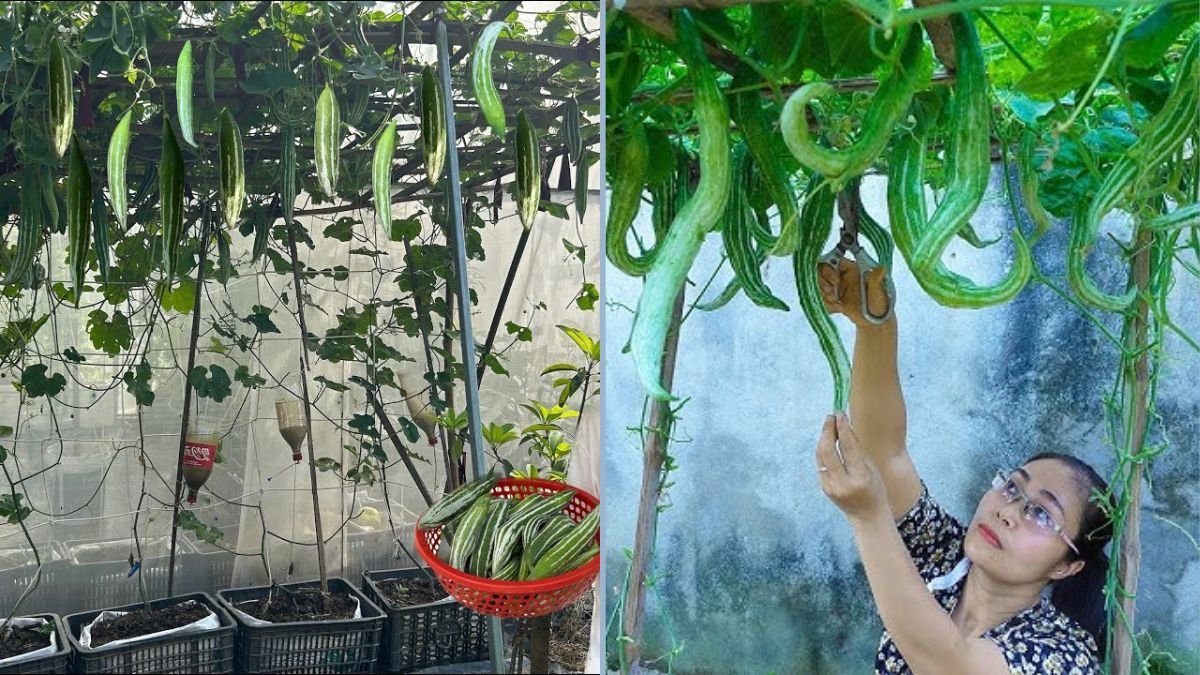
Snake gourd, also known as Trichosanthes cucumerina, is a popular climbing vegetable in many Asian kitchens. Recognizable for its long, green, snake-like appearance, this vegetable is prized for its tender flesh, mild flavor, and versatility in dishes like curries, stir-fries, soups, and stews.
If you love gardening but have limited space, there’s good news: you can grow snake gourd at home using recycled plastic baskets. Inspired by the YouTube video “Grow snake gourd in recycled plastic basket – lot of fruits,” this blog post provides a step-by-step guide to grow snake gourd efficiently, sustainably, and in a way that produces lots of fruits.
Why Grow Snake Gourd at Home?
Growing your own snake gourd comes with numerous advantages:
- Fresh and chemical-free: Control the fertilizers and pesticides for healthier produce.
- Space-saving: Ideal for balcony or terrace gardening.
- Cost-effective: Avoid repeated purchases at the market.
- High yield: With proper care, a single plant can produce multiple fruits over the season.
- Sustainable gardening: Recycling plastic baskets reduces waste while creating functional planters.
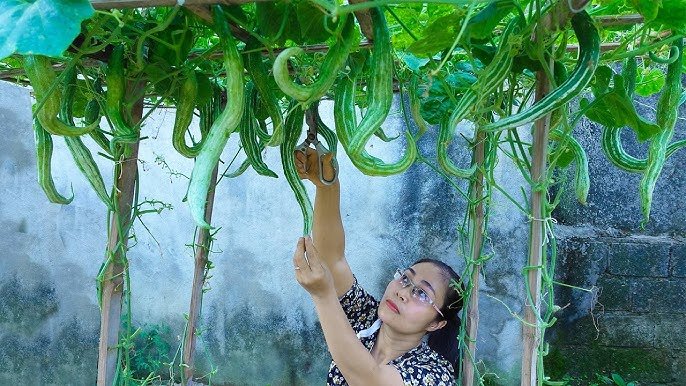
Growing snake gourd at home ensures that you always have fresh vegetables on hand while promoting eco-friendly gardening practices.
Understanding Snake Gourd
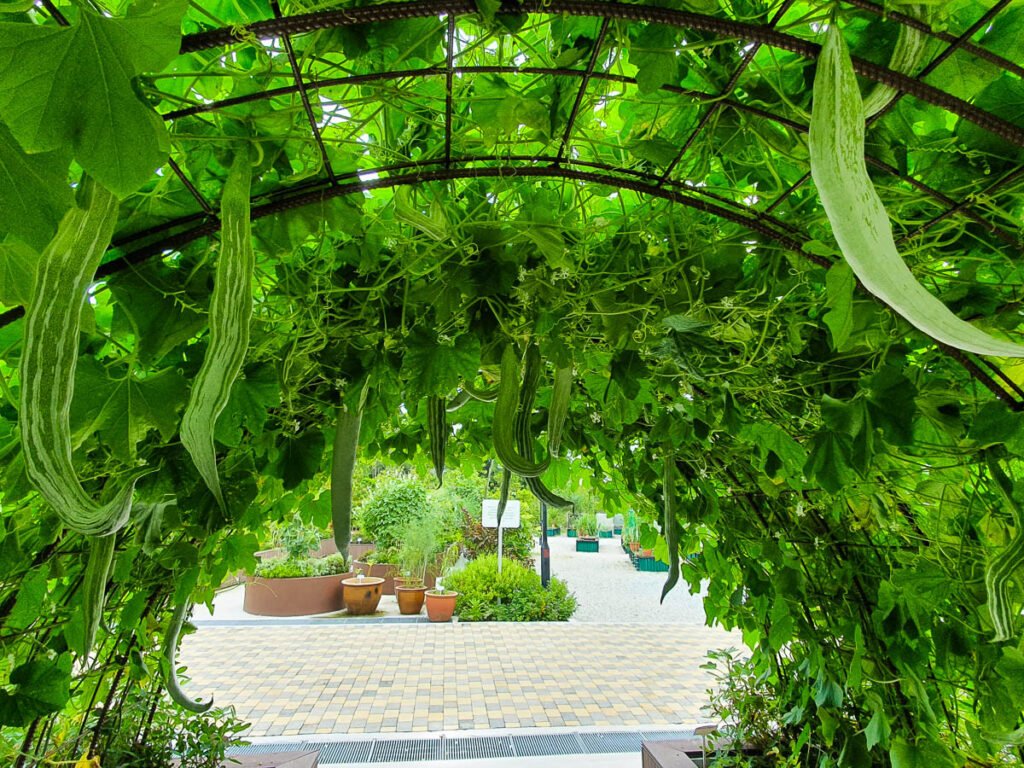
Snake gourd is a climbing vine that thrives in warm, sunny environments. Understanding its growth habit helps in providing the best care:
- Growth habit: Fast-growing climber with tendrils for support.
- Sunlight: Requires full sun for at least 6–8 hours daily.
- Soil: Prefers well-draining, fertile soil enriched with compost.
- Watering: Keep soil moist but not waterlogged.
- Support: Needs a trellis or vertical support to climb.
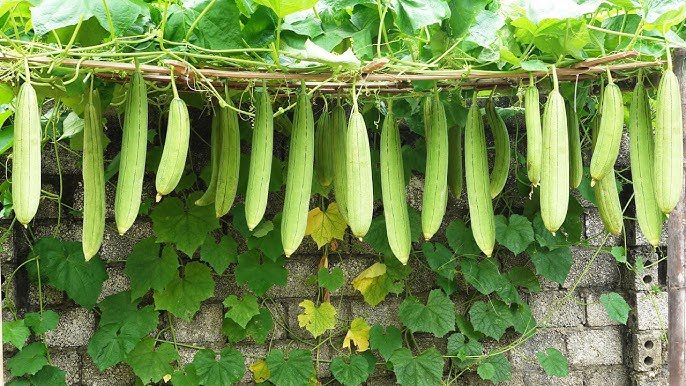
Snake gourd produces elongated, green fruits that can grow up to 3–4 feet in length, depending on variety and care.
Materials You’ll Need
To grow snake gourd in a recycled plastic basket, gather the following:
- Plastic baskets: Recycled baskets, clean and sturdy. Make sure they have drainage holes.
- Snake gourd seeds: Choose a variety suitable for container growth.
- Potting mix: Well-draining soil mixed with compost or organic manure.
- Trellis or support: Bamboo sticks, netting, or metal frame for vines to climb.
- Watering can: For consistent watering.
- Optional: Mulch for moisture retention.
This setup is low-cost, sustainable, and beginner-friendly, perfect for urban gardening enthusiasts.
Step 1: Prepare the Plastic Basket
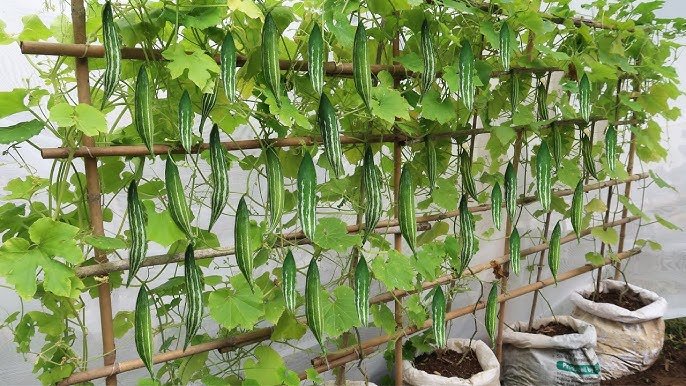
- Clean the basket thoroughly to remove dust and debris.
- Ensure there are adequate drainage holes at the bottom to prevent waterlogging.
- If needed, place a layer of small stones at the bottom for additional drainage.
- Fill the basket with a mixture of garden soil and compost, leaving 2–3 inches at the top for watering.
Proper preparation of the container ensures healthy root development and prevents issues like root rot.
Step 2: Sow the Seeds
Snake gourd can be grown directly from seeds:
- Soak seeds in water for 12–24 hours to improve germination.
- Make small holes in the soil, about 1 inch deep.
- Place 1–2 seeds per hole and cover lightly with soil.
- Water gently to keep the soil moist.
Seeds usually germinate within 7–10 days, depending on temperature and soil moisture.
Step 3: Provide Proper Sunlight
Snake gourd requires full sunlight for optimal growth:
- Place the basket in a sunny location like a balcony, terrace, or rooftop.
- Ensure it receives at least 6–8 hours of sunlight daily.
- Rotate the basket occasionally for even light exposure.
Adequate sunlight is crucial for strong vines and abundant fruit production.
Step 4: Support the Climbing Vine
Since snake gourd is a climber, providing support is essential:
- Insert bamboo sticks, a metal frame, or netting around the basket.
- Tie the growing vine gently with soft twine to guide it upwards.
- Ensure the support is strong enough to hold multiple heavy fruits.
A sturdy trellis prevents vines from tangling and allows better air circulation, reducing pest problems.
Step 5: Watering Your Snake Gourd
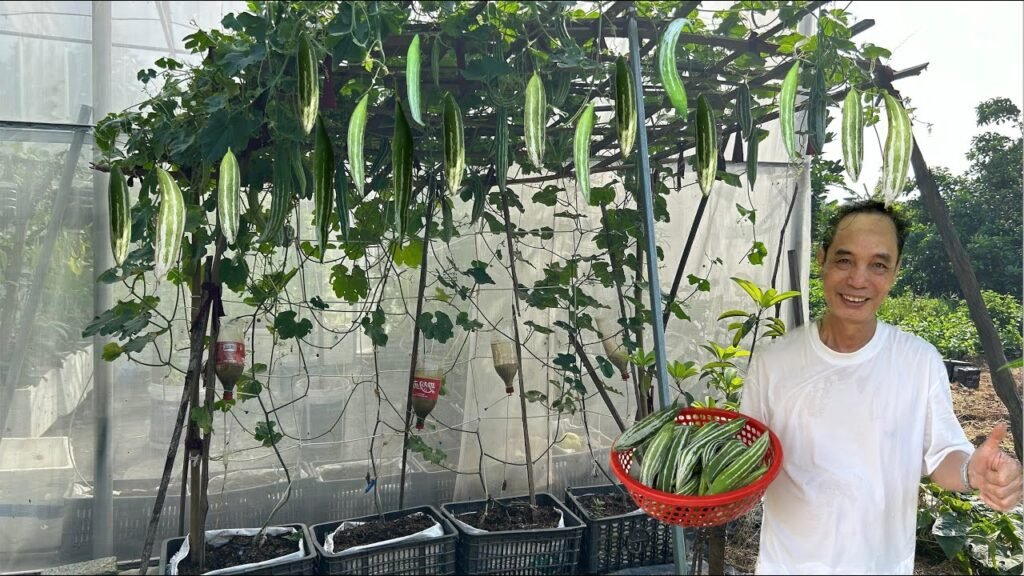
Consistent moisture is key to healthy growth:
- Water the plant regularly to keep the soil damp.
- Avoid overwatering, which can lead to root rot.
- Mulching the soil surface helps retain moisture and reduces evaporation.
Proper watering ensures the plant grows vigorously, producing long, tender fruits.
Step 6: Fertilizing for High Yield
Snake gourd is a heavy feeder and benefits from regular fertilization:
- Use organic fertilizers such as compost, cow dung, or vermicompost.
- Apply fertilizer every 2–3 weeks during the growing season.
- Liquid fertilizers like fish emulsion or seaweed extract can enhance growth and fruit quality.
Balanced nutrition promotes vibrant green leaves, strong vines, and abundant fruit production.
Step 7: Pruning and Training the Vine
Pruning helps redirect energy into fruit production:
- Remove weak or yellowing leaves to improve airflow.
- Pinch off excess lateral shoots to focus growth on main vines.
- Guide the vines along the trellis regularly to prevent tangling.
Training and pruning your snake gourd encourages higher yield and healthier plants.
Step 8: Pollination
Snake gourd produces male and female flowers, and proper pollination is necessary for fruit set:
- Bees and insects usually handle pollination naturally.
- If grown indoors or in an enclosed space, hand-pollinate by transferring pollen from male flowers to female flowers using a small brush.
Proper pollination ensures more fruits per plant, maximizing harvests.
Step 9: Harvesting Snake Gourd
- Fruits are ready to harvest 50–70 days after sowing, depending on the variety.
- Pick young, tender fruits when they are 18–24 inches long; they are more flavorful and tender.
- Regular harvesting encourages the plant to produce more fruits.
Avoid letting fruits overgrow, as older fruits become fibrous and less palatable.
Tips for High Yield
- Regular watering and fertilization to sustain growth.
- Provide ample support to allow vines to climb freely.
- Prune excess leaves and shoots for better airflow and fruit production.
- Harvest frequently to encourage new fruit set.
- Rotate containers occasionally for even sunlight exposure.
With these tips, a single recycled plastic basket can yield multiple snake gourds throughout the season.
Common Problems and Solutions
| Problem | Cause | Solution |
|---|---|---|
| Yellow leaves | Overwatering or nutrient deficiency | Reduce watering, add compost/fertilizer |
| Poor fruit set | Lack of pollination | Hand-pollinate flowers or attract pollinators |
| Pests | Aphids, fruit flies | Use neem oil spray or organic pest control |
| Weak vines | Insufficient sunlight | Move basket to a sunnier location |
Most issues are minor and can be easily resolved with proper care and attention.
Culinary Uses of Snake Gourd
Snake gourd is highly versatile in cooking:
- Stir-fries: Sauté with garlic, onions, or other vegetables.
- Curries: Cook with coconut milk or tomato-based sauces.
- Stuffed dishes: Hollow out and stuff with spiced fillings.
- Soups: Adds flavor and texture to broths and stews.
- Pickles: Can be preserved in vinegar or spices for later use.
Homegrown snake gourd is tender, fresh, and flavorful, making it superior to store-bought alternatives.
Environmental Benefits
Growing snake gourd in recycled plastic baskets is eco-friendly:
- Recycles plastic waste, giving single-use items a second life.
- Reduces dependence on store-bought produce, lowering food miles.
- Encourages sustainable gardening in small urban spaces.
- Promotes organic gardening, reducing chemical use.
This method demonstrates how practical, sustainable gardening can yield abundant, healthy vegetables at home.
Final Thoughts
Growing snake gourd in recycled plastic baskets is easy, cost-effective, and productive. With minimal space and materials, you can enjoy:
- Fresh, tender snake gourd for your kitchen
- High-yield plants producing multiple fruits
- Sustainable gardening practices that recycle materials
This method is ideal for:
- Apartment gardeners with limited space
- Beginners seeking an easy-to-manage vegetable garden
- Families wanting fresh, organic vegetables year-round
- Anyone interested in sustainable, high-yield container gardening
Start your snake gourd container garden today and enjoy an abundant harvest of healthy, homegrown fruits!