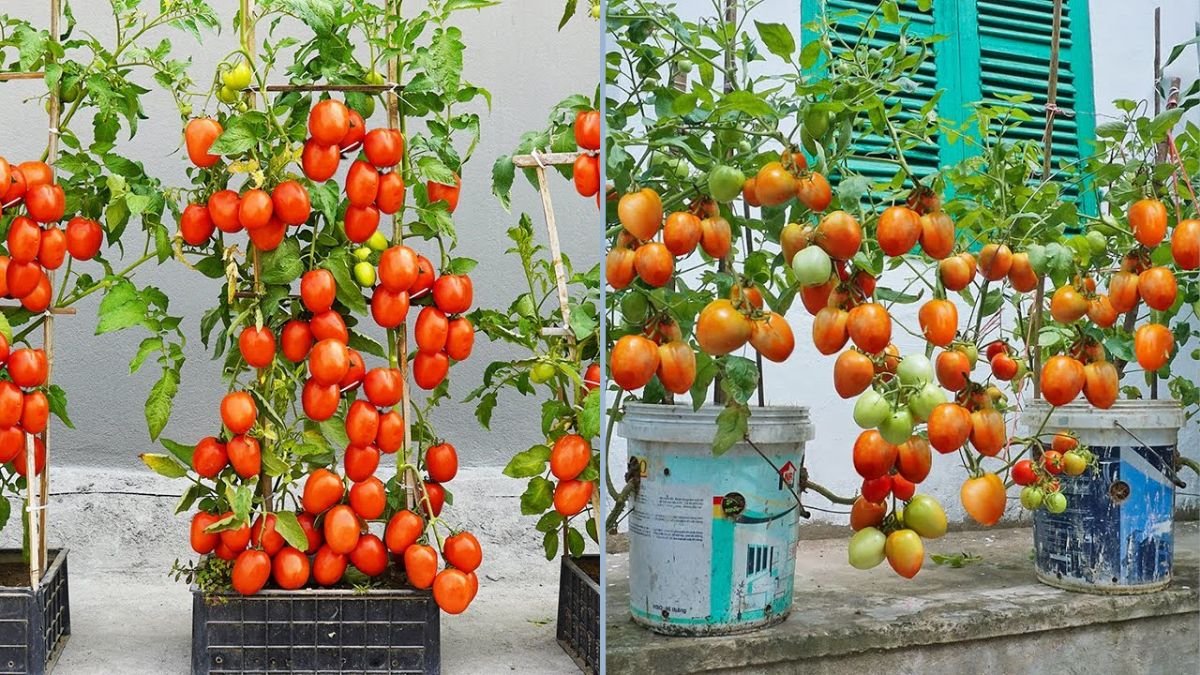
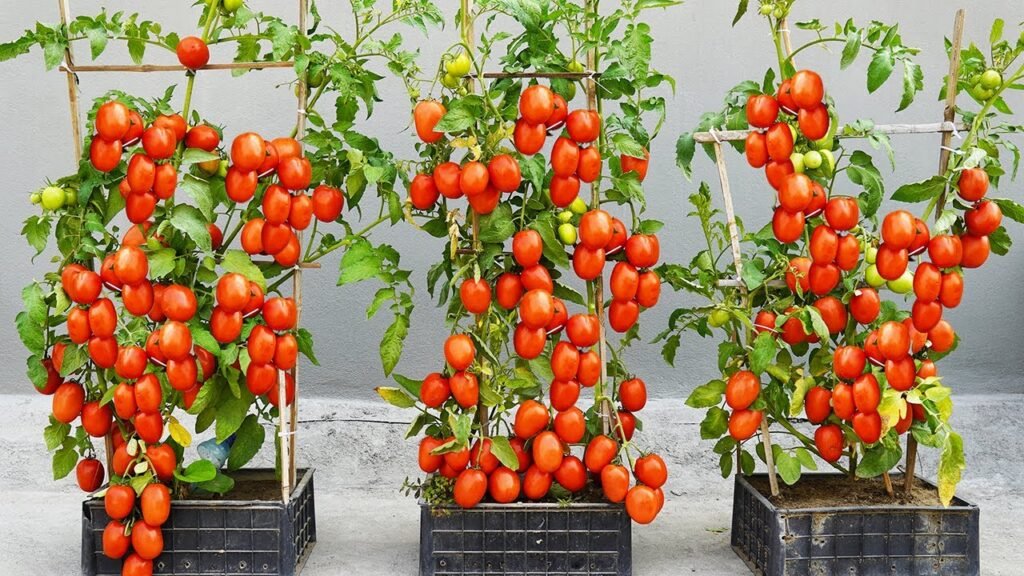
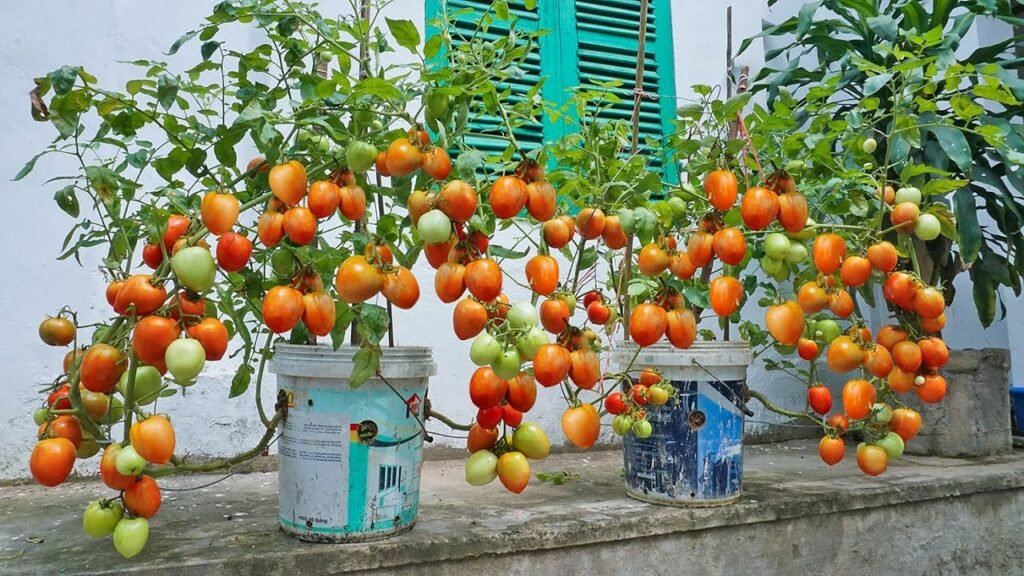
Tomatoes are one of the most popular and versatile vegetables worldwide, offering incredible flavor and nutrition. Many gardeners, especially those with limited space, wonder how to grow tomatoes effectively in containers while maximizing fruit production.
Here’s the exciting twist: by using plastic containers and incorporating bananas into your tomato-growing routine, you can significantly boost yields. Bananas are rich in potassium, a nutrient critical for flowering and fruiting in tomatoes. This blog will guide you through a step-by-step method to grow tomatoes in plastic containers and use bananas to achieve abundant harvests.
Why Grow Tomatoes in Plastic Containers?
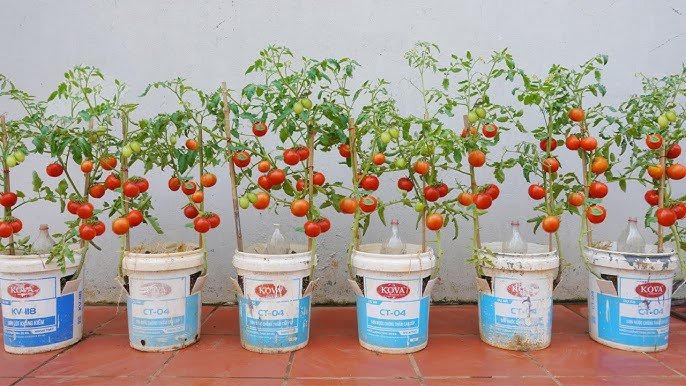
- Space Efficiency: Perfect for balconies, small patios, and urban apartments.
- Mobility: Containers can be moved to adjust sunlight exposure or protect plants from harsh weather.
- Soil Control: You can provide nutrient-rich, well-draining soil for optimal growth.
- Pest and Disease Management: Growing in containers reduces soil-borne diseases and makes it easier to monitor pests.
Why Bananas Help Tomato Plants Produce More Fruits
Bananas are a natural source of potassium, phosphorus, calcium, and magnesium, all essential for healthy tomato plants.
- Potassium: Enhances flower development, fruit size, and sweetness.
- Phosphorus: Promotes root and flower growth.
- Calcium: Prevents blossom-end rot, a common problem in tomatoes.
- Magnesium: Supports photosynthesis and leaf health.
By applying bananas as a fertilizer—either as banana peel compost, blended slurry, or directly buried pieces near the roots—you supply tomatoes with nutrients that improve flowering and increase fruit set.
Step 1: Selecting the Right Plastic Container
- Size: Choose a container at least 12–15 inches deep and 12 inches wide. Tomatoes develop extensive roots, so deeper containers encourage better growth.
- Drainage: Ensure your container has holes at the bottom to prevent waterlogging and root rot.
- Material: Thick, durable plastic is ideal; it retains moisture while being lightweight for easy movement.
Step 2: Preparing the Growing Medium
Tomatoes need nutrient-rich, well-draining soil. Here’s a recommended mix for container-grown tomatoes:
- 2 parts garden soil or loamy soil
- 1 part compost (preferably organic)
- 1 part sand or perlite for drainage
Optional: Add a handful of dried banana peels or composted banana as part of the soil mixture to introduce natural potassium.
Step 3: Planting Tomato Seedlings
- Choose a Healthy Seedling: Select seedlings with 3–5 true leaves and strong stems.
- Planting Depth: Bury the seedling slightly deeper than it was in the nursery pot, covering part of the stem. This encourages root growth along the buried stem.
- Spacing: If planting more than one tomato per container, ensure at least 6–8 inches between seedlings for adequate airflow.
Step 4: Incorporating Bananas for Maximum Fruit Production
There are several ways to use bananas to fertilize tomatoes:
1. Banana Peel Mulch
- Chop banana peels into small pieces.
- Place them on the soil surface around the base of the tomato plant.
- As the peels decompose, nutrients are released gradually.
2. Banana Slurry
- Blend banana peels with water to create a nutrient-rich liquid.
- Pour around the roots every 1–2 weeks as a natural fertilizer.
3. Buried Banana Pieces
- Bury chopped banana peels 3–5 inches deep near the root zone during planting or early growth.
- Cover with soil to prevent odor and pests.
Pro Tip: Avoid letting the banana touch the stem directly to prevent stem rot.
Step 5: Providing Proper Care for Container Tomatoes
1. Sunlight
- Tomatoes need 6–8 hours of direct sunlight daily.
- If grown indoors, place containers near south-facing windows or use grow lights.
2. Watering
- Keep the soil consistently moist but not soggy.
- Water early in the morning or late afternoon to reduce evaporation and prevent fungal growth.
3. Fertilization
- Besides bananas, supplement with organic liquid fertilizer or compost tea every 2–3 weeks for optimal growth.
- Avoid over-fertilizing with nitrogen; too much promotes leaf growth at the expense of flowers and fruits.
4. Support
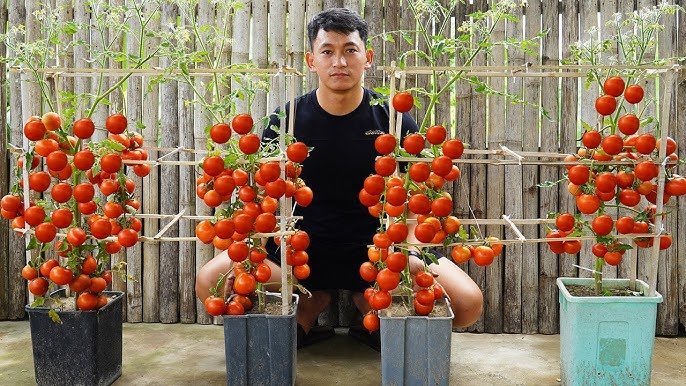
- Tomatoes need support to grow upright. Use stakes, cages, or trellises in containers.
- Tie stems gently to supports using soft ties or garden twine.
5. Pruning
- Remove yellow or diseased leaves to encourage healthy growth.
- For indeterminate varieties, pinch off suckers (side shoots) to focus energy on fruit production.
Step 6: Pollination for Better Fruit Set
Container-grown tomatoes may need assistance with pollination, especially if indoors:
- Hand Pollination: Use a soft brush or shake flowers gently to transfer pollen.
- Beneficial Insects: If outdoors, bees and other pollinators help naturally.
Proper pollination ensures more flowers set fruit, maximizing your yield.
Step 7: Harvesting Tomatoes
- Timing: Tomatoes are ready when they reach full color (red, yellow, or orange, depending on the variety) and are slightly firm.
- Frequency: Harvest every 2–3 days to encourage continuous production.
- Handling: Use gentle hands and shallow containers to avoid bruising.
Pro Tip: Regular harvesting helps the plant focus energy on new flowers and fruits.
Additional Tips for High-Yield Tomatoes
- Choose High-Yield Varieties: Determinate types produce all at once; indeterminate varieties yield continuously.
- Rotate Containers: Avoid planting tomatoes in the same container soil year after year to reduce disease risk.
- Mulch: Use straw or shredded leaves to retain moisture and regulate soil temperature.
- Monitor Pests and Diseases: Aphids, whiteflies, and fungal diseases are common. Use neem oil or organic sprays as needed.
- Temperature Control: Tomatoes grow best between 18–28°C. Move containers to shaded areas during extreme heat.
Benefits of Using Bananas in Container Tomato Gardening
- Boosts Flowering: Potassium-rich bananas enhance blossom development.
- Increases Fruit Size: Nutrients from bananas improve fruit quality and sweetness.
- Organic and Safe: Reduces reliance on chemical fertilizers.
- Cost-Effective: Kitchen banana scraps can be reused as a free fertilizer source.
Conclusion
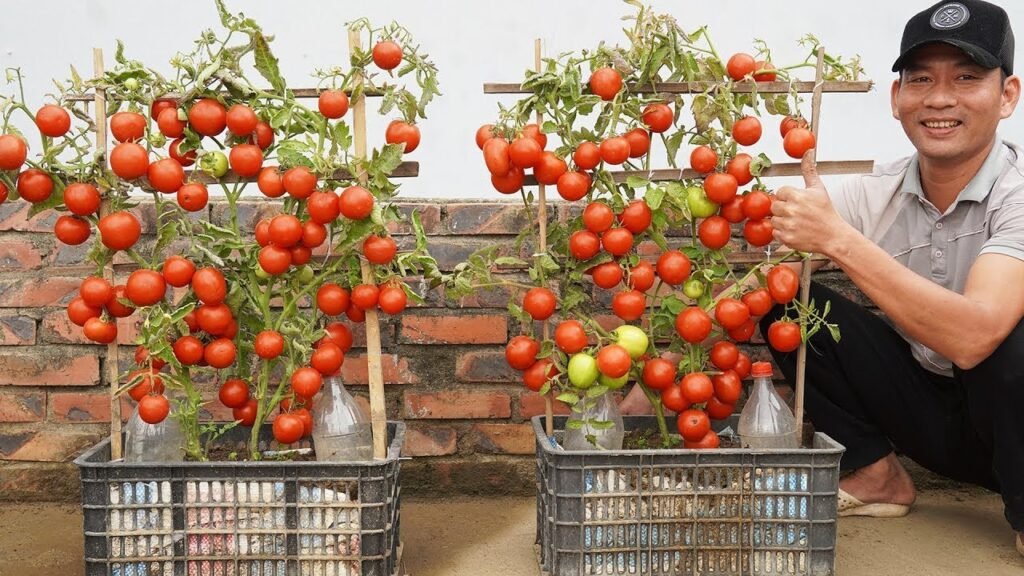
Growing tomatoes in plastic containers is perfect for small spaces, urban gardening, or indoor setups, and incorporating bananas as a natural fertilizer is an easy way to maximize fruit production. By following this step-by-step method—from selecting containers and soil to planting seedlings, applying bananas, and proper care—you can enjoy juicy, abundant tomatoes throughout the season.
This method not only boosts yields but also promotes sustainability by reusing kitchen scraps, reducing waste, and avoiding chemical fertilizers. With patience, consistent care, and a little creativity, even beginners can produce healthy, fruit-laden tomato plants right at home.
Start today, and your next batch of homegrown tomatoes might just be bigger, sweeter, and more plentiful than ever!