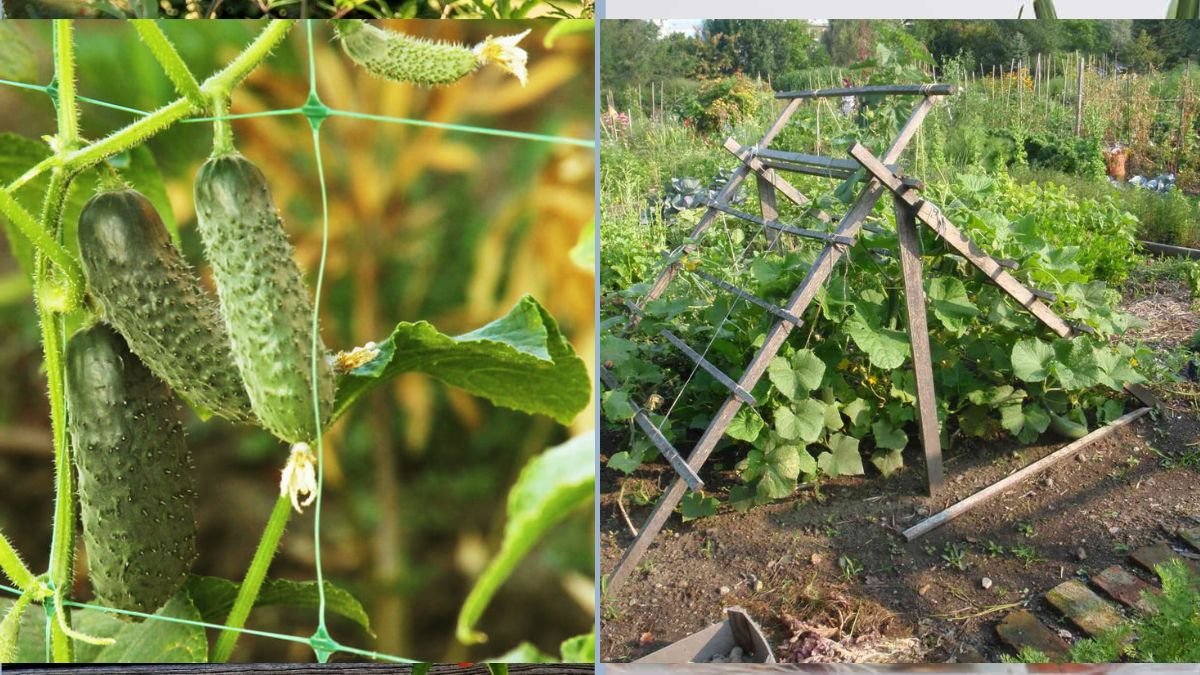
Cucumbers are a versatile and refreshing vegetable, valued for their crisp texture and nutritional benefits. Traditionally grown in sprawling garden beds, cucumbers can also thrive in vertical setups, making them ideal for small spaces such as balconies, patios, and urban gardens. Vertical gardening not only maximizes space but also improves air circulation, reduces pest issues, and makes harvesting easier. This article explores effective techniques, soil and container requirements, care strategies, and harvesting tips for growing cucumbers vertically.
Why Grow Cucumbers Vertically?
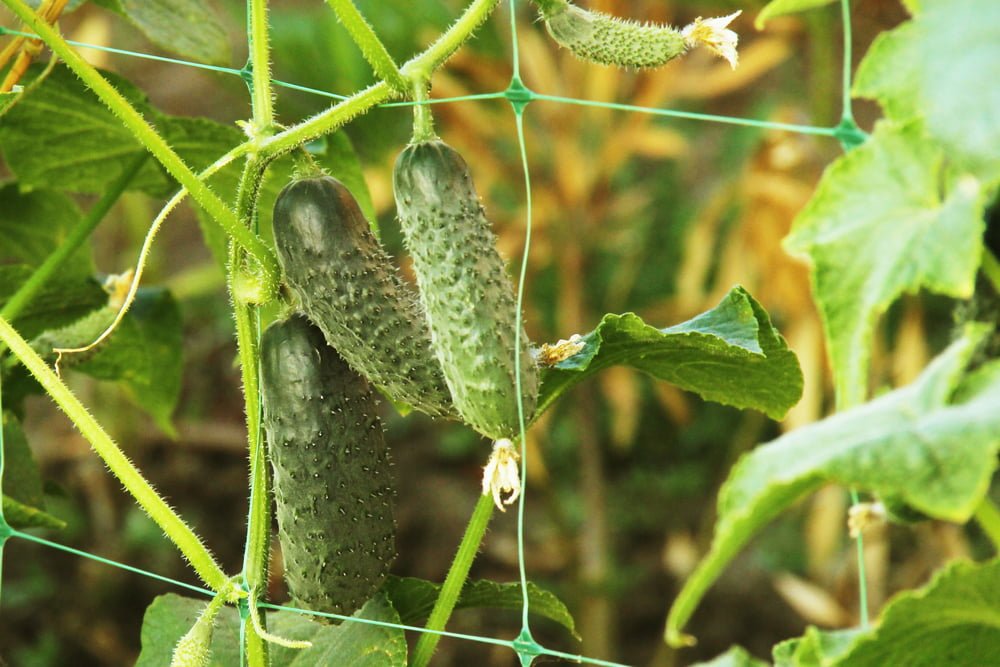
Cucumbers are natural climbers, and vertical gardening offers several advantages:
- Space Efficiency: Vertical systems allow gardeners to grow cucumbers in limited areas, using trellises, nets, or towers.
- Improved Air Circulation: Elevating vines reduces the risk of fungal diseases and promotes healthy foliage.
- Ease of Harvesting: Hanging fruits are easier to see and pick without bending or reaching under dense foliage.
- Higher Yields: Vertical growth encourages longer, straighter fruits and maximizes sunlight exposure.
- Aesthetic Appeal: Vertical cucumber vines create a green wall effect, enhancing the visual appeal of gardens and balconies.
Selecting the Right Cucumber Varieties
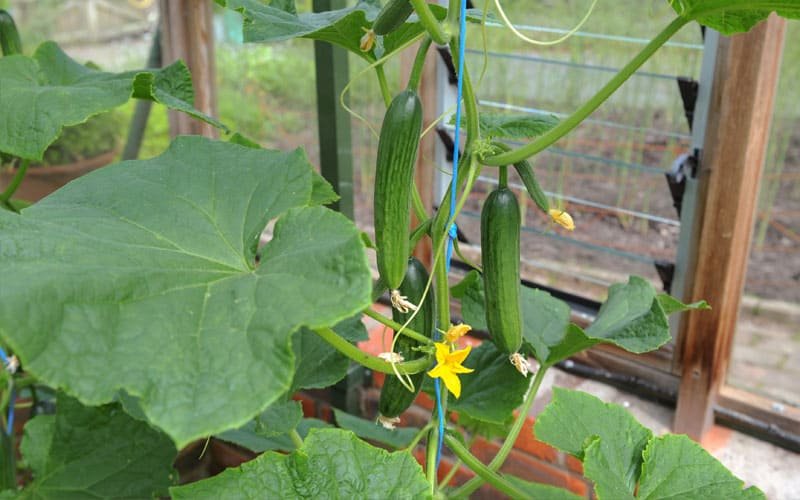
Choosing the appropriate variety is crucial for vertical gardening. Compact, climbing, or vining varieties perform best on trellises or supports:
- Vine or Pole Cucumbers: These are ideal for vertical growth; they produce long, slender fruits that hang neatly.
- Parthenocarpic Varieties: These varieties do not require pollination, making them perfect for indoor or balcony gardens where insects may be limited.
- Compact or Dwarf Varieties: Suitable for container gardening on small terraces or urban balconies.
Popular vertical-friendly cucumber varieties include “Marketmore,” “Spacemaster,” “Sweet Success,” and “Bush Champion” (for slightly smaller vertical setups).
Choosing Containers for Vertical Cucumber Growth
Cucumber plants require adequate root space, especially when trained vertically. Container selection guidelines include:
- Pot Size: Minimum 12–16 inches deep and wide for one plant. Larger containers are better for multiple plants.
- Material: Plastic, clay, or fabric pots are all suitable. Fabric pots enhance aeration and prevent root rot.
- Drainage: Ensure sufficient drainage holes to prevent waterlogging.
- Mobility: Lightweight containers can be moved to optimize sunlight exposure.
Deep and well-draining containers support vigorous root systems, which in turn support healthy vines and fruit production.
Soil Requirements
Healthy soil is essential for vigorous vertical cucumber growth:
- Well-Draining Soil: Mix potting soil with perlite or vermiculite to ensure proper drainage.
- Organic Matter: Compost, worm castings, or well-rotted manure provides essential nutrients.
- pH Level: Cucumbers prefer slightly acidic to neutral soil (pH 6.0–7.0).
- Aeration: Loosely packed soil allows roots to breathe and prevents compaction.
Nutrient-rich and well-aerated soil promotes fast growth, long vines, and abundant fruiting.
Planting Techniques
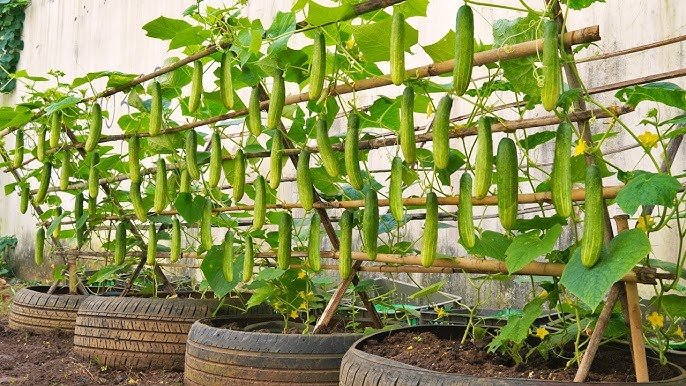
Correct planting methods help cucumbers thrive in vertical setups:
- Seed Sowing: Sow seeds directly in containers or start in seed trays. Plant 1 inch deep and 2–3 seeds per container. Thin to one seedling per container once true leaves appear.
- Transplanting: Seedlings with 2–3 true leaves can be transplanted into larger vertical-friendly containers.
- Spacing: Allow sufficient room for air circulation and vine growth; for multi-plant containers, maintain at least 12–18 inches between plants.
- Watering: Water immediately after planting to settle the soil.
Starting cucumbers correctly ensures strong root establishment and healthy initial growth.
Trellising and Support Structures
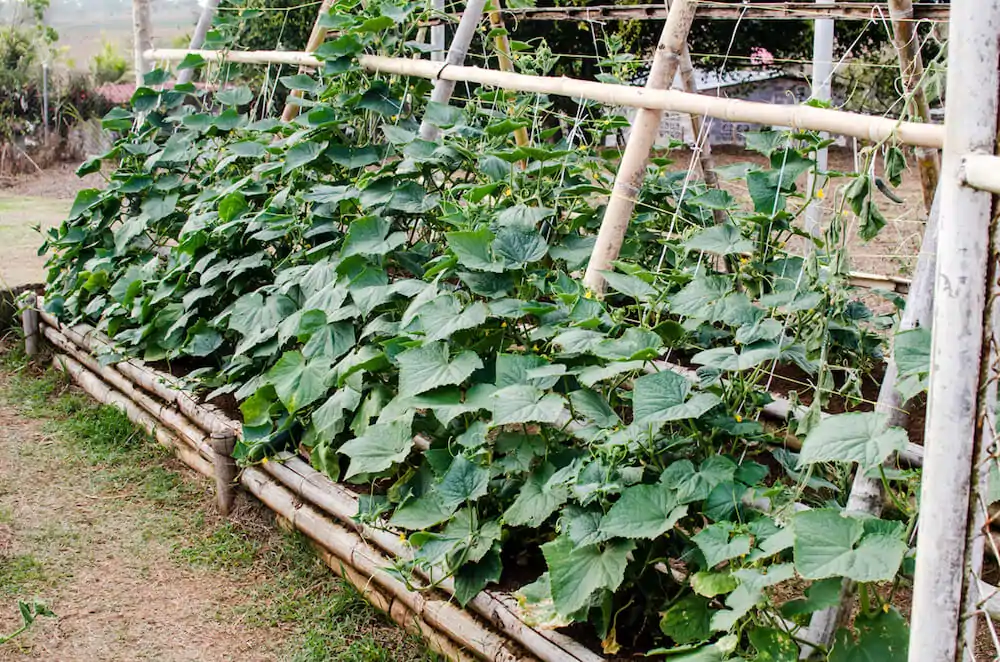
Vertical growth requires sturdy support to train cucumber vines effectively:
- Trellises: Wooden, bamboo, or metal trellises provide solid support for climbing vines.
- Nets or Mesh: Plastic or nylon nets allow vines to weave naturally and support fruits evenly.
- String or Twine: Secure vines loosely with soft ties to guide upward growth.
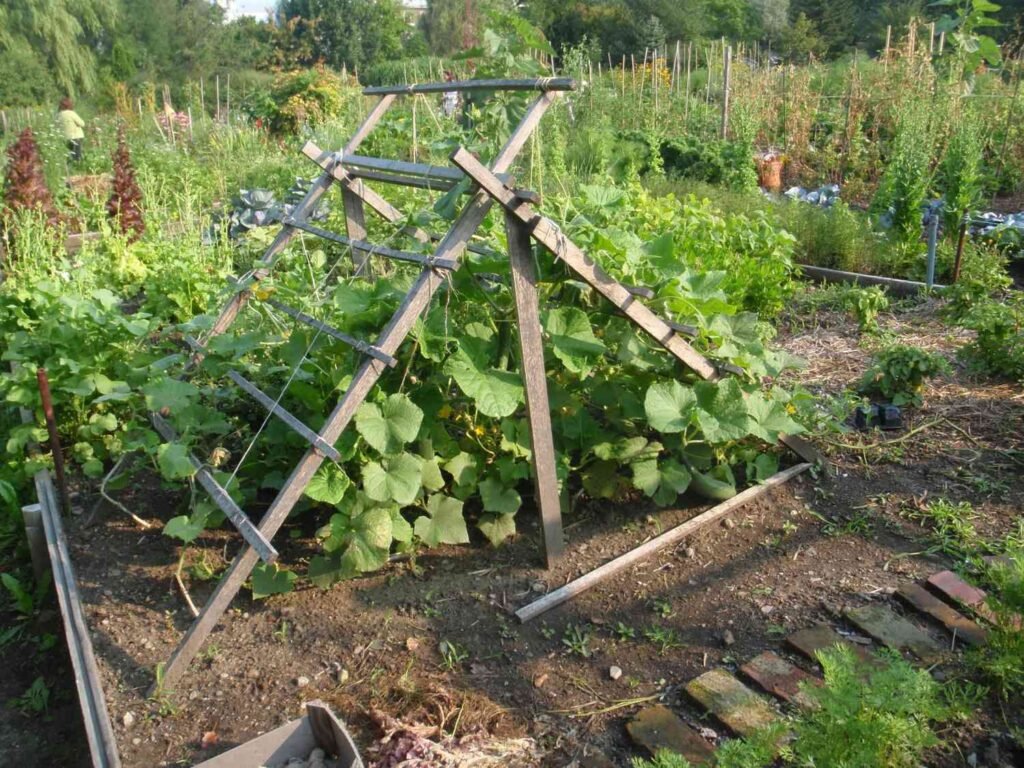
- A-Frame Structures: Ideal for balconies and small spaces; maximize vertical area and allow good air circulation.
Proper support prevents vines from sprawling, reduces disease risk, and results in straighter, more uniform fruits.
Watering Techniques
Cucumbers require consistent moisture, especially in container and vertical setups:
- Consistent Moisture: Keep soil evenly moist; allow the top inch to dry between watering.
- Deep Watering: Water thoroughly to encourage deep root growth.
- Avoid Leaf Wetting: Water at the base to prevent fungal diseases.
- Mulching: Apply organic mulch (straw, coconut coir, or leaves) to retain moisture and maintain even soil temperature.
Consistent watering ensures crisp, juicy fruits and supports continuous vine growth.
Fertilization
Container-grown vertical cucumbers require regular feeding:
- Balanced Fertilizer: Use organic fertilizers with nitrogen, phosphorus, potassium, and trace elements.
- Frequency: Feed seedlings every 2 weeks and mature plants every 2–3 weeks.
- Foliar Feeding: Apply diluted liquid fertilizers to leaves occasionally to supplement root feeding.
Proper fertilization promotes lush foliage, flower production, and abundant fruiting.
Pruning and Training
Pruning and vine management improve airflow, light penetration, and fruit quality:
- Prune Side Shoots: Remove unnecessary lateral shoots to focus energy on main vines.
- Guide Vines: Train vines along trellis or netting using soft ties or clips.
- Leaf Management: Remove damaged or yellowing leaves to improve air circulation and sunlight exposure.
Effective pruning ensures strong, healthy vines and prevents overcrowding.
Pollination
While cucumbers are primarily insect-pollinated, indoor or balcony setups may require assistance:
- Manual Pollination: Use a small brush or cotton swab to transfer pollen between male and female flowers.
- Air Circulation: Gentle breezes from a fan can simulate natural pollination and improve fruit set.
Ensuring successful pollination increases yield and produces uniformly shaped fruits.
Pest and Disease Management
Even vertical cucumbers can face pest or disease challenges:
- Common Pests: Aphids, spider mites, and whiteflies.
- Organic Controls: Neem oil, insecticidal soap, or manual removal of pests.
- Fungal Prevention: Proper spacing, pruning, and drip or base watering prevent powdery mildew and root rot.
- Regular Monitoring: Inspect leaves, stems, and fruits weekly for early signs of infestation.
Proactive pest and disease management maintains healthy plants and reduces crop loss.
Harvesting Techniques
Proper harvesting is essential for consistent production:
- Maturity Indicators: Harvest cucumbers when they reach the desired size (6–8 inches for slicing, smaller for pickling varieties).
- Frequent Harvesting: Pick regularly to encourage continuous fruiting and prevent overripe fruits from stressing vines.
- Gentle Handling: Twist or cut fruits carefully to avoid damaging the vine.
Timely harvesting ensures crisp, flavorful cucumbers and maximizes yield.
Space Optimization Tips
Vertical gardening allows efficient use of small spaces:
- Stacked Containers: Grow multiple plants using tiered pots or vertical racks.
- Balcony Wall Systems: Attach trellises or nets to walls for climbing vines.
- Companion Planting: Plant herbs or flowers nearby to attract beneficial insects and enhance aesthetics.
Smart space management allows urban gardeners to maximize yield even in confined areas.
Sustainability and Maintenance
Maintaining vertical cucumber gardens sustainably ensures long-term productivity:
- Organic Practices: Use compost, mulch, and organic fertilizers to nourish plants naturally.
- Water Conservation: Collect rainwater or use drip irrigation systems to reduce water waste.
- Regular Care: Monitor plants, prune, and remove debris to maintain a healthy growing environment.
- Succession Planting: Plant seeds or seedlings in intervals to ensure continuous harvest throughout the season.
Sustainable practices enhance plant health, support the environment, and reduce maintenance effort.
Conclusion
Vertical gardening is an effective and rewarding method for cultivating cucumbers, especially in urban and limited-space environments. With proper variety selection, container choice, soil preparation, trellising, and care, gardeners can enjoy abundant, high-quality fruits while optimizing space and reducing pest and disease challenges. Cucumbers grown vertically benefit from improved airflow, sunlight exposure, and easier harvesting, making this method ideal for both beginners and experienced gardeners. By implementing these detailed strategies, urban dwellers and balcony gardeners can achieve a sustainable, productive, and visually appealing cucumber harvest throughout the growing season.