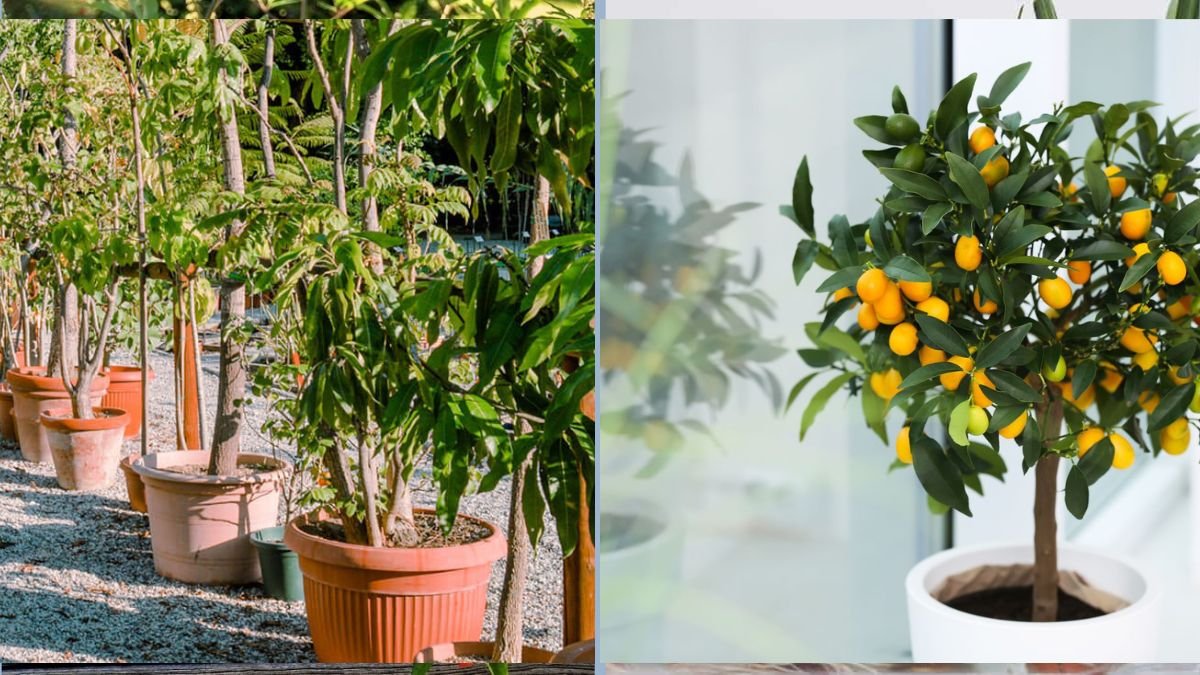
Citrus trees are beloved for their fragrant blossoms, glossy foliage, and juicy, nutrient-rich fruits. Traditionally grown in gardens or orchards, these trees can also thrive in container environments, making them ideal for apartment balconies. Cultivating citrus in small spaces is not only rewarding but also provides fresh, organic fruit year-round. This article explores detailed strategies for successfully growing citrus trees in apartment balconies, focusing on container selection, soil preparation, light requirements, care, and harvesting.
Why Grow Citrus Trees on Balconies?
Urban living often limits access to fresh fruits and gardening space. Balcony citrus cultivation offers several advantages:
- Year-Round Fruit Production: Many dwarf citrus varieties fruit multiple times per year, providing fresh produce continuously.
- Space Efficiency: Container-grown citrus adapts well to small spaces, including balconies and terraces.
- Pesticide-Free Fruits: Growing your own citrus ensures chemical-free, safe consumption.
- Aesthetic and Aromatic Benefits: Citrus trees add greenery and emit delightful floral fragrances that enhance the living environment.
- Educational and Therapeutic: Balcony citrus gardening promotes mindfulness, stress relief, and a deeper connection with nature.
Choosing the Right Citrus Varieties
Selecting dwarf or compact citrus varieties is crucial for apartment cultivation. Standard trees are unsuitable for containers due to extensive root systems. Recommended varieties for balcony growing include:
- Meyer Lemon: Compact, prolific, and sweet-tasting; adapts well to container life.
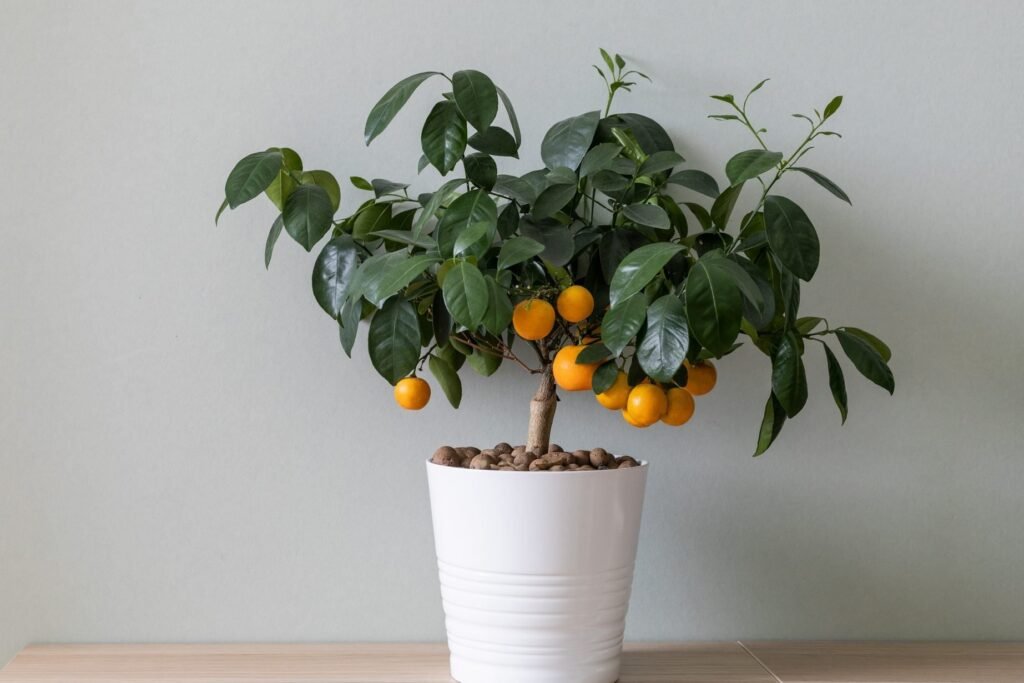
- Calamondin Orange: Small ornamental orange tree, ideal for patios and balconies; produces tangy fruit.
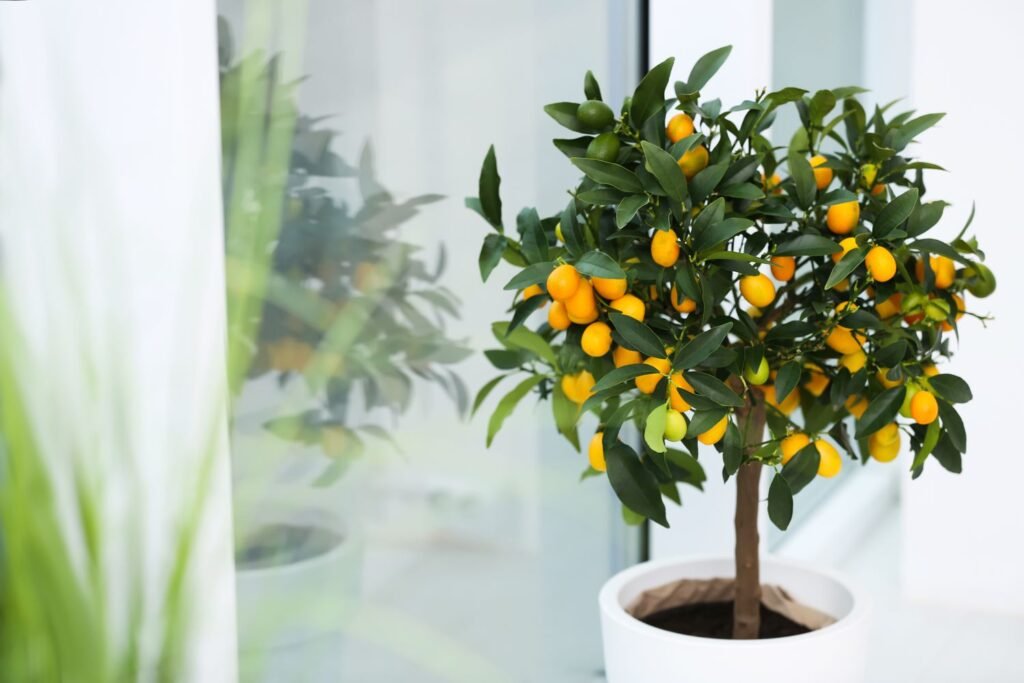
- Kumquat: Dwarf tree with edible peel; requires minimal space and yields year-round fruit.
- Key Lime: Small, aromatic lime tree that produces abundant fruit in containers.
- Dwarf Sweet Orange: Produces sweet, juicy oranges; adapts well to pots with proper care.
Choosing disease-resistant and container-friendly varieties ensures better growth and reduces maintenance challenges.
Selecting Containers
Container choice is critical for citrus tree health, fruit production, and longevity. Consider the following factors:
- Size: Start with a 12–15 inch diameter pot for young trees; mature trees may need 18–24 inch pots. Adequate root space promotes healthy growth and fruiting.
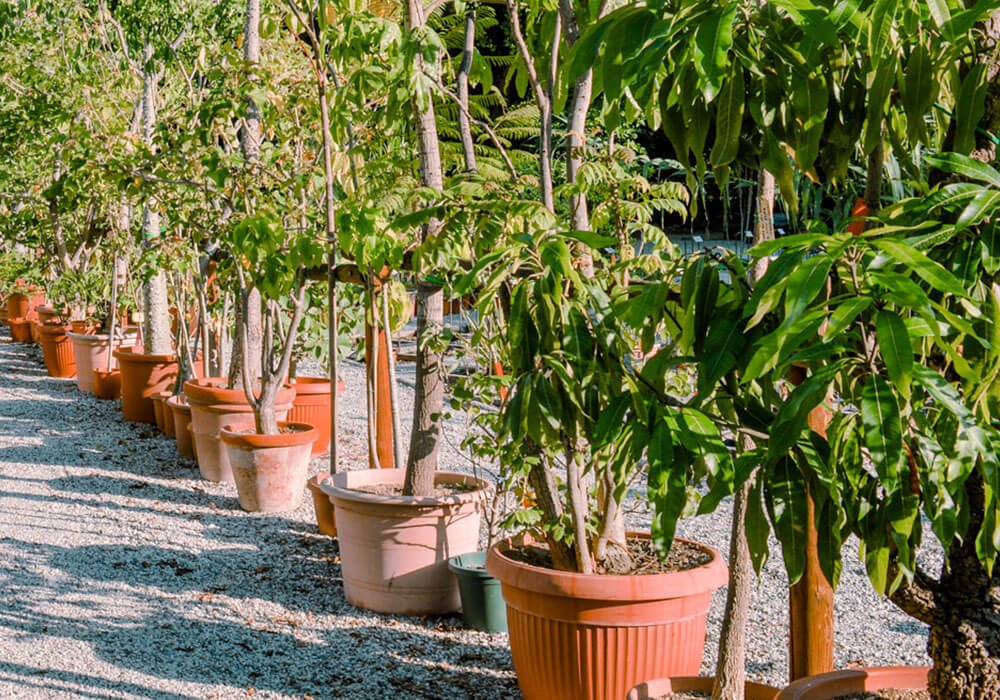
- Material: Terra cotta pots allow better airflow but dry quickly; plastic pots retain moisture longer. Both are suitable depending on watering habits.
- Drainage: Ensure containers have sufficient drainage holes to prevent waterlogging, root rot, and fungal infections.
- Mobility: Lightweight pots or those with caster wheels make it easier to move trees for optimal sunlight or protection from extreme weather.
Using saucers beneath containers prevents water spillage and protects balcony flooring.
Soil Preparation
Citrus trees require well-draining, nutrient-rich soil to thrive in containers. Guidelines for optimal soil:
- Potting Mix: Use high-quality commercial potting soil blended with perlite or sand to improve drainage. Avoid garden soil, which may compact and hinder root growth.
- Organic Matter: Add compost or well-rotted manure to supply essential nutrients.
- pH Level: Citrus prefers slightly acidic soil with a pH of 6.0–7.0.
- Aeration: Regularly loosen the top layer of soil to improve oxygen supply to roots.
Well-prepared soil ensures healthy root development, vigorous growth, and superior fruit quality.
Planting Techniques
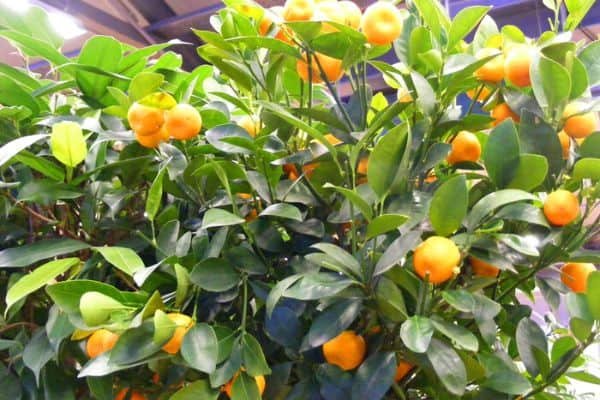
Proper planting is essential for container-grown citrus trees:
- Seedlings or Grafted Plants: Grafted trees generally produce fruit sooner than seed-grown plants.
- Planting Depth: Ensure the root ball is slightly below the container rim; the crown should remain above soil to prevent rot.
- Spacing: Avoid overcrowding pots; allow at least 2–3 feet of space for airflow if multiple trees are grown on a balcony.
- Initial Watering: Water thoroughly after planting to settle the soil around roots.
Establishing strong roots and proper planting depth is critical for long-term balcony citrus success.
Light and Temperature Requirements
Citrus trees thrive in bright, warm conditions:
- Sunlight: At least 6–8 hours of direct sunlight per day is ideal. South- or west-facing balconies provide maximum light exposure.
- Temperature: Citrus trees grow best in 65–85°F during the day. Night temperatures should not drop below 50°F. Protect trees from frost using covers or by moving them indoors during winter.
- Artificial Lighting: In low-light apartments, supplemental LED grow lights can support photosynthesis and flowering.
Proper light and temperature conditions are essential for fruiting and overall plant health.
Watering Techniques
Container-grown citrus requires consistent but careful watering:
- Moisture: Keep soil evenly moist; the top inch should be allowed to dry slightly between waterings.
- Deep Watering: Water thoroughly to encourage deep root growth, but avoid waterlogging.
- Drainage: Ensure excess water drains freely to prevent root diseases.
- Humidity: Indoor environments may be dry; occasional misting helps maintain leaf health.
Monitoring soil moisture regularly prevents stress, leaf drop, or fruit drop in citrus trees.
Fertilization
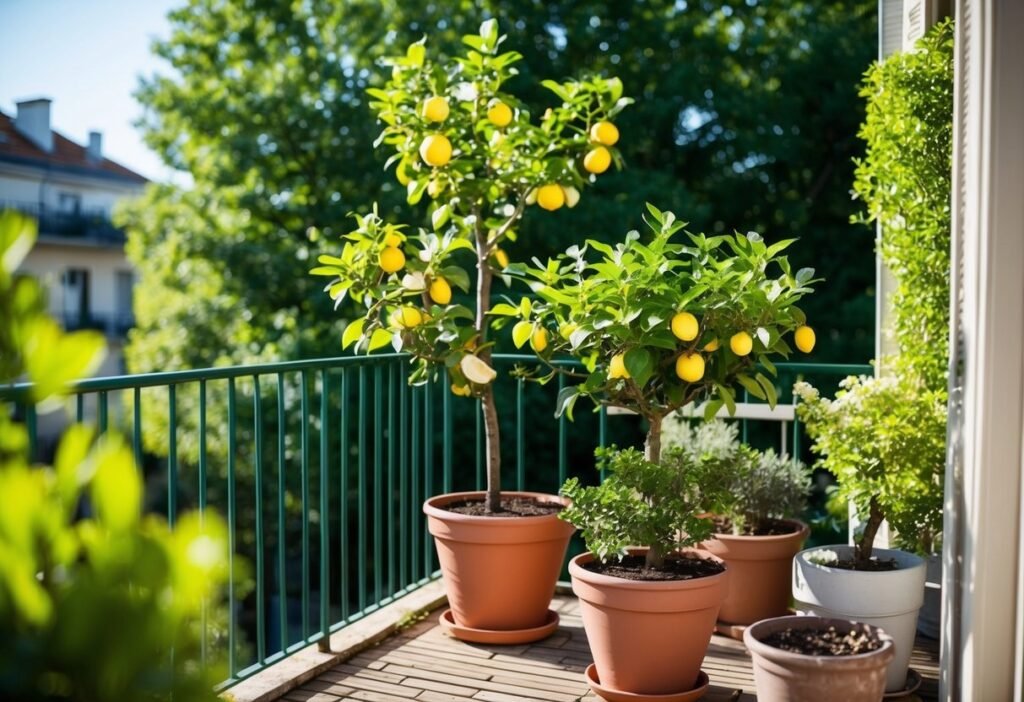
Citrus trees are nutrient-demanding and require regular feeding:
- Balanced Fertilizers: Use organic or slow-release fertilizers with nitrogen, phosphorus, potassium, and micronutrients.
- Frequency: Feed young trees every 4–6 weeks and mature trees every 6–8 weeks during active growth.
- Foliar Feeding: Spray diluted fertilizer on leaves occasionally to supplement root feeding and boost growth.
Proper fertilization ensures strong growth, vibrant foliage, and abundant fruit production.
Pruning and Training
Pruning is essential for shape, airflow, and fruit quality:
- Timing: Prune after harvest or in early spring before new growth begins.
- Technique: Remove dead, diseased, or overcrowded branches. Thin out interior growth to improve air circulation.
- Training: Use stakes or soft ties to guide young trees and prevent tipping in windy conditions.
Pruning encourages flowering, reduces disease risk, and maintains manageable tree size for balcony environments.
Pollination and Flowering
Citrus trees are self-pollinating but benefit from gentle assistance indoors:
- Manual Pollination: Use a small brush or cotton swab to transfer pollen between flowers to increase fruit set.
- Air Movement: A small fan can simulate wind, aiding pollination.
Ensuring successful pollination improves fruit quantity and quality for container-grown trees.
Pest and Disease Management
Even balcony-grown citrus can face pests and diseases. Organic management is recommended:
- Common Pests: Aphids, spider mites, scale insects, and mealybugs.
- Organic Controls: Neem oil, insecticidal soap, or horticultural oils are effective.
- Fungal Issues: Prevent powdery mildew and root rot by maintaining proper airflow, avoiding overwatering, and using well-draining soil.
- Regular Inspection: Monitor leaves, stems, and fruits weekly to detect early problems.
Proactive pest management ensures long-term health and productivity of citrus trees.
Harvesting Citrus Fruits
Proper harvesting is key to enjoying sweet, juicy citrus:
- Maturity Indicators: Fruits should be fully colored and slightly soft to touch. Citrus does not continue to ripen significantly off the tree.
- Gentle Handling: Twist or cut fruits carefully to avoid damaging branches.
- Continuous Harvesting: Regular picking encourages further flowering and fruiting.
Harvesting at peak maturity ensures maximum flavor, juiciness, and nutrient content.
Space Optimization and Aesthetic Tips
Maximizing balcony space while enhancing aesthetics:
- Vertical Gardening: Use tiered stands or wall-mounted planters to grow multiple trees efficiently.
- Container Rotation: Move pots periodically to ensure uniform sunlight exposure.
- Companion Planting: Grow herbs or flowers nearby to improve biodiversity and visual appeal.
Clever space management ensures a productive and attractive balcony citrus garden.
Sustainability and Maintenance
Maintaining balcony citrus trees sustainably ensures long-term success:
- Regular Observation: Monitor soil, watering, pests, and nutrient levels consistently.
- Eco-Friendly Practices: Compost kitchen waste and use organic fertilizers to reduce environmental impact.
- Pruning and Cleanliness: Keep the area tidy, removing fallen leaves or debris to prevent disease.
- Water Conservation: Collect rainwater or use efficient watering techniques for sustainability.
Sustainable practices enhance plant health, reduce maintenance, and support environmental responsibility.
Conclusion
Growing citrus trees on apartment balconies is a rewarding and practical approach to enjoying fresh, organic fruits year-round. With careful variety selection, proper containers, nutrient-rich soil, adequate sunlight, and attentive care, even small urban spaces can yield healthy, fragrant, and delicious citrus. Balcony citrus gardening not only provides fresh produce but also contributes to environmental sustainability, mental well-being, and aesthetic appeal. By following these detailed strategies, urban dwellers can cultivate thriving citrus trees, transform their living spaces into lush green havens, and enjoy the satisfaction of homegrown fruit at any time of the year.