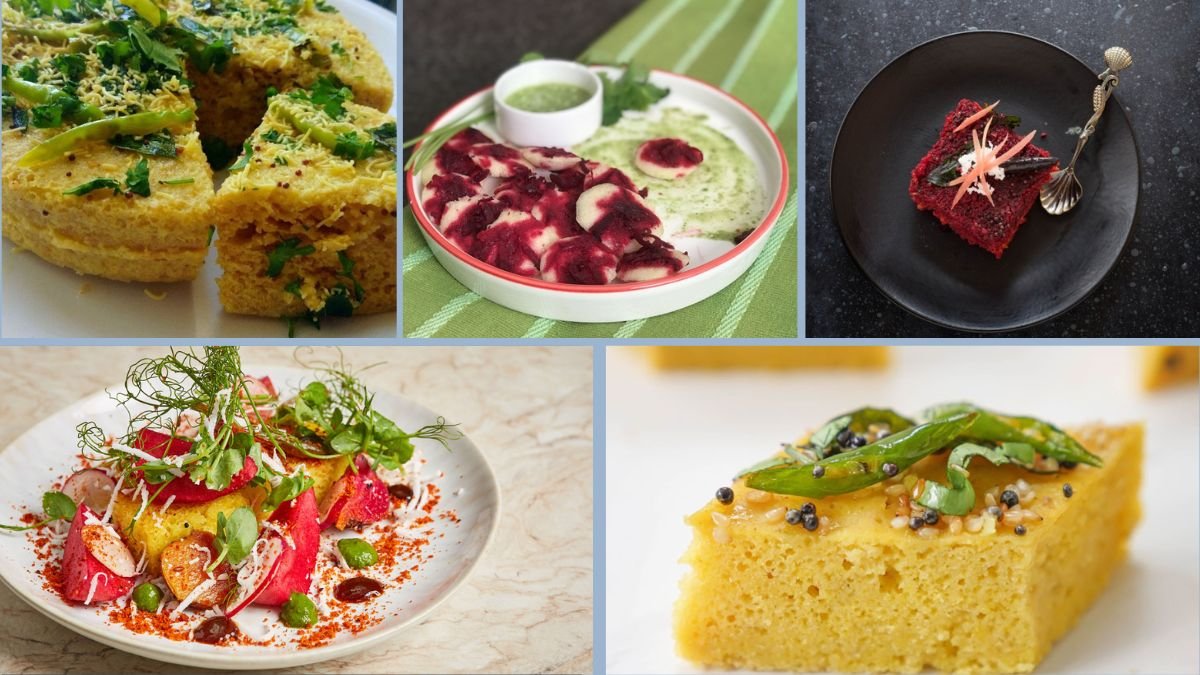
Dhokla is a beloved steamed snack from Gujarati cuisine, known for its soft, spongy texture and tangy flavor. In this variation, we incorporate vegetables and beetroot puree, which not only enhances the nutritional profile but also gives the dhokla a beautiful reddish hue. Below is a stepwise guide to making Vegetable Dhokla with Beetroot, complete with tips, rationale, and troubleshooting notes.
Introduction & Rationale
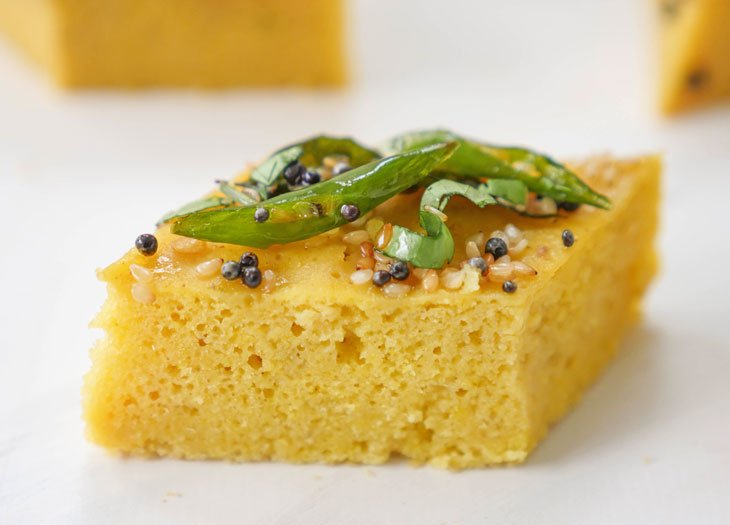
Before diving into the steps, it helps to understand why each ingredient and step exists:
- Why vegetable + beetroot? Adding vegetables (like carrots, peas, beans, capsicum) boosts fiber, vitamins, and color contrast. Beetroot, when pureed, imparts a vibrant red-purple hue and provides antioxidants (betalains) and folate.
- Why steaming? Steaming ensures a moist, soft texture without excessive oil.
- Role of fermentation / leavening? Traditional dhokla often relies on fermentation (e.g. with sour yogurt) or direct chemical leavening (fruit salt or baking soda) to generate gas bubbles, leading to its characteristic sponge-like structure.
- Tempering (seasoning) at the end gives flavor, aroma, and aesthetic finish—mustard seeds, curry leaves, sesame seeds, green chilies, and sometimes a splash of water/sugar to moisten the top.
This recipe outlines seven clear steps to prepare the dish from start to finish, and includes tips to get uniformly soft and flavorful dhoklas.
Step 1: Ingredient Selection & Preparation
Before mixing, you must gather and prepare all ingredients carefully.
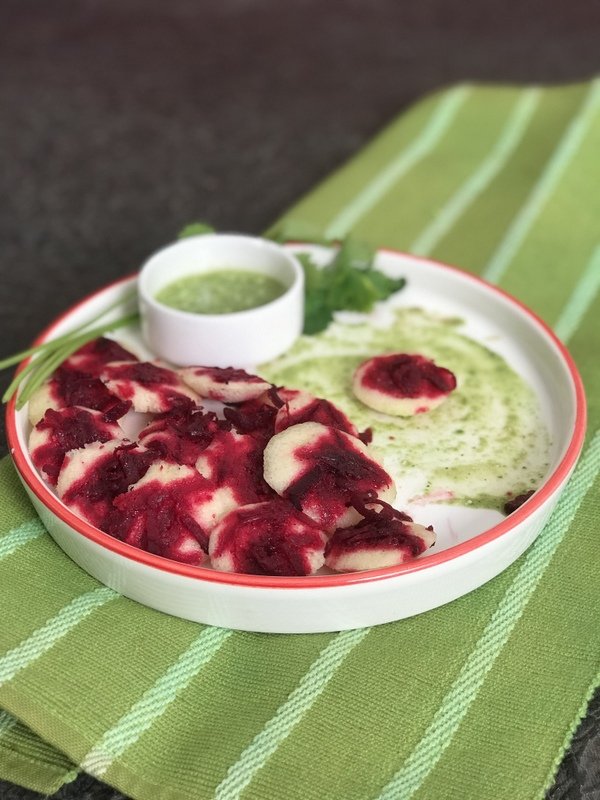
Essential ingredients:
- Gram flour (besan) – ~1 cup
- Semolina / sooji – ~1 to 1½ tablespoons (to provide slight firmness)
- Beetroot – 1 medium (or amount yielding ~½ cup puree)
- Yogurt (sour) – ~2 tablespoons
- Ginger-green chili paste – ~1 teaspoon
- Salt to taste
- A small pinch of sugar (optional, helps balance flavors)
- Water as needed
- Leavening agent: fruit salt (Eno) or baking soda (just before steaming)
- For tempering (vagar): oil (~1 tablespoon), mustard seeds (~½ teaspoon), sesame seeds (~½ teaspoon), curry leaves, slit green chilies, pinch of asafoetida (hing), chopped coriander leaves for garnish.
Preparation steps before mixing:
- Wash and peel the beetroot, chop into small pieces, and boil or steam until fully soft.
- Puree the cooked beetroot with minimal water to make a smooth paste.
- Chop vegetables such as carrots, peas, beans, capsicum finely, and lightly boil or blanch them so they are partly cooked (but still retain some crunch).
- Whisk the yogurt to smooth consistency. If the yogurt is thick, add a little water to bring it to a pourable consistency.
- Grease your steaming tray or thali (plate) and the steamer surface with oil, so dhokla won’t stick.
This preparation ensures everything is ready when the batter is to be steamed.
Step 2: Making the Batter
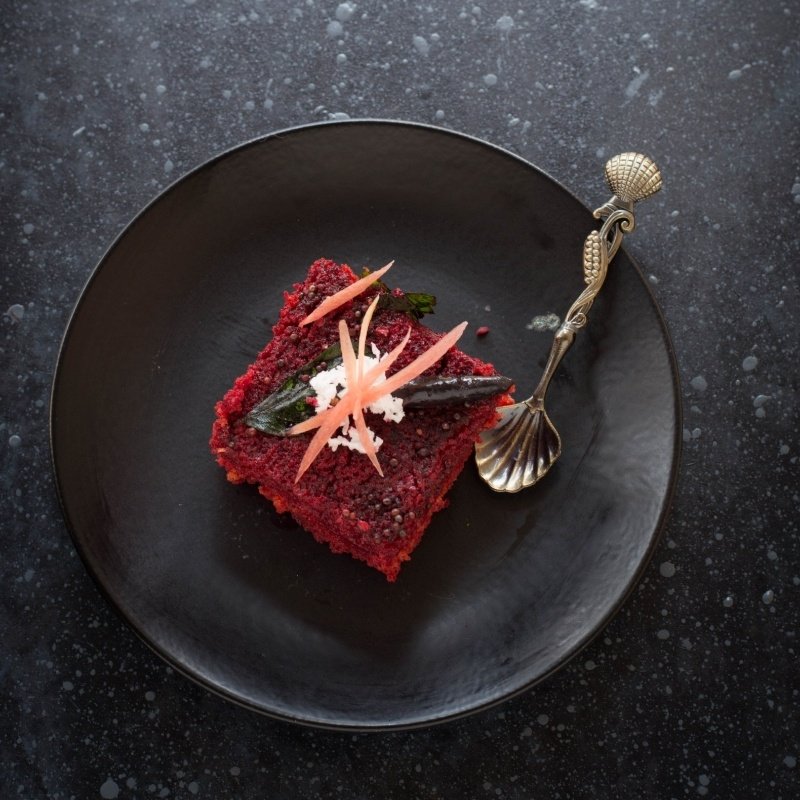
Now we combine dry and wet ingredients to form a smooth batter.
- In a mixing bowl, sift the gram flour (besan) to remove lumps.
- Add semolina (sooji) and salt and sugar (if using).
- Add the whisked yogurt gradually, mixing continuously to form a smooth, lump-free batter.
- Stir in the beetroot puree along with the chopped (partially cooked) vegetables. Mix until uniform color and texture.
- Add ginger–green chili paste for aroma and spice.
- Adjust water to reach the consistency of a thick pancake batter (pourable but not runny). The ideal consistency helps trap air and steam evenly.
- Cover the bowl and let the batter rest for 10–15 minutes (this resting helps semolina absorb moisture and aids slight fermentation).
Do not add the leavening agent (Eno or baking soda) yet—that will be added just before steaming.
Step 3: Activating the Leavening Agent & Pouring
This step is key to making the dhokla soft and fluffy.
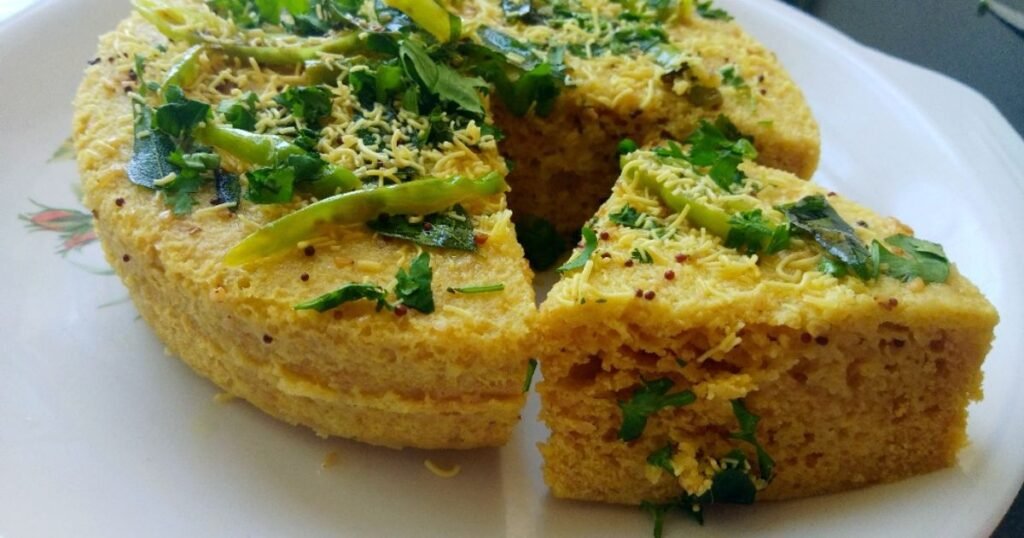
- As the steamer water comes to a rolling boil, sprinkle a little water (1–2 teaspoons) over the batter’s surface (this helps activate the fruit salt).
- Immediately add fruit salt (Eno) or a pinch of baking soda, and gently fold the batter just once or twice. You will see bubbles forming. (If you overmix, you lose the gas bubbles.)
- Quickly pour the batter into the greased steaming tray (thali) and gently shake/tilt to spread evenly. The batter should fill to a thickness of about 1–1.5 cm (½ inch) for best results.
- Cover the tray and slide it into the steamer (with lid). Steam on medium heat for about 10–15 minutes, or until a toothpick inserted comes out clean.
Don’t open the lid prematurely — steam must build up fully.
Step 4: Steam Cooking
While the batter is steaming, you can prepare the tempering and plan for final steps.
Steam duration & checks:
- For thick trays, steaming might take 12–15 minutes.
- For thinner layers or mini molds, 8–10 minutes may suffice.
- Use toothpick test: insert a skewer into center; if it comes out clean (no wet batter), the dhokla is cooked.
- Once done, turn off heat, let the steam subside for a minute, then carefully remove the tray (use oven mitts).
Let the dhokla rest under lid for a minute or two before cutting, so that it settles.
Step 5: Tempering (Vagar / Tadka)
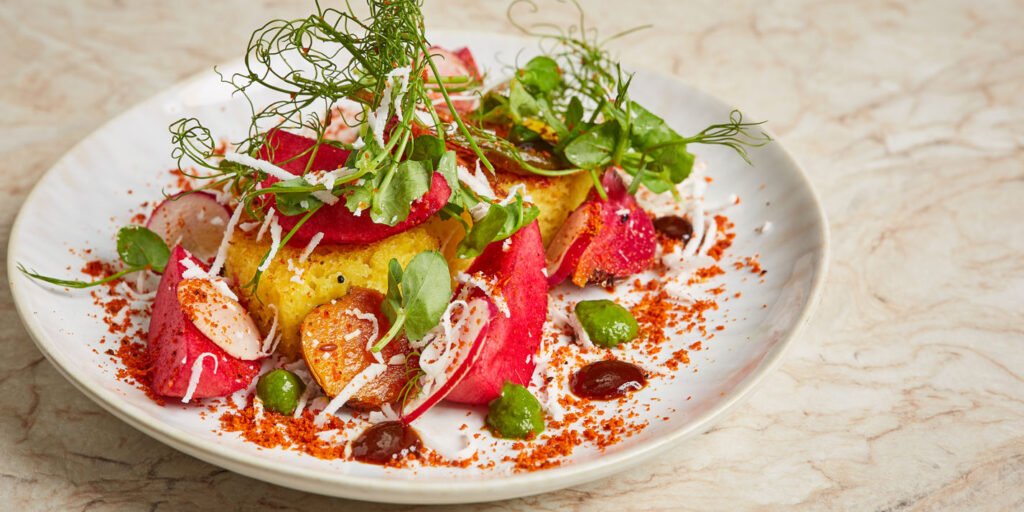
This is the step where flavor and aroma get layered onto the dhokla.
- In a small pan, heat the oil.
- Add mustard seeds; when they begin to crackle, add sesame seeds and a pinch of asafoetida.
- Add curry leaves and slit green chilies.
- You may optionally add a splash of water (2–3 tablespoons) along with a pinch of sugar and salt to create a thin tempering “syrup.”
- Let this tempering mixture come to a gentle boil so flavors mingle.
- Pour the hot tempering evenly over the still-warm dhokla in the tray. The dhokla will absorb some of this, enhancing moisture and taste.
This step not only adds flavor, but the hot liquid helps moisten the surface and improves mouthfeel.
Step 6: Cutting, Garnishing & Serving
Once tempered, the final presentation steps come into play.
- Let the dhokla cool slightly (just until it’s warm) so it firms up a bit but remains moist.
- Use a sharp knife to cut into desired shapes — squares, diamonds, or rectangles.
- Garnish with fresh chopped coriander leaves and optional grated coconut for color contrast.
- Arrange on a serving platter. You may sprinkle a little water on the surface if it looks dry.
- Serve with green chutney (coriander-mint) or sweet tamarind chutney, and/or steamed chilies.
Because this is fully vegetarian and steamed, it’s light, healthy, visually appealing, and nutritious.
Step 7: Tips, Variations & Troubleshooting
To elevate the dish or fix issues, consider these suggestions:
Tips for better texture
- Do not overmix after adding the leavening agent; that can deflate bubbles.
- Use fresh fruit salt (Eno has active CO₂ releasing capacity).
- Maintain consistent steaming temperature (medium heat) so the dhokla rises uniformly.
- Grease the tray well so that demolding is smooth.
- Use slightly sour yogurt, which helps fermentation/acid balance.
Variations
- You can use oats + vegetables + beetroot mix for a healthier variant (as in oats–vegetable dhokla recipes).
- Or combine besan + semolina + beetroot puree (many beetroot dhokla recipes use this combination).
- You may add mild spices like turmeric (just a pinch; be careful with coloring) or a little cumin powder for extra flavor.
Common problems & fixes
| Problem | Likely cause | Fix |
|---|---|---|
| Dhokla is dense or hard | Insufficient leavening / overmixing / too thick batter | Use correct amount of Eno, fold gently, adjust consistency |
| Too wet or soggy | Under-steaming / excess water in batter | Steam a little longer; reduce water added |
| Sticks to tray | Tray not greased enough | Grease generously or use banana leaf/foil |
| Dry top surface | Not enough tempering liquid | Pour slightly more tempering water mixture |
Sample Approximate Recipe (for 4–5 servings)
Below is a working recipe (approximate) you can test or present:
Ingredients:
- 1 cup gram flour (besan)
- 1½ tablespoons semolina (sooji)
- 1 medium beetroot (for ~½ cup puree)
- 1 cup yogurt (whisked)
- 2–3 tablespoons mixed vegetables (carrot, peas, beans), boiled & chopped
- 1 teaspoon ginger-green chili paste
- Salt to taste
- Pinch of sugar
- 1 packet Eno fruit salt (or ½ teaspoon baking soda)
Tempering:
- 1 tablespoon oil
- ½ teaspoon mustard seeds
- ½ teaspoon sesame seeds
- A pinch of asafoetida (hing)
- 5–6 curry leaves
- 2 slit green chilies
- 2–3 tablespoons water
- Pinch of sugar & salt
- Fresh coriander, grated coconut (for garnish)
Follow the seven steps above, steam ~12 minutes, temper, cut, garnish, and serve.
Nutritional & Academic Notes (Optional for Thesis)
- The addition of beetroot increases beta‑carotene, folate, dietary fiber, and natural pigments (betalains).
- Use of steaming lowers fat content compared to frying.
- Vegetable inclusion increases mineral and vitamin diversity (vitamin A, C, K, etc.).
- From a food science perspective, the leavening kinetics (CO₂ generation and bubble retention) and microbial kinetics of partial fermentation (if using yogurt) could be explored.
- Sensory evaluation (color, texture, flavor) can be compared between plain vegetable dhokla and beetroot-enhanced version.
Conclusion
Vegetable Dhokla with Beetroot is a delightful, nutritious, and visually striking variation of the classic Gujarati snack. By following the seven structured steps — from ingredient preparation, batter mixing and resting, leavening activation, steaming, tempering, cutting & garnishing, and troubleshooting — you can achieve a soft, spongy, flavorful, and fully vegetarian dish. In an academic context, this recipe also opens avenues to explore food chemistry (leavening, pigment stability), nutrition profiling, and sensory evaluation.
If you like, I can convert this into a formatted thesis chapter (with sections, tables, images) or provide a shorter abstract version. Would you like me to do that?