
Paneer Bhurji is a flavorful, protein-rich vegetarian dish native to the Indian subcontinent. When prepared well, it offers a balanced, satisfying breakfast that combines fresh spices, dairy, and veggies. This article outlines six simple yet thorough steps to prepare Paneer Bhurji, along with tips on ingredient selection, nutritional value, serving suggestions, and variations—all while keeping it entirely vegetarian.
Introduction
Breakfast is often called the most important meal of the day. A nourishing breakfast provides energy, supports cognitive function, and helps maintain health throughout the morning. Paneer Bhurji is an excellent breakfast choice for vegetarians: it’s rich in protein, calcium, and flavour, and can be cooked quickly. “Bhurji” essentially means a scramble—paneer (Indian cottage cheese) crumbled or broken up, sautéed with spices, onions, tomatoes, and optionally other vegetables. This dish is quick, versatile, and pleasing to many palates. The following six steps will walk you through preparing Paneer Bhurji that is both traditional in flavour and modern in convenience, suitable for a thesis or detailed recipe study.
Ingredients & Equipment (Preparation Before Cooking)

- Paneer: about 200 grams, fresh. Make sure it is firm, non-crumbly, not overly dry or rubbery. Homemade or good quality store-bought.
- Vegetables: 1 medium onion, 1 medium ripe tomato, green bell pepper (capsicum) or a small carrot, optional peas. These add texture, micronutrients and variety.
- Spices & aromatics: ginger, garlic (fresh), green chillies (or red chilli powder), turmeric powder, coriander powder, garam masala, cumin seeds.
- Herbs: fresh coriander leaves (cilantro).
- Others: oil or ghee, salt, optionally a pinch of sugar to balance acidity of tomato.
- Equipment: non-stick skillet or frying pan, spatula, sharp knife, chopping board, bowl, stove.
Step 1: Ingredient Preparation
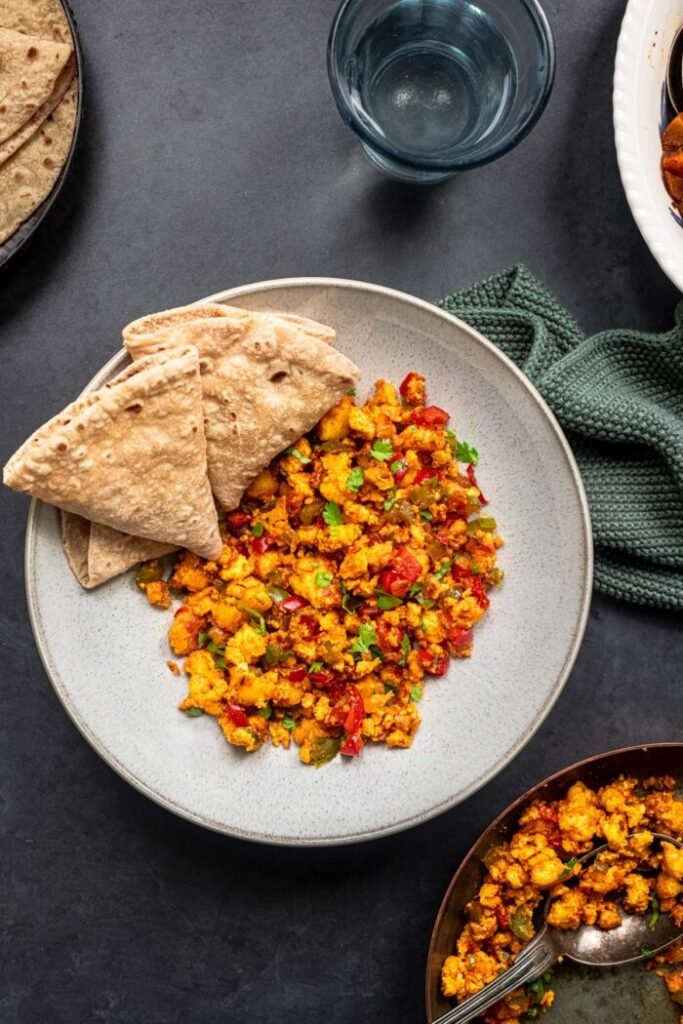
- Paneer Crumble or Chop – Cut the paneer into cubes and then crumble it lightly with your fingers or with the broad side of a knife. The size of crumbles can vary depending on texture preference; smaller crumbles make a tighter scramble, larger chunks give more bite.
- Chop Vegetables – Dice the onion finely. Chop tomato into small cubes. If using bell pepper, carrot or peas, prepare those: dice bell pepper, julienne carrot or blanch peas. Also mince ginger and garlic, slice green chillies.
- Measure Spices – Keep turmeric, coriander, garam masala, cumin seeds ready. This mise en place helps speed up cooking and avoids burning spices.
This preparation usually takes about 5-7 minutes. Good prep ensures smooth cooking.
Step 2: Heat & Temper Spices

- Place your non-stick skillet over medium heat. Add 1–2 tablespoons of oil or ghee (ghee adds a richer flavour).
- Once oil is hot but not smoking, add a teaspoon of cumin seeds. Let them sizzle for a few seconds until fragrant and slightly brown.
- Add finely chopped ginger and garlic, sauté 30-45 seconds, then add green chillies and onion. This “tempering” builds the aromatic base of the dish.
Step 3: Sauté Vegetables & Tomatoes
- When onions turn translucent and edges begin to brown lightly, add bell pepper or carrot (if using). Stir often, cooking until vegetables soften but still retain slight bite.
- Add tomatoes. Cover or stir occasionally. Cook until tomatoes break down, oil begins to separate slightly, and the mixture becomes a thick paste. This helps in bringing out sweetness and balances the tanginess. You may add a pinch of sugar if tomatoes are too sour.
Step 4: Spice Infusion & Adjustment
- Lower the heat slightly and add dry spices: turmeric powder (~½ teaspoon), coriander powder (~1 teaspoon), red chilli powder (amount per your heat preference), salt. Stir quickly so the powders do not burn.
- Cook for about 30 seconds so spices release their essence—look for colour change and fragrance.
- Taste the base (before adding paneer) for salt & heat; make adjustments. It’s easier to correct seasoning before adding paneer than after.
Step 5: Add Paneer & Combine
- Add the crumbled or chopped paneer to the pan. Gently fold in with the sautéed vegetables and spices.
- Cook for 2-3 minutes, stirring regularly so the paneer heats through, absorbs flavours, and edges get very light golden if you like slight browning. Avoid over-cooking paneer; it becomes rubbery or loses moisture.
- Towards the end, sprinkle garam masala (~½ teaspoon) and stir well. This final finishing touch adds depth and aroma.
Step 6: Garnish, Serve & Pairing Suggestions
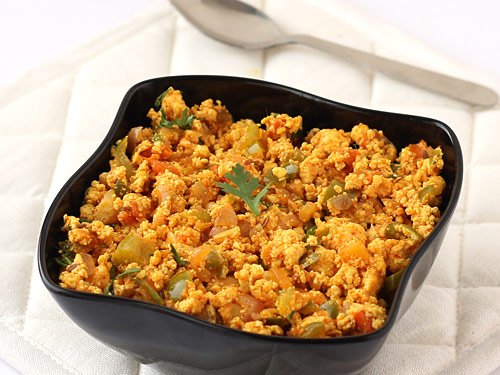
- Turn off heat and garnish with finely chopped fresh coriander leaves. Optionally sprinkle a few drops of fresh lemon juice for brightness.
- Serve hot. Paneer Bhurji pairs beautifully with:
- Roti, paratha, or chapati
- Toasted bread, multigrain toast, or whole wheat bread
- Pills of dosa or chapati bread rolls
- As a filling in wraps or sandwiches
- Side accompaniments: plain yogurt, pickle or chutney, fresh salad (sliced cucumbers, tomatoes), or fruits for breakfast balance.
Nutritional Benefits & Health Considerations

- Protein & Calcium from paneer support muscle repair, bone density, and satiety throughout the morning.
- Vitamins & Fibre from vegetables: onions, tomatoes, peppers provide vitamin C, A, dietary fiber for digestion.
- Moderation of Fat & Spice: using moderate oil and balancing heat ensures the dish is palatable and digestive. Avoid too much oil or excessive chillies if sensitive.
Variations & Enhancements
- Vegetable Variations: add spinach or methi (fenugreek) leaves for greens; mushrooms for umami; peas and corn for sweetness.
- Dairy Variations: use low-fat paneer or homemade paneer with controlled fat levels.
- Spice Adjustments: try incorporating powdered cumin or roasting dry masala for deeper flavour; smoked paprika instead of red chilli powder for milder heat.
- Texture Preferences: for creamier finish, add a tablespoon of fresh cream or milk at the end; for dry bhurji, remove moisture earlier.
Conclusion
Paneer Bhurji is an ideal breakfast dish for vegetarians, combining speed of preparation, nutritional completeness, and flavour. By following these six steps—preparation, tempering, sautéing vegetables, infusing spices, adding paneer, garnishing and serving—you can consistently produce a balanced, delicious meal. With optional variations, this recipe can be adapted to suit dietary needs or flavor preferences. For anyone writing a thesis or cookbook, these steps form a structured method that highlights both technique and nutrition.