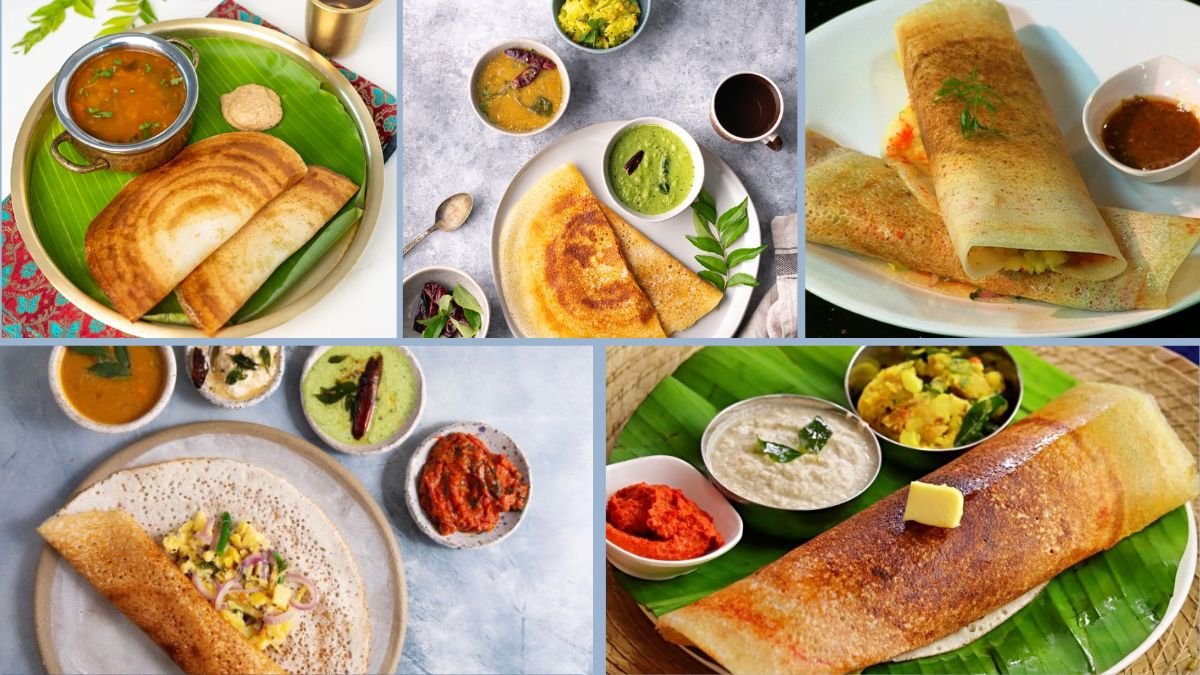
Masala Dosa, a South Indian classic, is a paper-thin rice-and-lentil crepe filled with spiced potato curry. Loved for its crisp texture and savory flavor, it has become popular across India and worldwide. However, one common concern is the use of excess oil during cooking, which can make the dish heavy. This article presents a practical five-step guide to preparing crispy Masala Dosa without extra oil, with emphasis on batter preparation, cooking technique, and health-conscious adjustments—all while staying true to vegetarian traditions.
Introduction
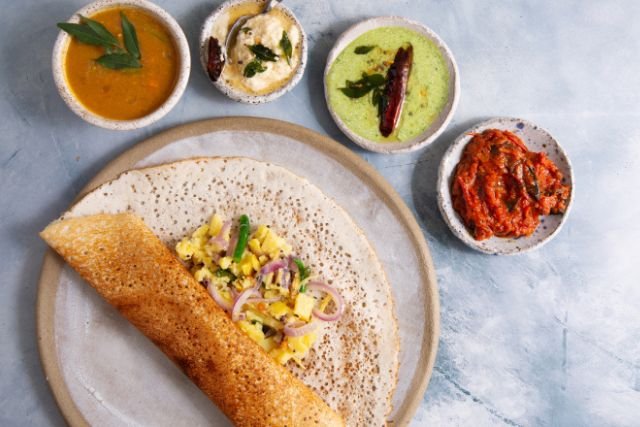
Breakfast plays an important role in setting the nutritional tone for the day. Among vegetarian breakfast dishes, Masala Dosa holds a special place. Traditionally made from fermented rice and urad dal batter, dosas are crisp yet light, and when paired with potato masala, chutney, and sambar, they offer a complete meal rich in carbohydrates, protein, fiber, and micronutrients.
Yet many cooks worry that reducing oil will compromise crispiness. In reality, the right batter fermentation, pan preparation, and spreading technique can produce dosas that are both crisp and light without overuse of oil. This guide simplifies the cooking process into five manageable steps.
Ingredients (Serves 4)
- For the Dosa Batter
- Raw rice: 2 cups
- Urad dal (split black gram, skinless): ½ cup
- Fenugreek seeds: ½ teaspoon
- Poha (flattened rice): 2 tablespoons (optional, for softness)
- Water: as needed
- Salt: to taste
- For Potato Masala (Filling)
- Potatoes: 3 medium, boiled & mashed
- Onion: 1 large, thinly sliced
- Green chilies: 2, finely chopped
- Ginger: 1 teaspoon, grated
- Turmeric powder: ½ teaspoon
- Curry leaves: 8–10
- Mustard seeds: 1 teaspoon
- Cumin seeds: ½ teaspoon
- Oil: 1 tablespoon (for tempering only)
- Salt: to taste
- Fresh coriander leaves: handful, chopped
- Accompaniments
- Coconut chutney
- Tomato chutney
- Sambar
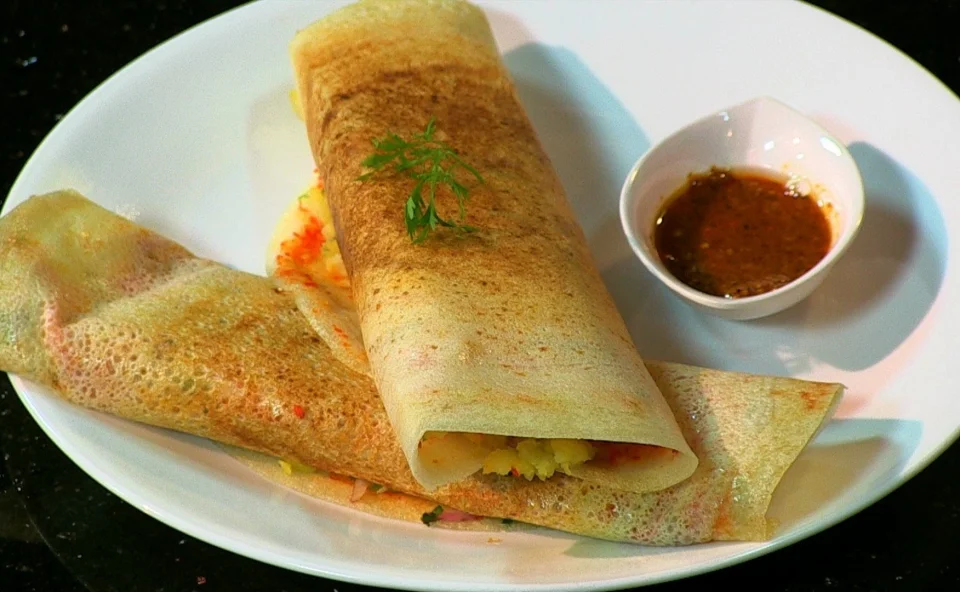
Step 1: Preparing the Batter
- Wash rice, urad dal, fenugreek, and poha thoroughly. Soak them separately for 6 hours.
- Grind the urad dal first into a smooth, fluffy paste using minimal water.
- Grind rice, poha, and fenugreek into a slightly coarse paste.
- Mix both pastes, add salt, and whisk well to incorporate air.
- Allow to ferment overnight (8–10 hours). Proper fermentation is key to natural crispiness without excess oil.
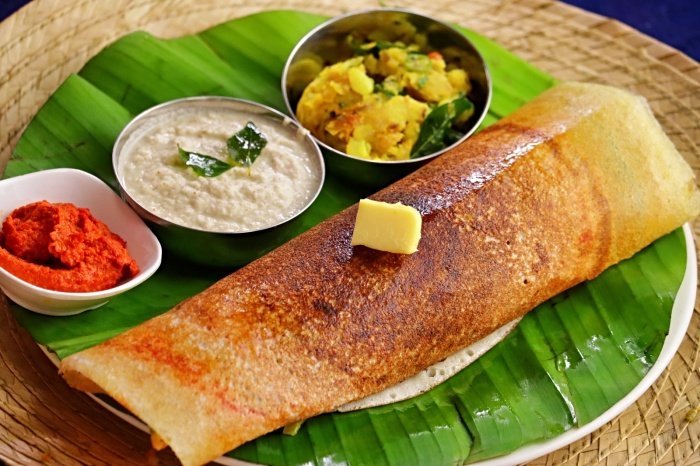
Step 2: Cooking the Potato Masala
- Heat 1 tablespoon oil in a pan.
- Add mustard seeds, cumin, curry leaves, ginger, and chilies. Let them crackle.
- Add onions, sauté until golden.
- Stir in turmeric, followed by mashed potatoes and salt.
- Mix thoroughly and finish with chopped coriander. The filling should be soft and spreadable but not watery.
Step 3: Preparing the Pan for Oil-Free Crispiness
- Use a well-seasoned cast iron tava or non-stick pan.
- Heat the pan until medium-hot, then sprinkle a few drops of water; they should sizzle and evaporate instantly.
- Wipe the surface lightly with a cloth dipped in minimal oil. This micro-layer prevents sticking without making the dosa greasy.
Step 4: Spreading and Cooking the Dosa
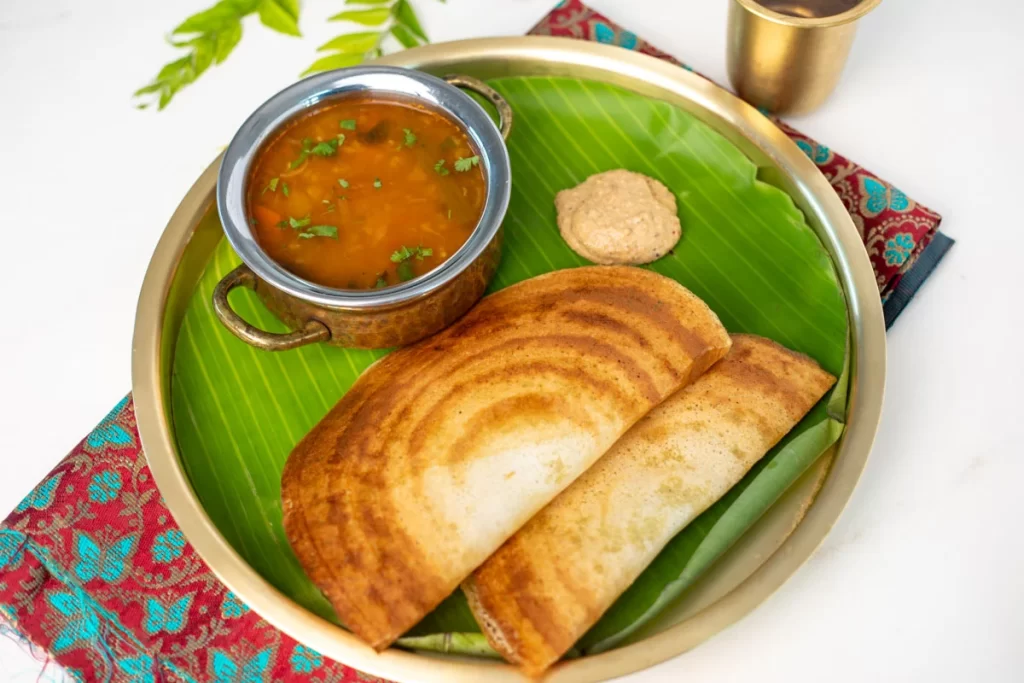
- Pour a ladleful of batter in the center of the hot pan.
- Using the back of the ladle, spread it outward in a circular motion, creating a thin, even layer. The thinner the dosa, the crispier it becomes.
- Cook on medium heat; avoid covering, as steam softens the dosa.
- Once the edges lift naturally and the surface turns golden, you’ll notice crispness even without oil drizzle.
- Place 2–3 tablespoons of potato masala in the center, fold, and remove.
Step 5: Serving and Pairing
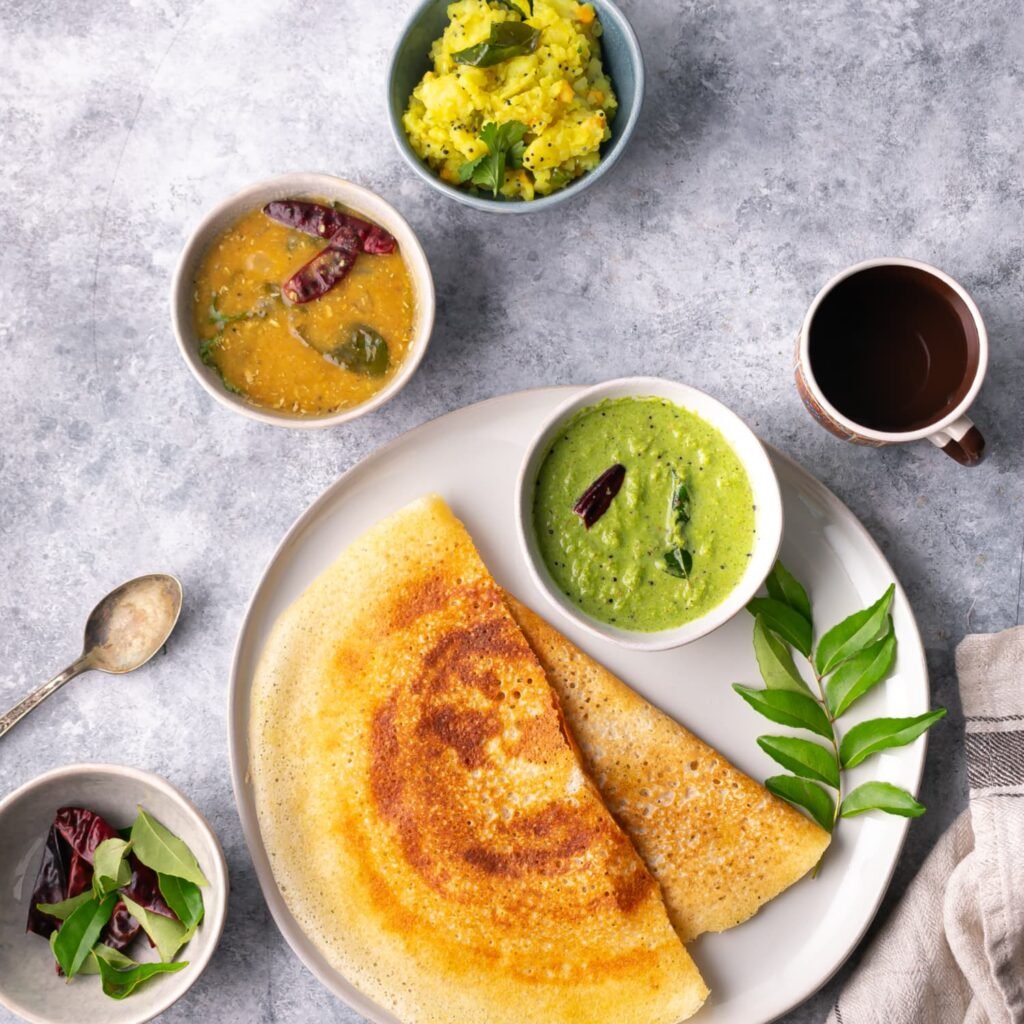
Serve the crispy Masala Dosa immediately, accompanied by coconut chutney, tangy tomato chutney, and hot sambar. For a lighter option, pair with mint chutney and a glass of buttermilk. Dosa is best enjoyed fresh off the pan, when it retains its crunch.
Nutritional Benefits
- Protein: Urad dal provides plant-based protein essential for muscle repair.
- Carbohydrates: Rice and potatoes give sustained energy.
- Fiber & Micronutrients: Onions, coriander, and curry leaves contribute antioxidants, iron, and vitamins.
- Low Fat: Minimal oil use reduces calorie load while retaining crispness.
Variations
- Rava Masala Dosa: Use semolina for an instant version, no fermentation needed.
- Vegetable Masala Dosa: Add carrots, peas, or beans to the potato filling.
- Millet Masala Dosa: Substitute rice with foxtail millet or barnyard millet for a healthier twist.
- Vegan Masala Dosa: Traditionally vegan-friendly, no changes required unless served with dairy chutneys.
Conclusion
Crispy Masala Dosa without excess oil is not only possible but easy with the right method. The five-step process—preparing batter, cooking potato masala, seasoning the pan, spreading and cooking the dosa, and serving—ensures a wholesome, tasty, and health-conscious dish. By focusing on fermentation, pan technique, and minimal oil use, one can create restaurant-style dosas at home while keeping nutrition in check.
In a fast-paced world, this oil-light yet crispy version of Masala Dosa brings together tradition, taste, and wellness—making it a perfect addition to any vegetarian thesis on regional cuisine.